Understand any stock in simple English
SFC Energy AG
SFC Energy makes fuel cells and power systems that keep equipment running with reliable electricity when the grid can't be trusted.
SFC Energy makes small power plants that run on methanol or hydrogen, and it sells them to people who need electricity in places where the normal grid is missing, unreliable, or simply not an option. Its customers include police and security teams, defense forces, telecom towers, oil and gas sites, and industrial operations monitoring remote equipment. When a border patrol needs a camera running through the night, or a remote sensor needs power for months without anyone visiting, SFC's fuel cells quietly do the job.
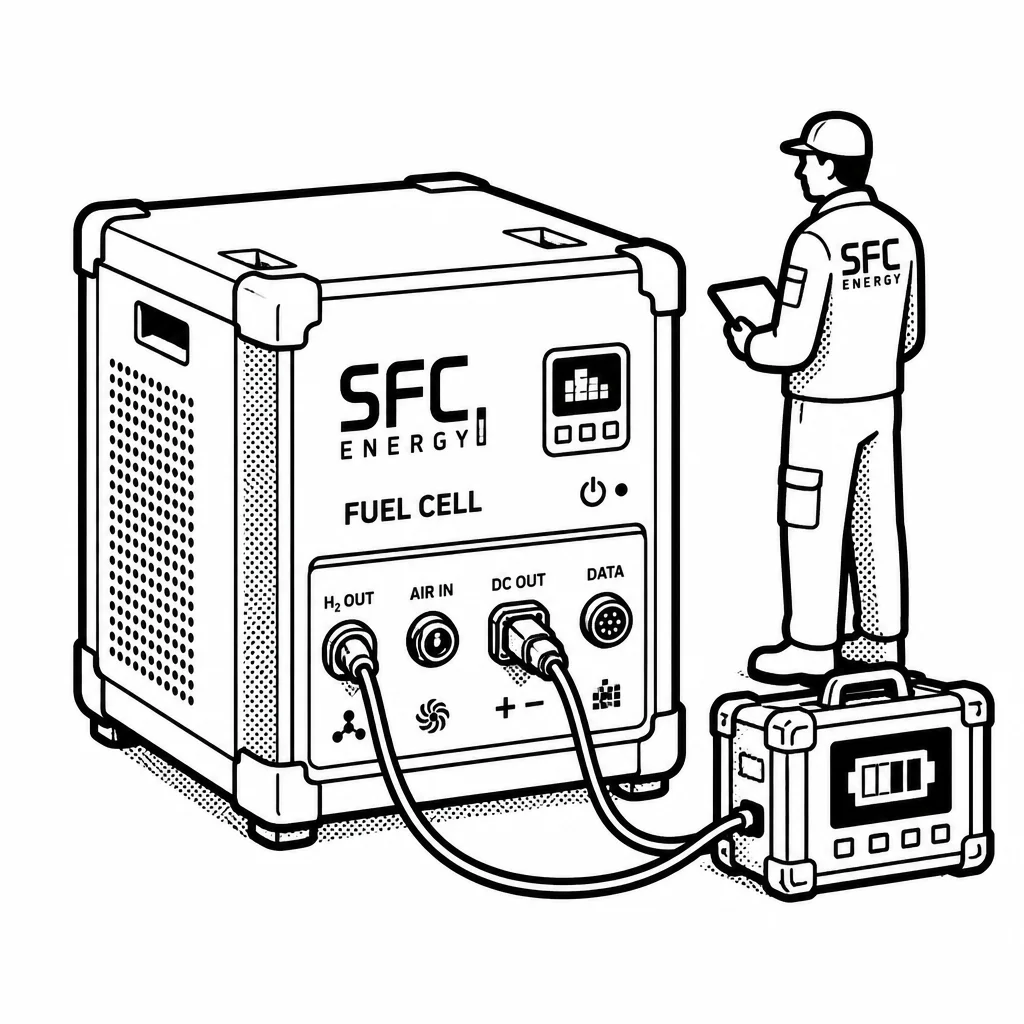
The core product is the direct methanol fuel cell. Instead of burning fuel to spin a turbine, it uses a chemical reaction to turn methanol into electricity, with very little noise and almost no emissions. That matters because the alternative is often a diesel generator that needs refueling, makes noise, and breaks down, or a battery that runs flat. SFC also sells power management electronics, backup systems, and the accessories that tie these pieces together, plus it runs a business supplying components for other fuel-cell makers. The company is based near Munich, Germany, and sells across Europe, North America, and Asia. It has grown steadily, helped by defense spending and the shift toward cleaner remote power, and it has made acquisitions to widen its product range. Competition comes from diesel generators, solar-plus-battery setups, and other fuel-cell makers, but SFC's edge is that it has been doing this for decades and its systems are proven in tough environments.
The honest picture: SFC is a small company in a niche market. It depends on a relatively narrow set of customers, and fuel cells are still more expensive than the dirty diesel alternative. But it has a real business with real customers, and as remote power needs grow and rules on emissions tighten, the case for its products gets stronger.
Saved answer · last researched 17 Nov 2026