Understand any stock in simple English
Enter a ticker to learn what the company does and how it makes money.
BetaShares FTSE 100 ETF
BetaShares FTSE 100 ETF is a fund that lets Australian investors buy a slice of the 100 biggest companies listed in London, all in one trade.
BetaShares FTSE 100 ETF is a simple product with a simple job: it gives Australian investors an easy way to own the biggest companies on the London Stock Exchange, without opening a UK brokerage account or picking individual shares. When you buy a unit of the fund on the ASX, you are buying a tiny slice of a giant basket holding the 100 largest London-listed companies.
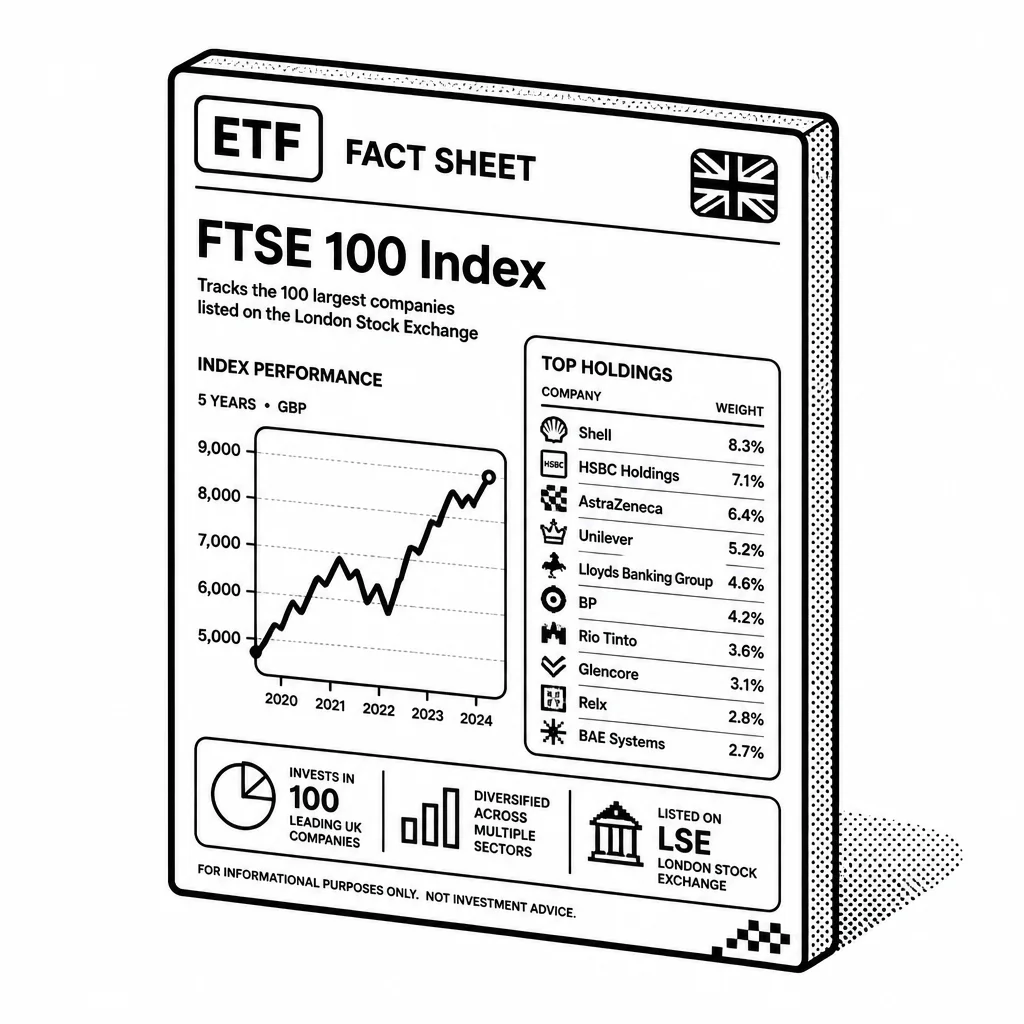
That basket is full of names most people know: oil giants like Shell and BP, banks like HSBC and Barclays, staples like Unilever and AstraZeneca, plus miners such as Rio Tinto. The fund tracks the FTSE 100 Index, holding the same companies roughly in the same proportions, so its value rises and falls with the UK's biggest public companies. It also has a currency twist: the index is priced in British pounds, so for an Australian investor the fund's return blends UK share prices with movements in the pound versus the Australian dollar. The fund makes money through a management fee charged to investors, and because it mirrors an index rather than paying a team of stock pickers, that fee is modest. It pays out dividends collected from the UK companies in the basket, so investors get both the potential for capital growth and a stream of income.
The appeal is diversification and convenience: one trade, dozens of UK blue chips, and the option to hedge or leave currency exposure in play. The catch is what comes with it. The FTSE 100 is heavy on old-economy names like energy, banks, and mining, so returns are tied to commodity prices, interest rates, and the UK's economic mood. It is a cheap, tidy way to add UK exposure to a portfolio, not a bet on fast-growing technology companies.
Saved answer · last researched 15 Nov 2026