Understand any stock in simple English
Enter a ticker to learn what the company does and how it makes money.
iShares MSCI United Kingdom Small-Cap ETF
It is an exchange-traded fund that lets U.S. investors own a basket of small British companies in one simple purchase.
This is a basket, not a business. The iShares MSCI United Kingdom Small-Cap ETF holds a wide spread of small companies listed in the United Kingdom, and it exists so that an American investor can own that whole slice of the British market with a single trade. You buy a share, and behind it sits a collection of hundreds of smaller UK firms — the kind of companies that are too small to make headlines but make up the long tail of the British economy.
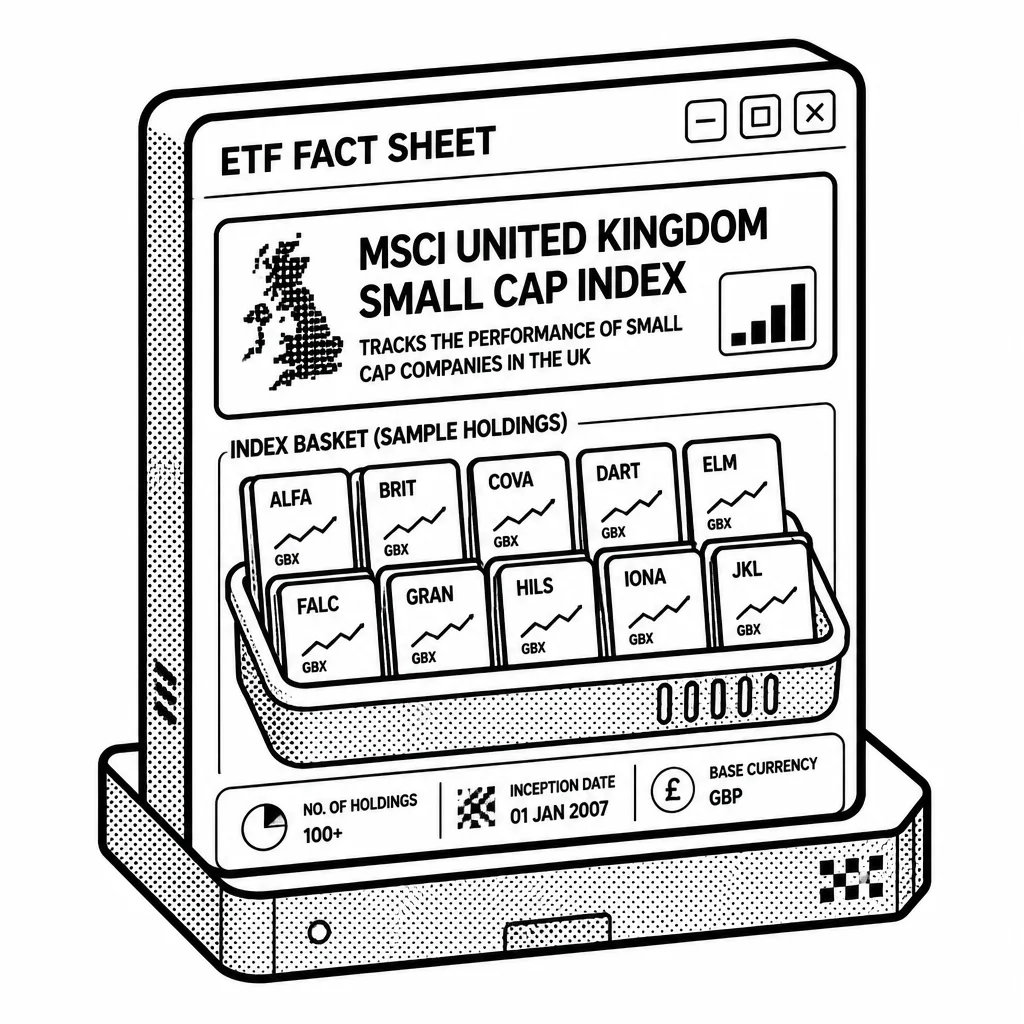
The word "small-cap" is the key. These are not giant names like the oil majors or big banks. They are smaller businesses — think regional retailers, niche manufacturers, specialty service firms, and mid-sized industrial companies. Small companies tend to move more sharply than large ones, both up and down, so this fund is a way to bet on the scrappier, faster-moving end of the UK market rather than its heavyweights. Why would someone buy it? Mostly for diversification. If you already own big American stocks, adding a basket of small UK companies spreads your money across different economies, currencies, and industries. The fund does the tedious work of tracking an index — the MSCI United Kingdom Small Cap Index — so you don't have to pick individual stocks. The trade-off is that you pay a small annual fee for that convenience, and you take on the extra bumps that come with small companies and foreign currency swings.
It is a plain, low-drama product: no clever strategy, no star manager, just a rules-based basket that follows its index. The catch is that small UK stocks can be thinly traded and can sit still for long stretches, and the fund's value depends heavily on how British smaller companies perform and on the pound's strength against the dollar. For a U.S. investor who wants a small, specific slice of Britain without opening a London brokerage account, that is the whole appeal — and the whole risk.
Saved answer · last researched 15 Nov 2026