Understand any stock in simple English
Enter a ticker to learn what the company does and how it makes money.
iShares MSCI Germany Small-Cap ETF
It is an exchange-traded fund that gives investors a simple way to own a basket of small German companies in one purchase.
This is a fund, not a company that makes or sells anything. It is an exchange-traded fund, or ETF, which means it trades on a stock exchange like a single share. It is listed on Cboe BZX under the ticker EWGS, and what an investor buys is a ready-made basket of small German companies. If you want a slice of Germany's smaller businesses without picking individual stocks, this fund is one way to get it.
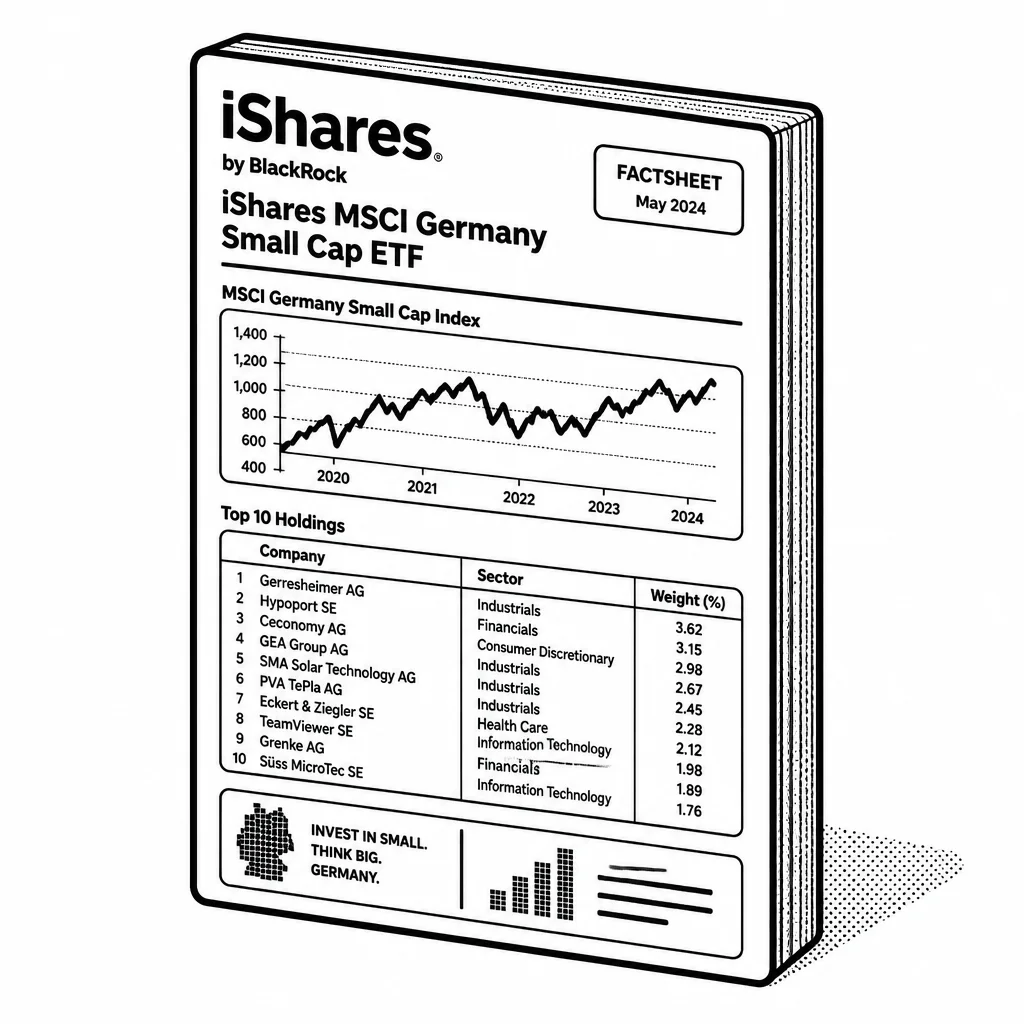
The fund tracks an index called the MSCI Germany Small-Cap Index. That index is built to follow the smaller end of the German stock market — companies far smaller than the household names like Volkswagen or Siemens. The fund simply holds the stocks in that index, roughly in the same proportions, so its value rises and falls with that group of companies. An investor gets diversification across many small German firms in a single trade, rather than betting on one. The companies inside are the kind most people have never heard of: mid-sized industrial suppliers, specialty manufacturers, and service firms that often sell to businesses rather than consumers. Germany's economy leans heavily on these "Mittelstand" companies, the quiet engineering and manufacturing firms that export machinery and parts around the world. Owning this fund is really a bet on that slice of the German economy — the small, export-focused businesses rather than the giant multinationals.
The catch is that small companies can be more sensitive to economic swings than large, established ones, and currency moves between the euro and the dollar add another layer of risk for a U.S. investor. The fund charges an annual expense ratio, a small slice of your investment each year that goes to the issuer, BlackRock's iShares unit, for running the fund. It is a low-cost, hands-off way to add small German stocks to a portfolio — but the returns ride on how those smaller businesses and the broader German economy perform.
Saved answer · last researched 15 Nov 2026