Understand any stock in simple English
Enter a ticker to learn what the company does and how it makes money.
Espey Mfg. & Electronics Corp.
Espey makes rugged power supplies, converters, transformers, and antennas for military and industrial customers.
Espey is a small, old-school manufacturer that builds the electrical gear behind the scenes — the power supplies, converters, transformers, and antennas that keep military equipment and industrial machines running. Its customers are mostly the U.S. military and defense contractors, along with industrial firms. When a Navy ship, a fighter jet's support system, or a radar installation needs clean, reliable power or a signal sent and received, Espey is one of the companies that makes the hardware.
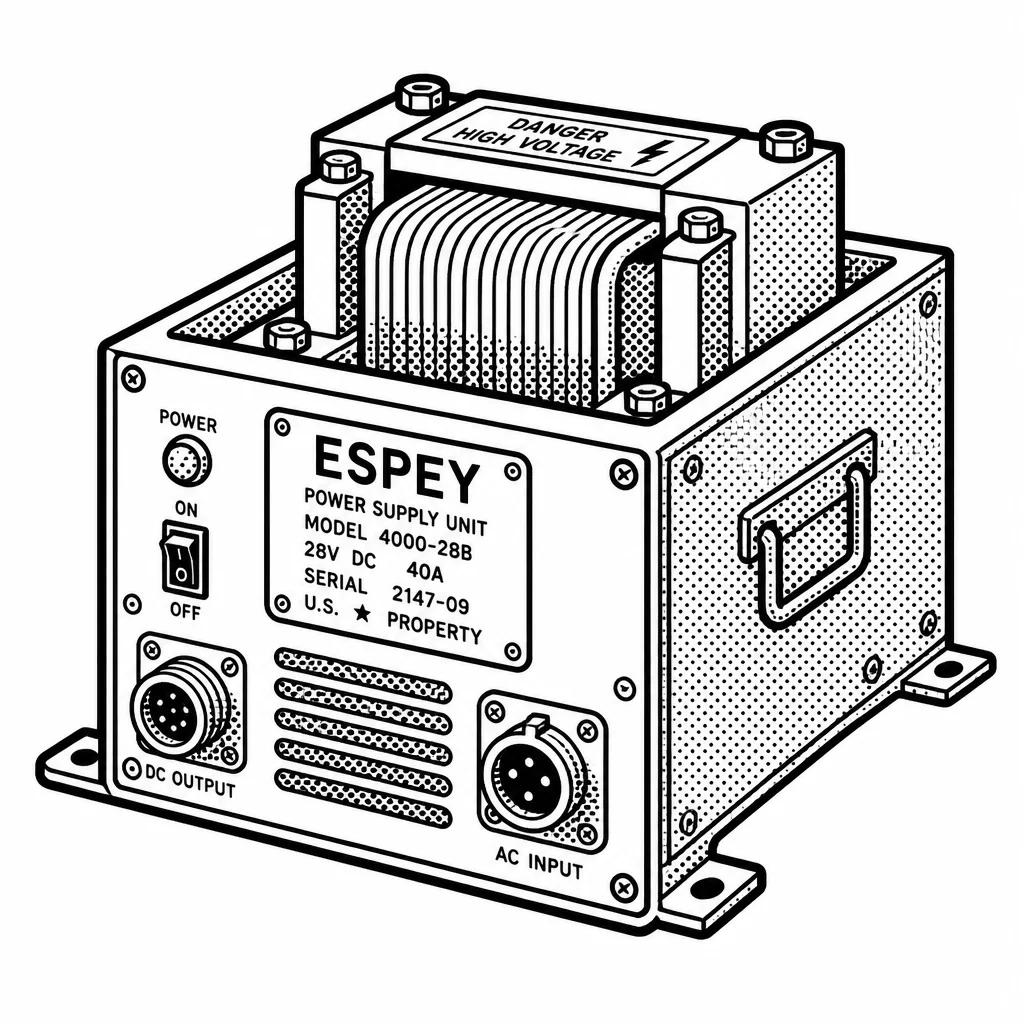
The business is best understood as custom engineering rather than mass production. Espey designs and builds to a customer's exact specifications, often in small batches, and those parts have to survive heat, vibration, salt water, and years of use without failing. That is why customers pay up for it: a cheap power supply that dies in the field is worse than useless on a warship. Once Espey's part is designed into a military program, it tends to stay there for a long time, because re-qualifying a new supplier is slow, expensive, and risky. Espey is a tiny company headquartered in Saratoga Springs, New York, and it has been around since the 1920s. It runs lean, carries little debt, and has historically paid a dividend and bought back shares. The flip side of a small defense supplier is lumpiness: revenue swings with the timing of defense contracts and orders, and a handful of big customers can move the whole business. Its scale also means it competes for attention against far larger defense electronics players, so its edge is niche expertise and long-standing relationships rather than size.
The stock is a curious one — a micro-cap defense supplier with a loyal following among small investors. It is not a growth story in the usual sense; it is a steady, specialized shop whose fortunes rise and fall with defense budgets and the pace of new program awards.
Saved answer · last researched 15 Nov 2026