Understand any stock in simple English
Enter a ticker to learn what the company does and how it makes money.
Enovix Corporation
Enovix makes silicon-anode lithium-ion battery cells that pack more energy into the same space for wearables, phones, laptops, and electric vehicles.
Enovix is a battery company with a simple sales pitch: the same size battery, but more juice. It designs and manufactures lithium-ion cells that use silicon instead of graphite for the anode — the part of the battery that stores lithium ions — because silicon can hold far more energy per gram. That matters most in small devices, where every millimeter counts, so the company's first customers are makers of wearables, smartphones, and laptops, with electric vehicles and other OEMs as the longer-term target.
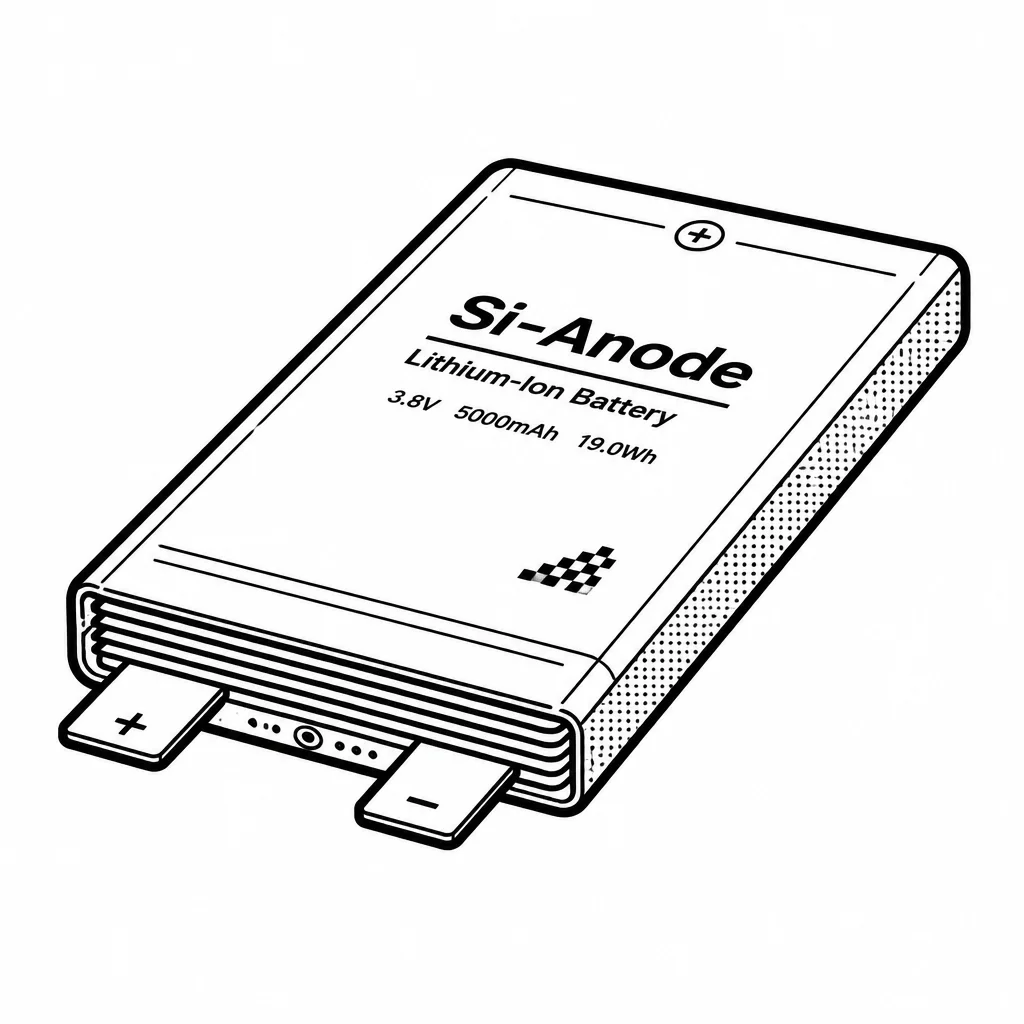
The core problem it solves is that graphite anodes have a physical ceiling, and device makers keep asking for more battery life in thinner products. Silicon swells when it absorbs lithium, which historically cracked cells and killed their lifespan — that's the reason your phone doesn't already have a silicon battery. Enovix's answer is a manufacturing trick: it builds the anode on a rigid silicon wafer and holds the stack under constant physical pressure inside a metal case, so the swelling is contained and the cell survives hundreds of charge cycles. The business model is making and selling cells, not licensing a recipe. That means Enovix carries the heavy costs of a manufacturer — factories, equipment, and the slow, expensive work of proving a new battery design can be made at high volume with low defects. It has been building out production in Malaysia and has had to walk back earlier plans, including dropping a factory in Thailand. This is a company spending heavily to scale before it earns much; it has posted steep losses as it ramps.
The stakes are high because the prize is large. Winning design slots with device makers takes years of qualification testing, but once a battery is designed into a product, it tends to stay there. Enovix is betting that its pressure-based design gives it an edge over other silicon-anode hopefuls and over conventional graphite cells from established players like Panasonic and LG Energy Solution. The honest summary: a real technology with real manufacturing risk, still in the prove-it phase.
Saved answer · last researched 15 Nov 2026