Understand any stock in simple English
Enter a ticker to learn what the company does and how it makes money.
DoubleLine Income Solutions Fund
It is a closed-end fund that pools investor money and lends it out by buying income-producing debt around the world, passing the interest back to shareholders as dividends.
DoubleLine Income Solutions Fund is a closed-end fund, which is a kind of pooled investment that raises money once from investors and then trades on the stock exchange like a single share. An investor buys shares to get a steady stream of monthly income, plus a shot at some capital growth. The fund takes that money and buys debt — bonds and loans from companies and governments around the world — and hands most of the interest it collects back to shareholders as dividends.
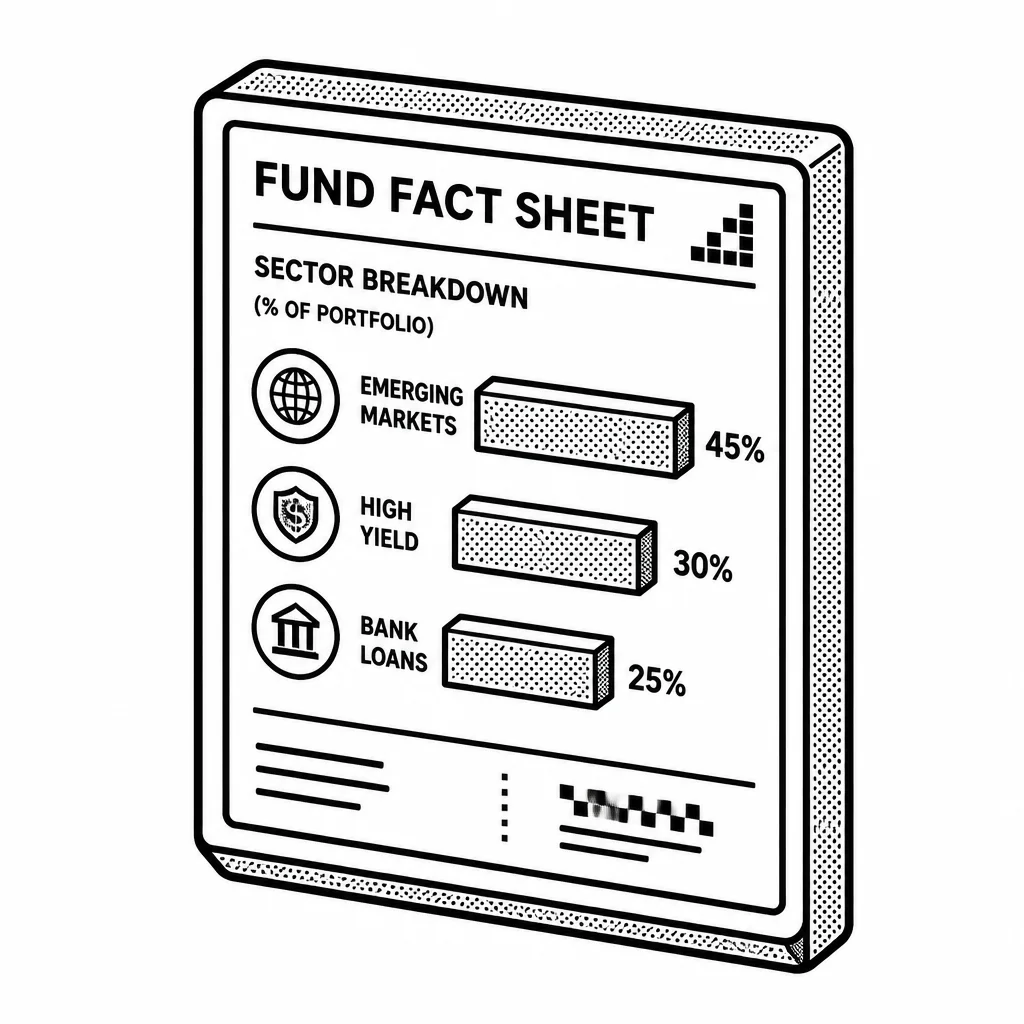
The man behind it is Jeffrey Gundlach, a bond investor famous for calling big turns in the market. He runs DoubleLine Capital, the Los Angeles firm he founded in 2009 after leaving his previous employer. The fund sits inside that empire, and Gundlach's reputation is a big reason people trust it with their savings. The fund leans on his team's skill at picking credit — deciding which borrowers are likely to pay their debts and which are not. What makes this fund different from a plain bond index is its reach. It can buy high-yield "junk" bonds, emerging-market government debt, bank loans, and other slices of the credit market that pay more interest than safe government bonds. That extra yield is the whole point: investors accept more risk in exchange for bigger monthly checks. The trade-off is real. When credit markets seize up, these kinds of bonds can fall hard, and the fund's share price can swing widely.
Closed-end funds have a quirk worth knowing. Unlike ordinary mutual funds, they don't create or redeem shares on demand, so the share price can drift away from the actual value of the fund's holdings. Sometimes it trades at a discount, meaning you can buy a dollar of assets for less than a dollar. The fund also uses borrowed money, known as leverage, to amplify returns — which magnifies gains and losses alike. DoubleLine charges a management fee for running the portfolio, and that cost comes out of investor returns. For someone who wants regular income and is comfortable with credit risk, it is a way to own a professionally managed slice of the global debt market without picking bonds themselves.
Saved answer · last researched 15 Nov 2026