Understand any stock in simple English
Enter a ticker to learn what the company does and how it makes money.
dormakaba Holding AG
dormakaba makes the locks, doors, and electronic access systems that control who gets into buildings and rooms around the world.
dormakaba is a Swiss company that most people walk past every day without noticing. It makes the hardware that controls doors — the locks, handles, hinges, and closers — plus the electronic systems that decide who is allowed through them. Think offices, hotels, hospitals, airports, and apartment buildings. If a door needs to open smoothly, lock securely, or only let certain people in, dormakaba probably sells something that helps.
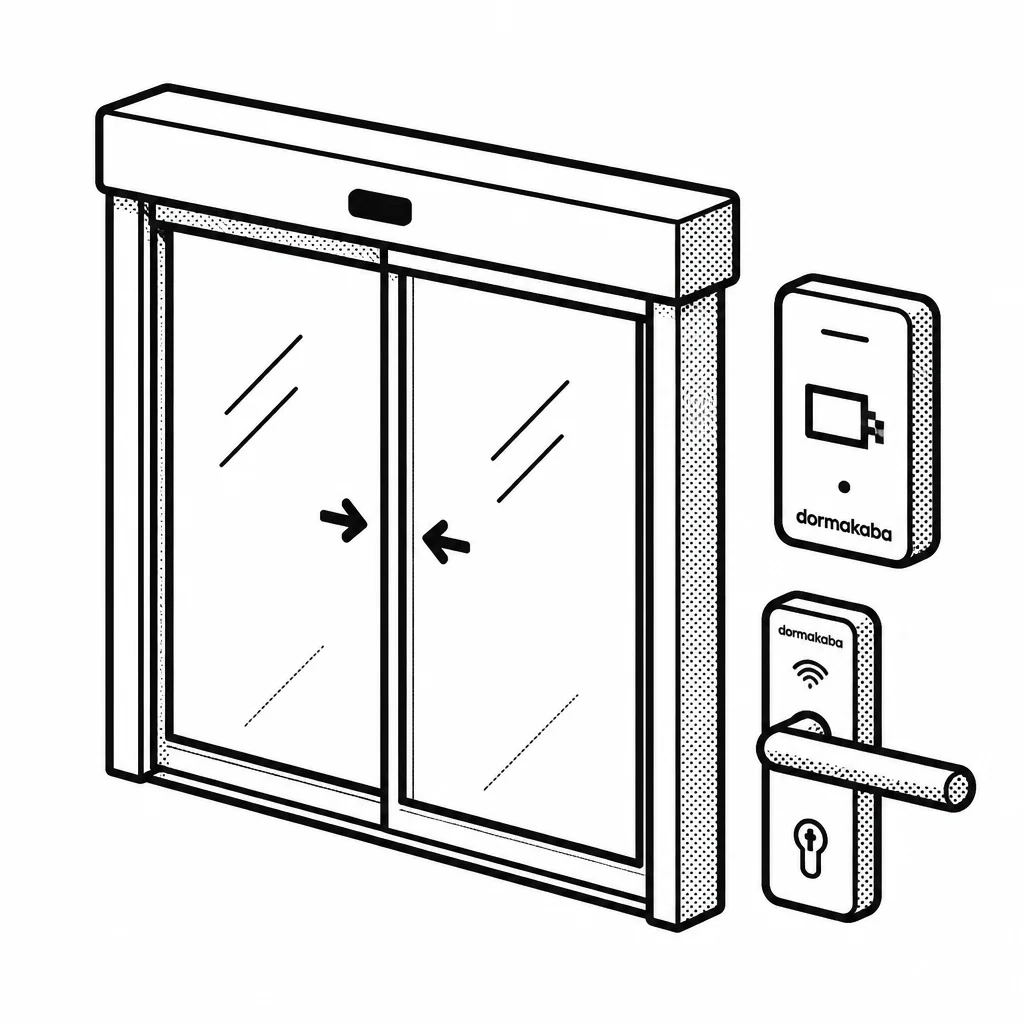
The business splits into two broad halves. One is physical access: mechanical locks, door hardware, and entrance systems like sliding doors and revolving doors that you find at the front of shops and office towers. The other is electronic access, which is where the growth story lives. That means key cards, fobs, smartphone-based entry, and software that lets a building manager control which employees can enter which rooms at which times. This is a subscription-flavored, stickier business than selling a hinge — once a building's security system runs on your software and readers, ripping it out is a headache. Customers are mostly building owners, facility managers, architects, and construction firms, plus the locksmiths and distributors who actually install and stock the products. Big commercial projects choose dormakaba because architects want brands they trust to meet fire and safety codes, and because a broken lock in a busy office is an emergency that someone must answer for. Rivals include Assa Abloy, the Swedish giant that is the clear market leader, along with Allegion Allegion. dormakaba sits as a strong number two in many markets, which means scale advantages in manufacturing and distribution but a constant fight with a bigger competitor. The company was created in 2015 when two old Swiss and German lock makers, Dorma and Kaba, merged, and the name is simply the two jammed together. It is headquartered in Rümlang, near Zurich, which makes sense for a company that grew out of European precision manufacturing. That combination gave it a wide product range from cheap mechanical hardware all the way up to high-security electronic systems, but the merger has not been a runaway success — sales have grown slowly, and the company has had to work through integration and efficiency problems while investing heavily in digital access products.
Like many mature industrial companies, dormakaba generates steady cash and uses it to pay dividends and fund product development, with some bolt-on acquisitions to strengthen its electronic access and entrance-systems offerings. The honest picture is a solid, necessary business that touches millions of doors but faces a bigger, leaner rival and a construction market that rises and falls with the economy. Its future depends on whether it can win the shift from metal keys to digital access — a shift that turns a one-time hardware sale into an ongoing service relationship.
Saved answer · last researched 15 Nov 2026