Understand any stock in simple English
Enter a ticker to learn what the company does and how it makes money.
Dyno Nobel Limited
Dyno Nobel makes and sells the explosives and blasting systems that mining companies use to break rock, plus industrial chemicals and fertilizers.
Dyno Nobel is the company that makes the boom for the world's mines. When a big iron ore or copper mine needs to shatter a wall of rock, it drills holes, fills them with explosives and timing systems, and blows the rock apart so it can be dug up and processed. Dyno Nobel supplies most of that kit — the bulk explosives, the detonators, and the electronic blasting systems that let miners fire hundreds of holes in a precise sequence. It also runs the trucks and crews that load the explosives at the mine site, so customers pay for a service as much as a product.
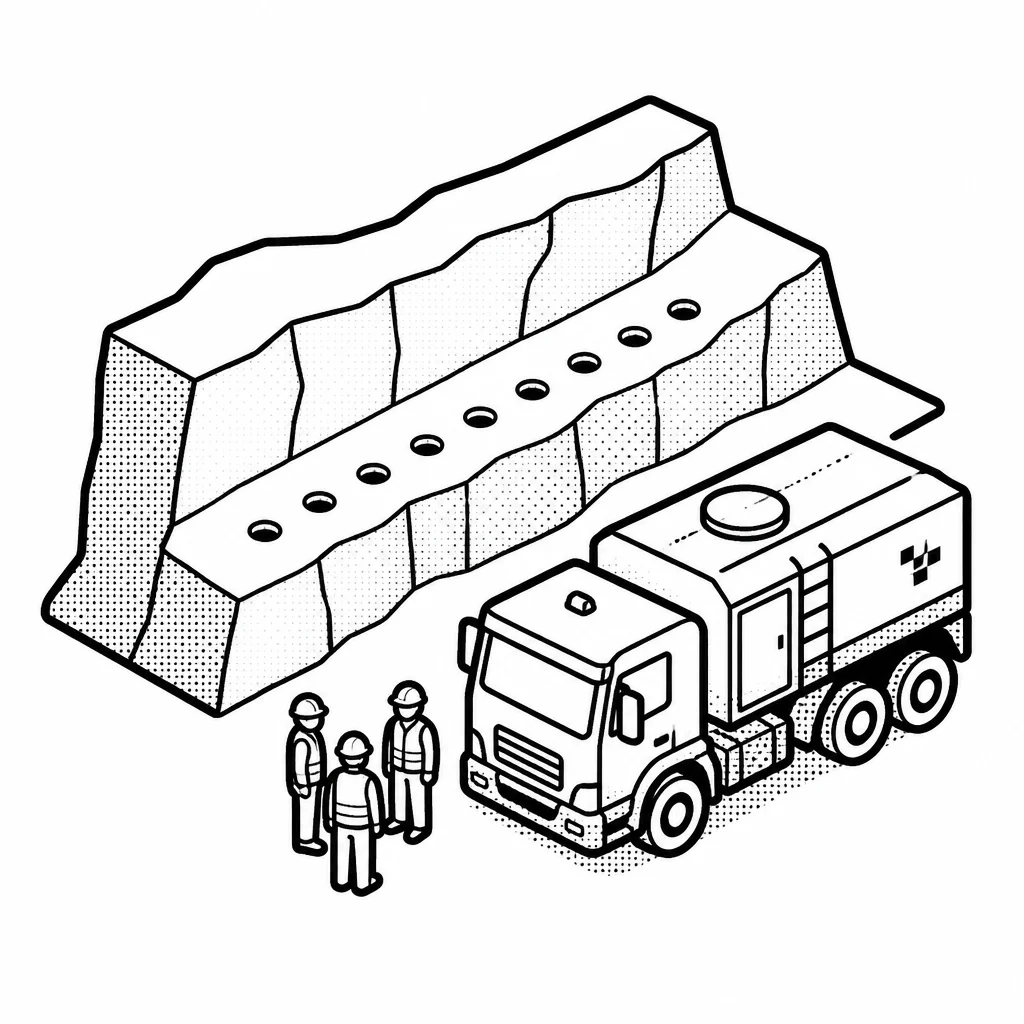
The business splits into two halves. The explosives side, Dyno Nobel, is the big one and sells to mining and quarrying customers across the Americas, Australia, and other resource-heavy regions. The other half is Incitec Pivot Fertilisers, which makes and distributes fertilizers to farmers, mainly in Australia, and also runs some industrial chemicals operations. Fertilizer is a steadier, more agricultural business; explosives rise and fall with mining activity and commodity prices. The company has a genuinely odd history. It used to be called Incitec Pivot, an Australian fertilizer and chemicals firm, and it bought Dyno Nobel in 2008 — inheriting a brand that traces back to Alfred Nobel, the man who invented dynamite and later founded the Nobel Prizes. In 2025 the company renamed itself Dyno Nobel to put the explosives business front and center, after years of shareholders pushing for a split of the fertilizer and explosives arms. It is headquartered in Australia, and its customers are some of the largest mining companies in the world, who value reliable supply and safe handling as much as price.
Explosives is a tough, logistics-heavy business: you cannot ship it casually, storage is tightly regulated, and mines want a supplier who can deliver to remote sites on schedule. That creates sticky relationships and high barriers for newcomers, but it also ties Dyno Nobel's fortunes to mining capex and commodity cycles. The fertilizer side faces its own pressures — global fertilizer prices swing with energy costs and trade flows. The company generates steady cash and has historically paid dividends, while its big strategic question is whether combining explosives and fertilizer under one roof still makes sense.
Saved answer · last researched 12 Nov 2026