Understand any stock in simple English
Enter a ticker to learn what the company does and how it makes money.
DFDS A/S
DFDS runs ferries and door-to-door freight and passenger transport services across Northern Europe.
DFDS is a shipping and transport company that moves two very different things across the water: cargo and people. On the freight side, it runs a network of ferry routes and trucking operations that carry trailers, containers, and goods for manufacturers, hauliers, and freight forwarders. On the passenger side, it operates ferries with cabins, restaurants, and duty-free shops, mostly on overnight and short-sea crossings in the North Sea, the Baltic, and the English Channel. The company is headquartered in Copenhagen and listed on Nasdaq Copenhagen.
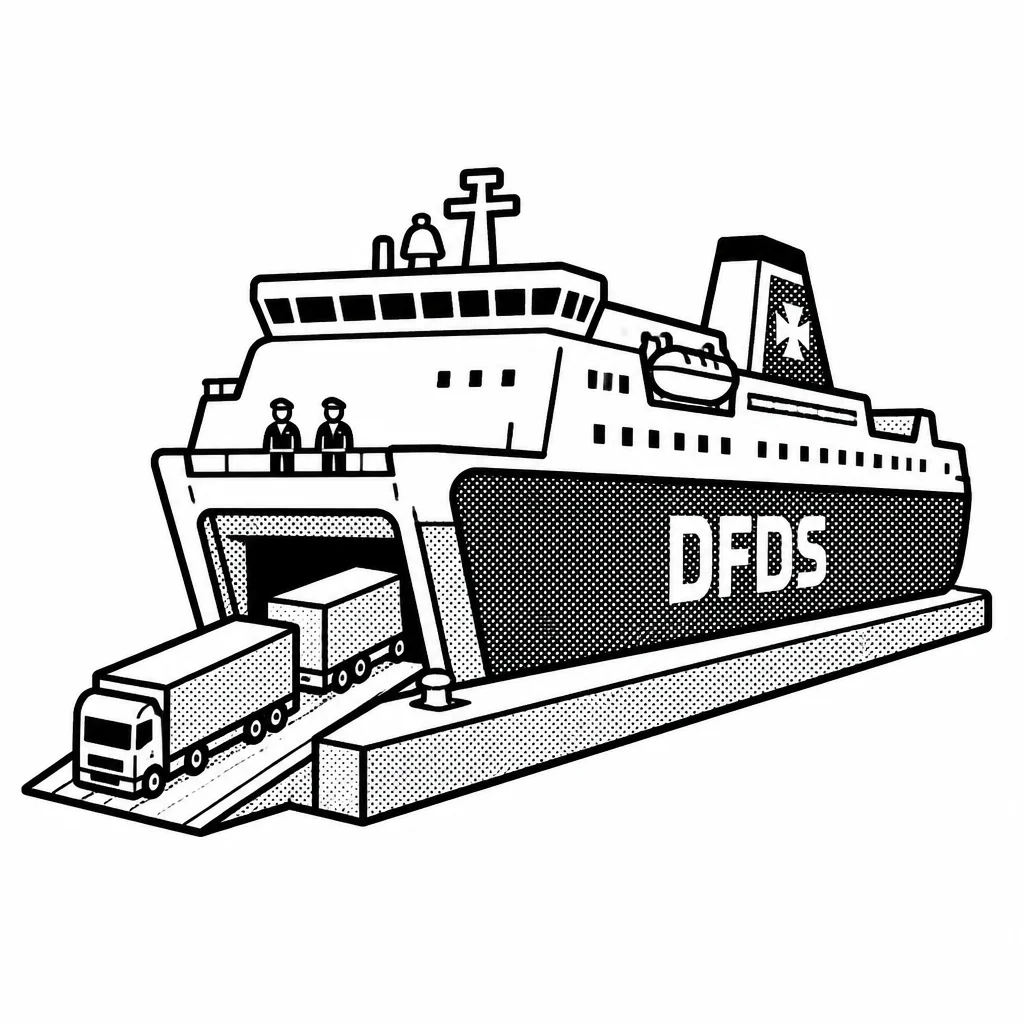
The freight business is the bigger and more important part. DFDS does not just sail ships from port to port; it sells door-to-door logistics. A manufacturer in Germany can hand DFDS a trailer of parts and have it delivered to a factory in the UK or Sweden, with DFDS handling the road legs, the ferry crossing, and the paperwork in between. That makes it a "ro-ro" operator — roll-on, roll-off — where trucks drive their trailers straight onto the ship and off the other side, which is much faster than loading individual crates into a hold. Customers pay for reliability and for one company to take responsibility for the whole journey, rather than stitching together a trucker, a ferry line, and a customs broker themselves. The passenger side is smaller but well known to travellers. DFDS runs routes such as Copenhagen–Oslo, Amsterdam–Newcastle, and crossings between the UK and France, plus a network of routes in the Baltic and Denmark. These ferries make money from cabin bookings, food and drink, and onboard shopping, so a full ship of holidaymakers and a busy freight deck can both feed the same vessel. It also gives the company a consumer brand that most pure freight operators lack.
DFDS's strengths come from its route network and its mix of freight and passengers: freight volumes are steadier and less seasonal than tourist traffic, and the two can share the same ships. Its vulnerabilities are the things that hit any transport business — fuel prices, economic slowdowns that reduce trade volumes, and competition from the Channel Tunnel and low-cost carriers on some routes. The company has also been expanding through acquisitions, buying logistics and ferry businesses to widen its network, which adds scale but also integration risk. In short, DFDS is a bet on Northern European trade and travel: if goods and people keep moving across the region's waters, the ferries stay full.
Saved answer · last researched 12 Nov 2026