Understand any stock in simple English
Enter a ticker to learn what the company does and how it makes money.
D-BOX Technologies Inc.
D-BOX makes motion systems that physically move seats and platforms in sync with movies, video games, and training simulators.
D-BOX Technologies makes the seats move. When an explosion hits in a movie, a race car slides around a corner in a video game, or a pilot trains in a flight simulator, D-BOX's haptic motion systems tilt and shake the seat or platform in sync with what's happening on screen. It's a small Canadian company based near Montreal, Quebec, that sells these motion systems to cinemas, sim racing fans, and simulation and training customers around the world.
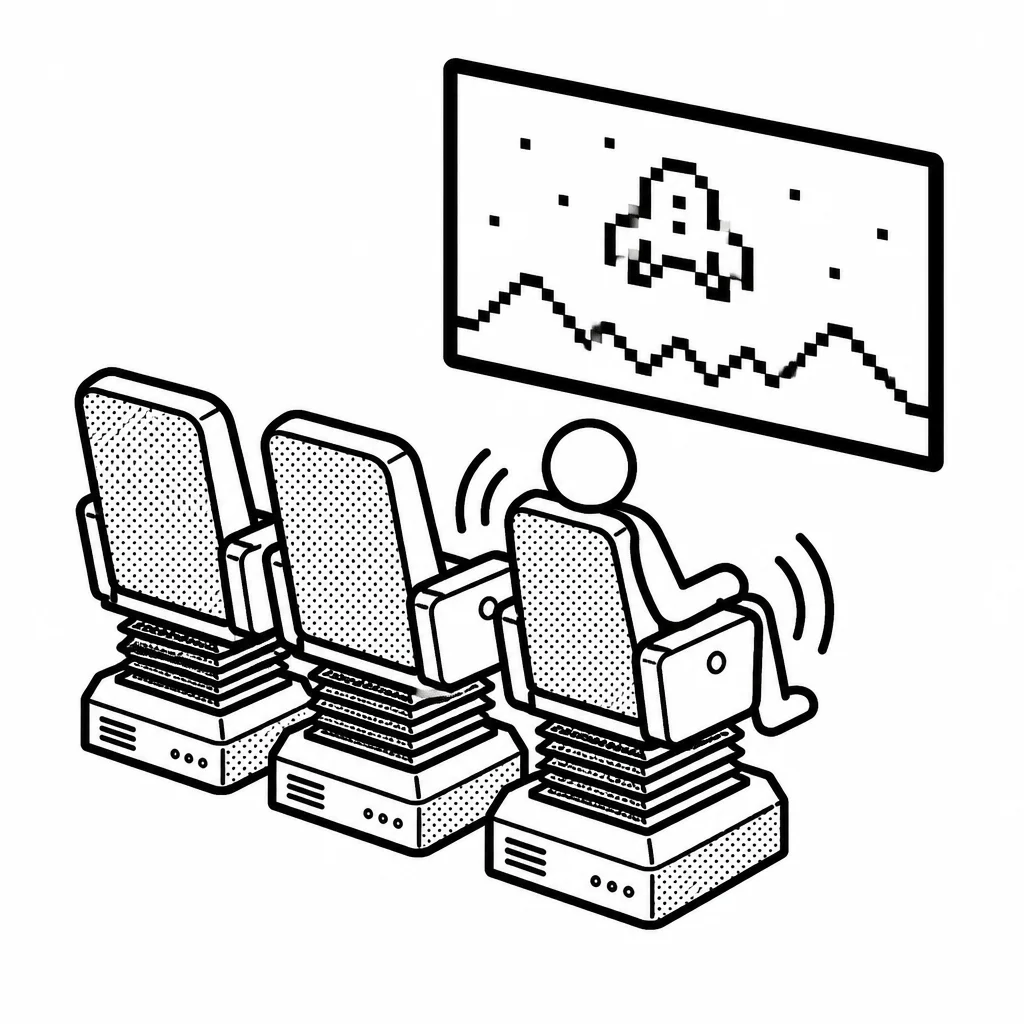
The heart of the product is a compact actuator—a motorized piston—that gets bolted under a seat or platform. Software takes a special motion code embedded in the film or game and translates it into precise movements, so the chair pitches, rolls, and rumbles along with the action. D-BOX sells the actuators, the control electronics, and the motion code itself, then licenses that code library. Its customers are businesses and enthusiasts who want to feel the action rather than just watch it: theatre chains installing premium motion seats, racing fans building home rigs, and professional training operations that use realistic motion to make simulation feel closer to the real thing. The business has had a long, bumpy ride. D-BOX started in the late 1990s with motion systems for theme parks and attractions, then pushed hard into cinemas, hoping motion seats would become a premium upsell that theatres could charge extra for. That bet never scaled the way investors hoped, and the company has cycled through losses and small profits. It has been widening its focus toward sim racing and commercial simulation and training, markets where motion is a tool rather than a novelty. The core challenge is familiar: motion seats are a nice-to-have for most consumers, so growth depends on finding customers for whom realistic movement genuinely matters—racers, pilots, and operators who train on simulators.
Its main competition isn't really other motion-seat makers; it's the fact that most screens work fine without moving. Where D-BOX wins is with customers who will pay for a more physical, immersive experience, and by having a motion-code library that makes its hardware useful out of the box. The company is small, thinly traded, and dependent on a handful of entertainment and simulation markets, which makes it a speculative, niche business rather than a steady compounder. But for the slice of the world that wants to feel the road, the cockpit, or the on-screen crash, D-BOX builds the hardware that makes it happen.
Saved answer · last researched 14 Nov 2026