Understand any stock in simple English
Dave Inc.
Dave is a digital banking app that gives people cash advances, budgeting tools, and checking accounts.
Dave is a banking app for people who live close to the edge of their paycheck. Its most famous feature is a small cash advance — often a few hundred dollars — that a member can take before payday instead of paying a fee at a payday lender or getting hit with an overdraft charge at a traditional bank. The app also offers a spending account, a budgeting tool that tracks upcoming bills, and ways to build credit. Members pay for this mostly through a monthly subscription fee, which is the core of the business.
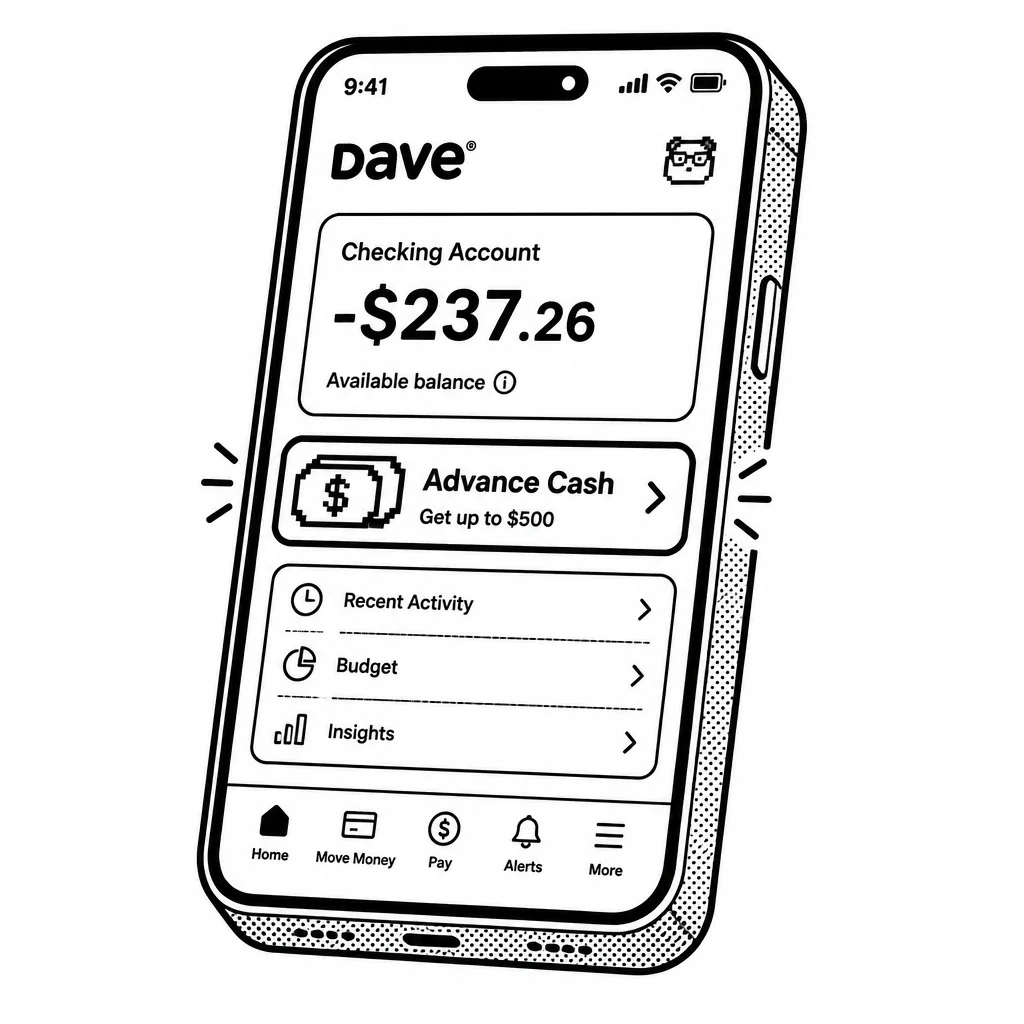
The appeal is speed and simplicity. Signing up takes minutes, there's no credit check, and the money can land in the account quickly. Traditional banks make money when you overdraft, and payday lenders charge steep fees, so Dave positions itself as the friendlier option for the same short-term cash crunch. That framing — a service that feels like it's on the customer's side — is a big part of why people choose it over a big bank. The business is not without sharp edges. Regulators have scrutinized the app's fees and marketing, and the company has had to defend its practices; it reached a settlement with the Federal Trade Commission over allegations around its cash advance practices. Its members are also financially stretched by definition, so the business is sensitive to the job market and to how much spare cash people have. Growth depends on adding members and getting them to use more of the app's features, not just the advance.
Dave makes most of its money from those recurring subscription fees rather than from interest, which makes it look more like a software business than a bank. It doesn't hold the deposits itself — partner banks do that — which keeps its balance sheet lighter and lets it scale without building branches. The big question for investors is whether it can keep members subscribed and paying as it grows, while staying on the right side of regulators who watch the short-term lending space closely.
Saved answer · last researched 17 Nov 2026