Understand any stock in simple English
Enter a ticker to learn what the company does and how it makes money.
Companhia de Saneamento de Minas Gerais
Copasa treats and pipes clean water to homes and businesses in the Brazilian state of Minas Gerais, and collects and treats the sewage that flows back out.
Copasa is a water and sewage company. It pumps clean water into people's taps and carries the dirty water away, serving millions of people across Minas Gerais, a big inland state in Brazil roughly the size of France. Most of its customers are households and businesses, and they pay monthly bills for water and sewage service — money that comes in whether the economy is booming or slow, because people need water every single day.
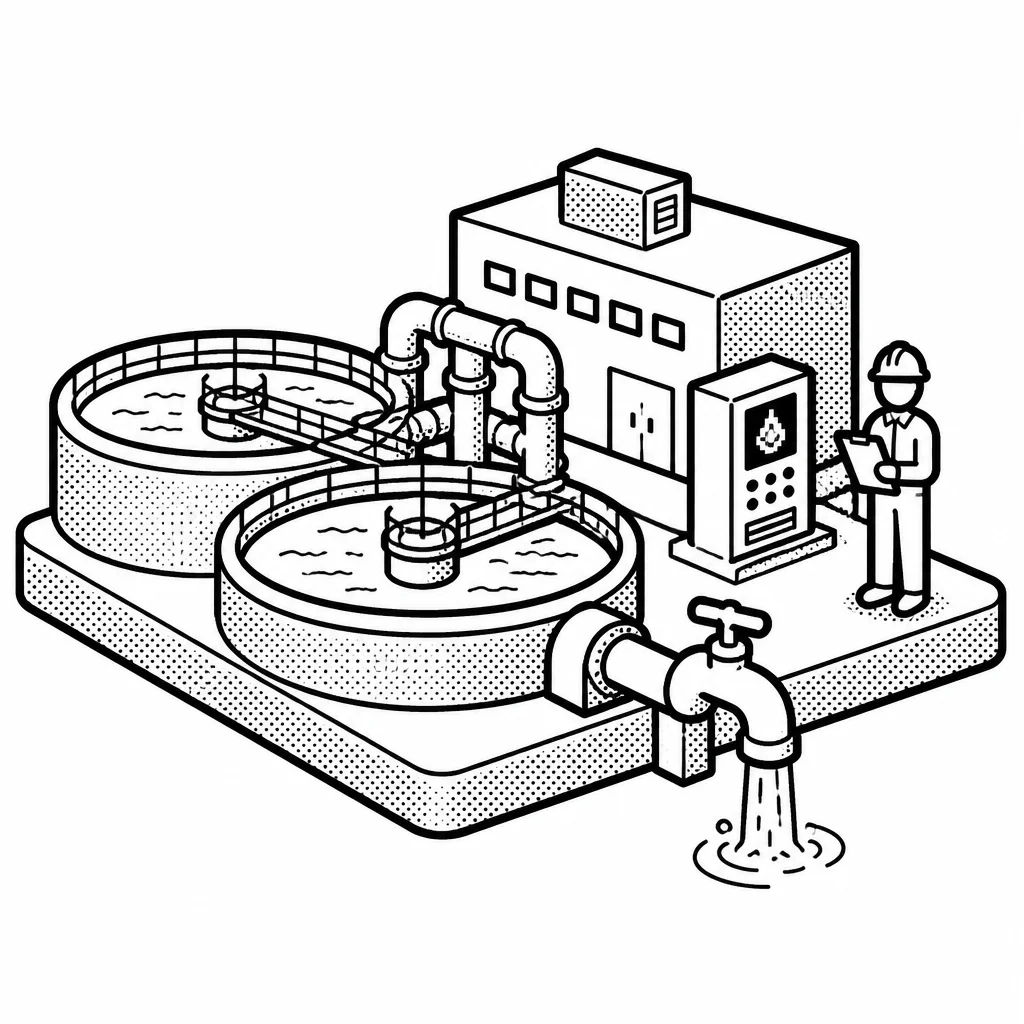
The business is a regulated utility, which means a government agency sets the rules and approves the prices Copasa can charge. That cuts both ways: it keeps revenue steady and predictable, but it also caps how much profit the company can squeeze out of each customer. In exchange for those rules, Copasa gets something valuable — a protected service area. In most of its towns, it is the only water company in town, so it doesn't fight for customers the way a phone company or a bank does. It also collects solid waste in some places and sells a bit of extra services, like building sewage connections, but the core of the money is the monthly water and sewage bill. What makes the business interesting is the gap it's trying to close. Brazil has long struggled to deliver basic sanitation — a huge share of the country still lacks proper sewage collection, and the recent legal overhaul of the sector pushed companies to expand faster and compete for new contracts. For Copasa, that means laying new pipes and treatment plants across growing towns, which costs a lot of money up front and pays back slowly over decades. It's a capital-hungry business: profits mostly get plowed back into pipes, pumps, and treatment plants, and Copasa also pays dividends to its shareholders, which include the state government of Minas Gerais and private investors who own the freely traded shares.
The simple version: it is a steady, boring, essential business with a wide moat around its service territory, but it moves slowly. Growth depends on winning and keeping contracts, keeping regulators happy with prices, and actually finishing the sewage work Brazil still badly needs.
Saved answer · last researched 12 Nov 2026