Understand any stock in simple English
Enter a ticker to learn what the company does and how it makes money.
Cheniere Energy Partners, L.P.
Cheniere Energy Partners owns and runs a giant natural gas export plant in Louisiana that turns gas into a liquid and ships it around the world.
Cheniere Energy Partners owns and operates the Sabine Pass terminal in Louisiana, one of the biggest liquefied natural gas export facilities on the planet. It takes natural gas from pipelines, chills it until it turns into a liquid, and loads it onto specially built ships. That liquid takes up about 600 times less space than the gas version, which makes it cheap to move across oceans.
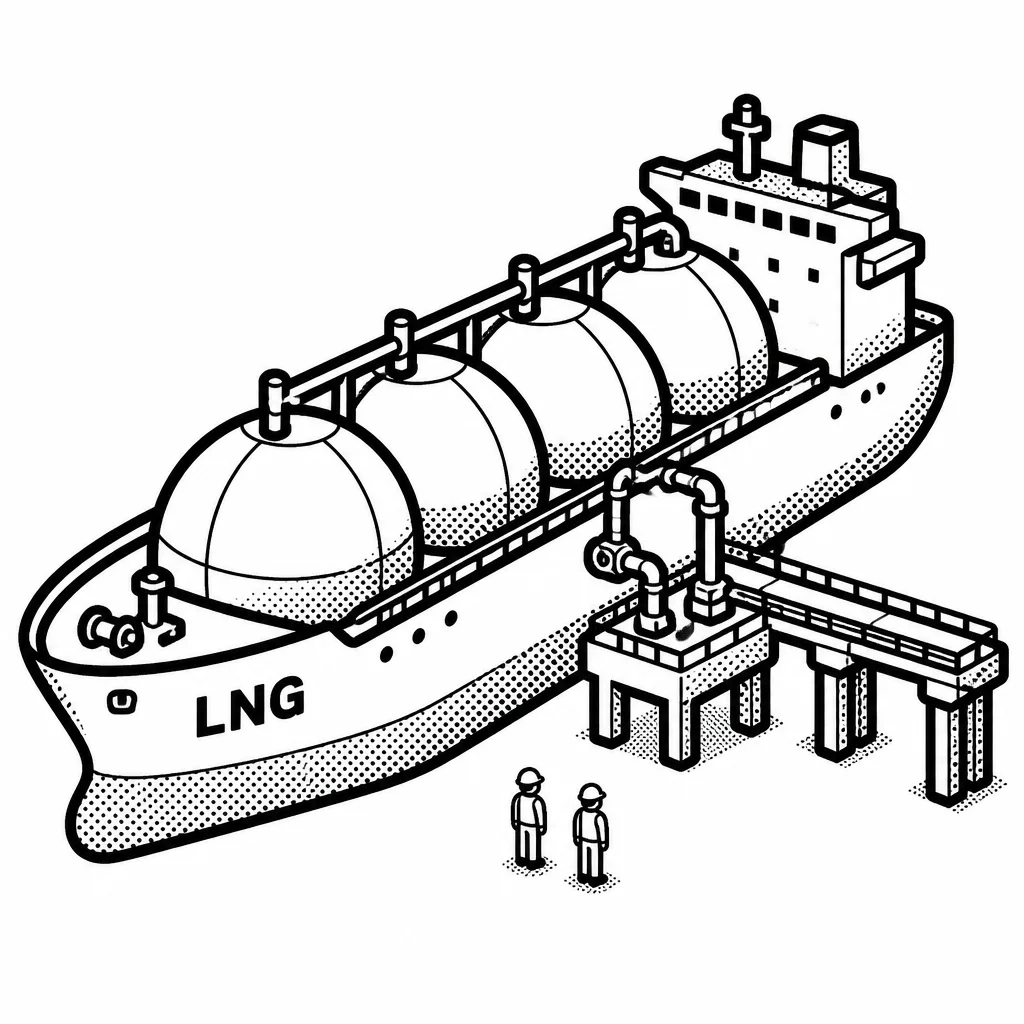
Its customers are energy companies, utilities, and traders around the world, who buy the LNG and ship it to places that need fuel — power plants in Europe, factories in Asia, and heating systems in cold winters. The business model is mostly built on long-term contracts, where buyers commit to paying for a set amount of capacity every year whether or not they actually take the gas. That is a big deal, because it makes the cash flow predictable and helps fund the giant, expensive equipment needed to do this. The partnership structure matters here. Cheniere Energy Partners is a master limited partnership, not a regular corporation, and it is controlled by its parent, Cheniere Energy. It has no employees of its own — the parent runs the operations and gets paid a fee for that. The partnership itself makes money from the terminal's capacity and from the LNG it sells, and it passes most of that cash to the people who own its units in the form of distributions. Why does this matter? The world needs more LNG, especially since Europe cut back on Russian pipeline gas. Sabine Pass sits in a strong spot: it is close to cheap, abundant US shale gas and already has permits to expand. The catch is that the business is incredibly capital-hungry — building a single train, the industry word for one LNG production unit, costs billions — and the whole thing is exposed to natural gas prices, global demand, and the risk of accidents or outages at a plant that is hard to replace.
Liquefying gas is like freezing a river so you can ship it in ice cubes. The trick is that the plant only makes financial sense if you keep it running flat out for decades, which is why those long-term contracts matter so much.
Saved answer · last researched 16 Nov 2026