Understand any stock in simple English
Enter a ticker to learn what the company does and how it makes money.
Coal India Limited
Coal India is the world's largest coal mining company, digging up the fuel that keeps India's power plants and factories running.
Coal India is the giant that literally keeps the lights on in India. It mines coal, sorts it, and sells it to power plants, steel mills, cement factories, and fertilizer makers—the industries that build and feed a fast-growing country. When you flip a switch in India, there's a good chance the electricity behind it started as a lump of rock dug up by this company.
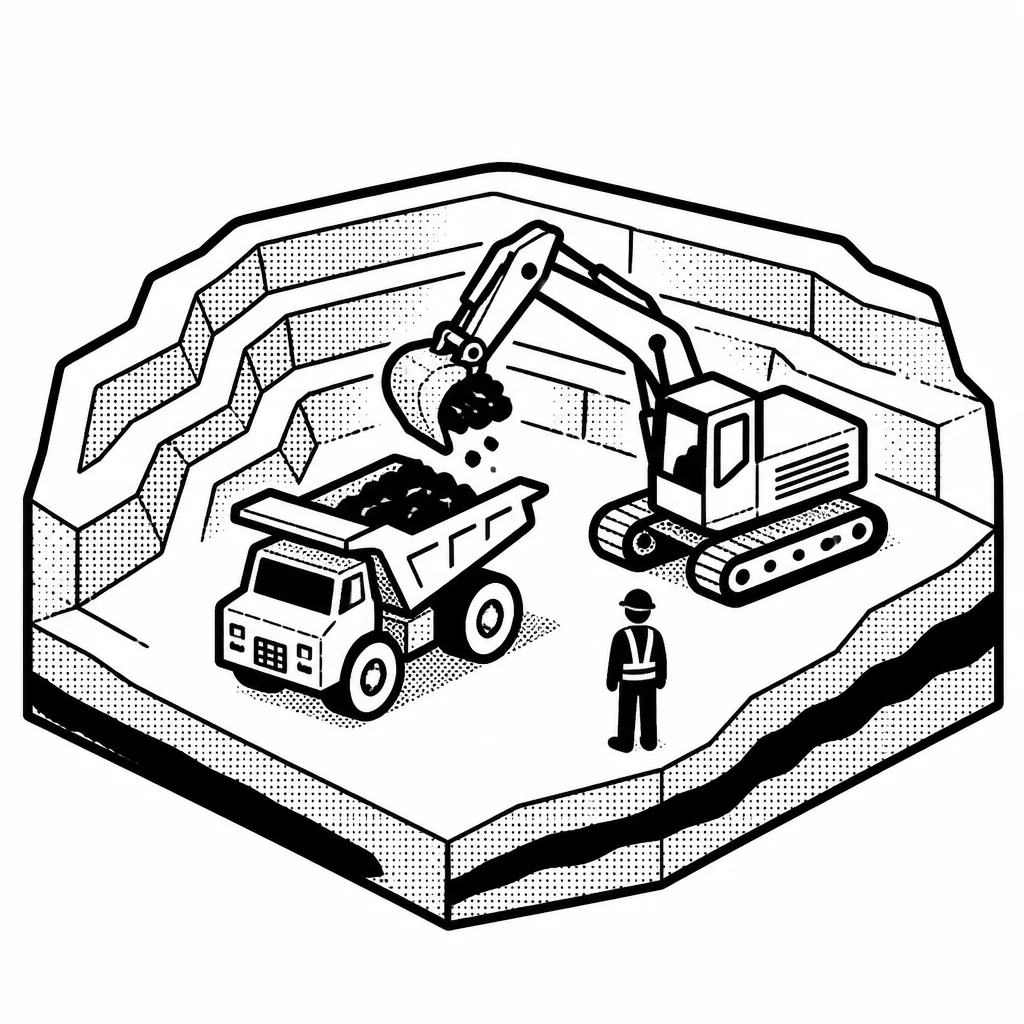
The business is simple in principle: dig coal out of the ground, sell it by the ton. The company runs huge open-pit and underground mines across eastern and central India, then moves the coal by rail and road to its customers. Power plants are the biggest buyers, because coal still produces the majority of India's electricity. Customers stick with Coal India for a blunt reason: it is by far the biggest and cheapest source of the fuel they need, and the alternatives aren't large enough to replace it. What makes the company so powerful is that it sits on enormous reserves and faces little real competition at home—it supplies the great majority of the coal mined in India. But that dominance comes with a very different kind of boss: the Indian government owns roughly two-thirds of the company. Prices are often set with national priorities in mind rather than pure profit, and the company carries a heavy social load, including a huge workforce and commitments to the communities where it mines. It also has to compete with cheaper imported coal and with the slow but real shift toward renewable energy.
Still, Coal India throws off a lot of cash, and it has been handing much of it back to shareholders through fat dividends and share buybacks while investing in expanding mine output and modernizing how coal gets moved. The tension at the heart of the story is easy to see: India needs more energy every year, and coal is the quickest way to get it, but the world is trying to burn less of it. For now, the company remains an essential, cash-rich machine—one whose future depends on how fast India's energy mix changes.
Saved answer · last researched 12 Nov 2026