Understand any stock in simple English
Enter a ticker to learn what the company does and how it makes money.
Canadian National Railway Company
Canadian National Railway runs a huge network of trains that carry freight — everything from grain and lumber to cars and containers — across Canada and the United States.
Canadian National Railway is a railroad. But more precisely, it is a freight railroad: it hauls the heavy stuff that keeps the economy moving. Trains pull grain from Prairie farms, lumber from forests, coal, potash, crude oil, cars, and shipping containers full of manufactured goods. Shippers pay CN to move their cargo, and CN earns money by charging for each carload or container it carries over its tracks.
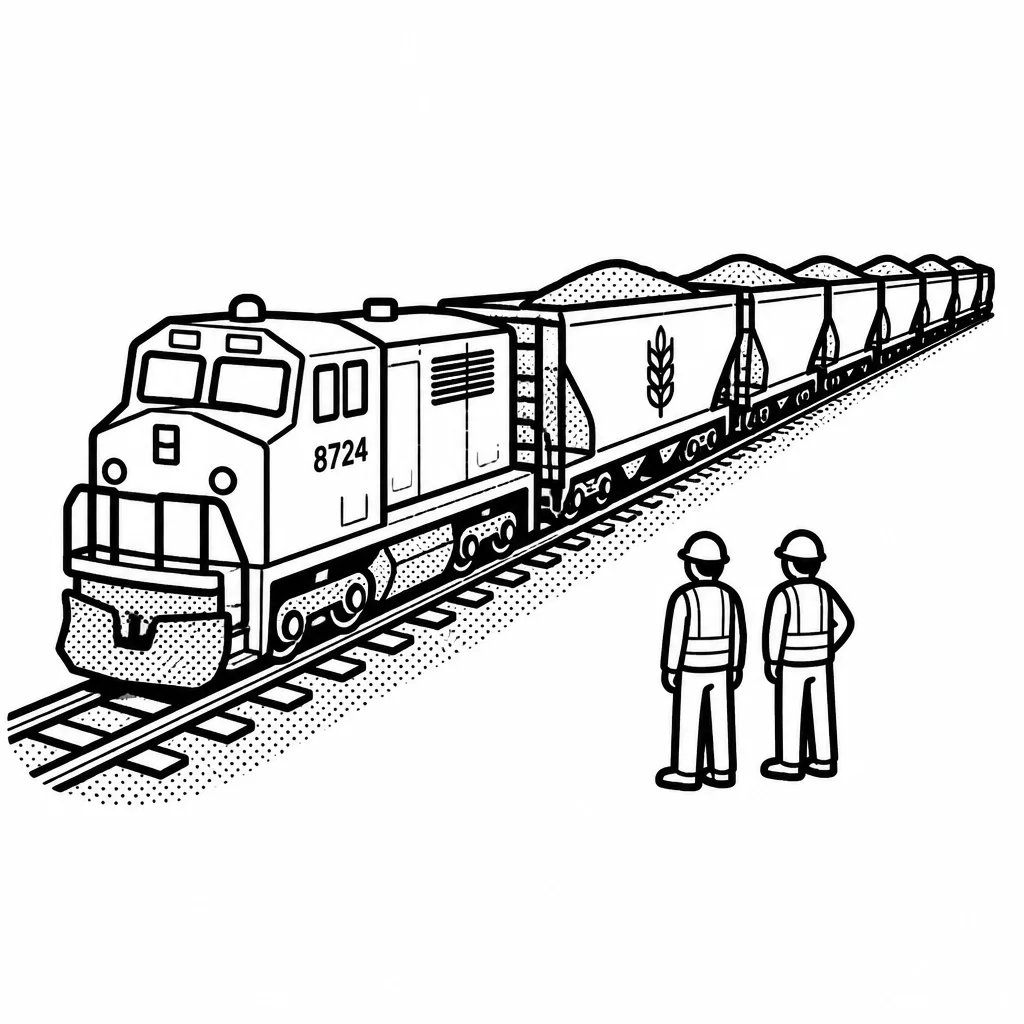
The company's network is its crown jewel. CN owns thousands of miles of track stretching from the Atlantic and Pacific coasts of Canada down into the U.S. Midwest and Gulf Coast, including a line all the way to New Orleans. That reach matters because it lets CN offer something few railroads can: a single-railroad trip from a Canadian port to the American heartland, or from a Chicago factory to a West Coast terminal. For a shipper, fewer handoffs between railroads means fewer delays and less headache. CN also runs an intermodal business, which is a fancy word for moving shipping containers and truck trailers on trains. A container comes off a ship in Vancouver or Halifax, gets lifted onto a flatcar, rides the rails toward Toronto or Chicago, and then a truck takes it the last few miles. CN owns some trucking operations too, and it sells logistics services that help customers plan and track shipments. The company competes mainly with other big North American railroads — Canadian Pacific Kansas City is its fiercest rival in Canada, and Union Pacific, BNSF, Norfolk Southern, and CSX battle it out south of the border. Trucks compete for shorter hauls and for freight where speed matters more than cost.
Railroading is a brutal, capital-hungry business. Laying track, buying locomotives, and maintaining thousands of miles of steel and ties swallows enormous amounts of cash. But once the track is down, each additional train car is cheap to move. That is why railroads obsess over "operating ratio" — the share of revenue eaten by expenses — and why CN has long been considered one of the industry's best-run operators, a reputation built on disciplined spending and a lean workforce. The company generates hefty free cash flow and returns much of it to shareholders through dividends and share buybacks, while also reinvesting in track, terminals, and technology. Its biggest risks are economic: when trade slows or a recession hits, freight volumes fall, and a railroad cannot easily shrink its tracks. Weather, labor disputes, and regulatory fights over things like rail safety and shipping rates can also dent results. Still, CN sits at the center of North American trade, and as long as goods need to move long distances over land, its trains will keep rolling.
Saved answer · last researched 12 Nov 2026