Understand any stock in simple English
Enter a ticker to learn what the company does and how it makes money.
Canadian National Railway Company
Canadian National is a railroad that hauls freight — things like grain, lumber, coal, cars, and consumer goods — across Canada and the United States, and connects to ports and trucking partners to move cargo around the world.
Canadian National is a railroad, but the simplest way to picture it is as a giant conveyor belt stretched across North America. Shippers pay it to move heavy stuff they can't easily send by truck or plane: grain from Prairie farms, lumber from sawmills, coal, potash, crude oil, cars, and the container loads of manufactured goods that arrive at ports. Freight railroads are cheap per ton over long distances, which is why so much of the continent's raw material and bulk cargo rides on steel rails.
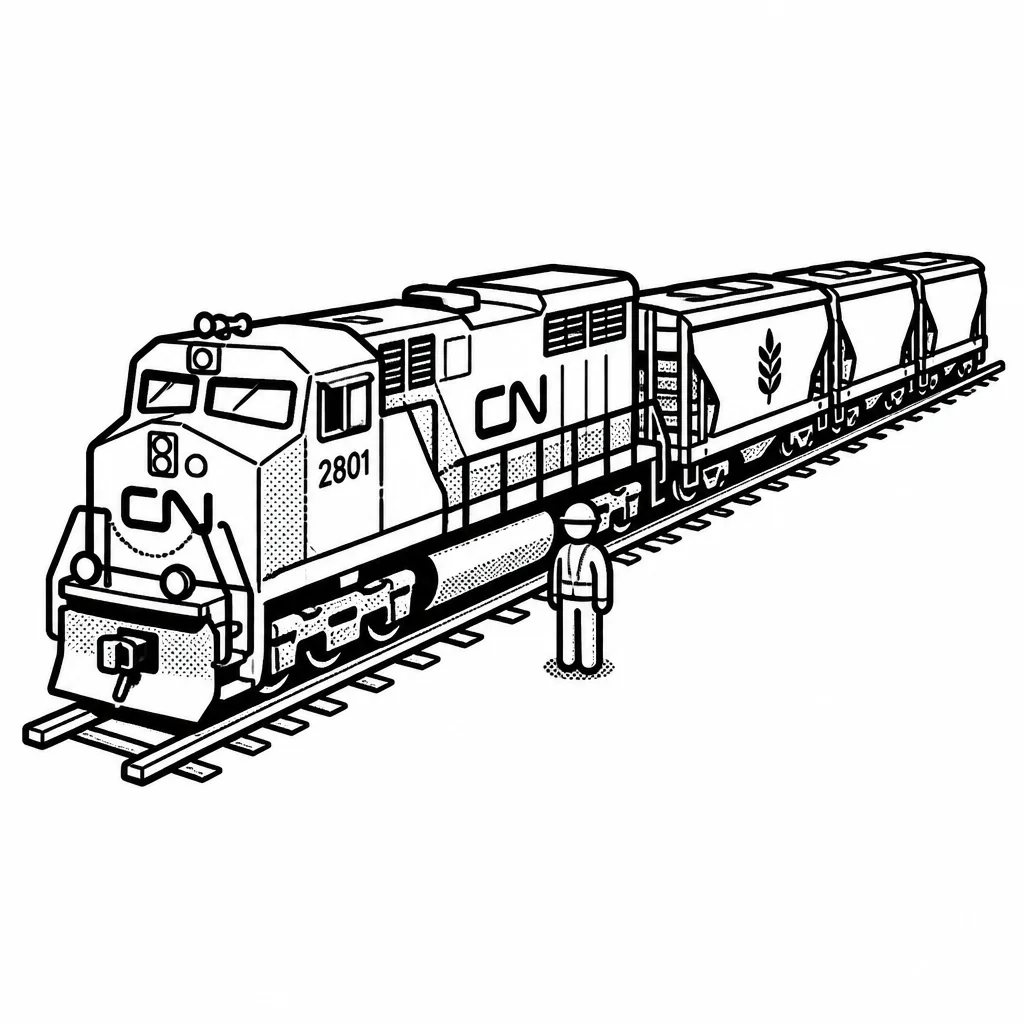
The company runs one of the few rail networks in North America, so most of its customers have a real alternative only in the form of a rival railroad or a truck. Its main competitor is Canadian Pacific Kansas City, which competes on routes through western Canada and the U.S. Midwest, and it also bumps up against big U.S. railroads like Union Pacific and CSX on cross-border traffic. Canadian National's pitch is its network: it reaches three coasts — the Atlantic, the Pacific, and the Gulf of Mexico — which lets it hand off containers between ships and trains and keep freight moving without switching to another railroad. A big part of the business is intermodal, which simply means moving shipping containers that can jump between ship, rail, and truck. Ports on the West Coast and in Eastern Canada feed containers onto Canadian National trains bound for Chicago, Toronto, and beyond, and the railroad also sells trucking and supply-chain services to stitch the pieces together. The company is based in Montreal, and its network stretches from British Columbia to Nova Scotia and down into the U.S. heartland, which is why it calls itself a North American railroad rather than just a Canadian one.
Railroads are capital-hungry: they own thousands of miles of track, locomotives, and railcars, and they spend heavily each year just keeping that network in shape. That spending is a fixed cost, so profits swing with how much freight moves — a weak economy or a bad harvest hurts. Canadian National has also had to deal with labor disputes and service complaints from shippers, reminders that a railroad is only as good as its reliability. When it does well, it throws off plenty of cash, which it uses to pay dividends, buy back shares, and invest in the network.
Saved answer · last researched 15 Nov 2026