Understand any stock in simple English
Cimpress plc
Cimpress mass-produces customized printed products like business cards, signs, and clothing for small businesses and consumers through brands such as Vistaprint.
Cimpress is the company behind those cheap custom business cards, T-shirts, and banners you see advertised online. Through its best-known brand, Vistaprint, it sells printed products to small business owners and ordinary people who want a logo on a mug or a sign for their shop. It does this at huge scale, which is the whole trick: one small order is expensive to make, but millions of tiny, different orders made together become a real business.
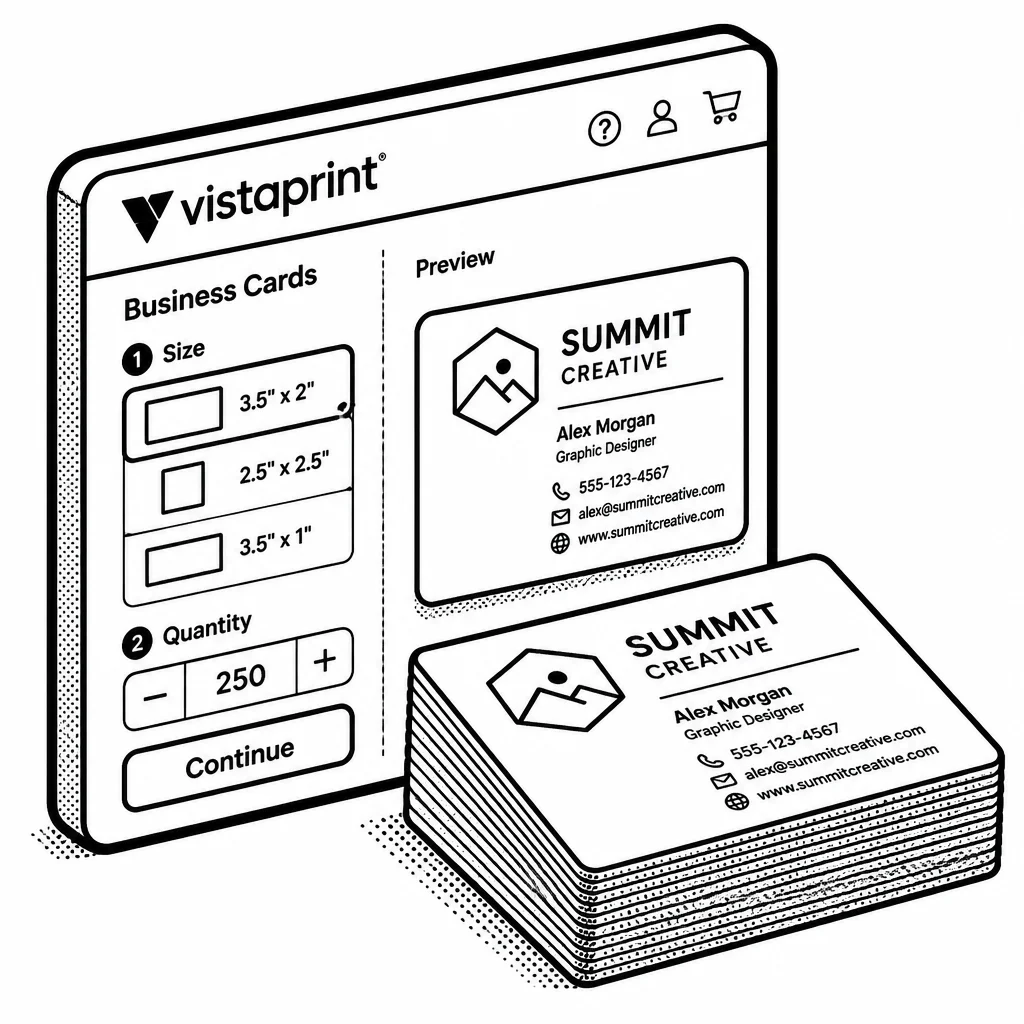
The core idea is mass customization. Instead of printing ten thousand identical flyers, Cimpress prints a huge pile of products that are all different, because each customer designs their own. Software automates the design step, the order flows straight into factories, and machines handle the printing, cutting, and shipping. That lets it sell short runs at low prices that a traditional print shop can't match. Its main customers are micro-businesses — the one-person shop, the corner café, the small online seller — and everyday consumers buying things like wedding invitations, photo gifts, and personalized clothing. Cimpress runs several brands rather than just one. Vistaprint handles the small-business and consumer printing; other parts of the group serve larger customers and specialized print needs, such as signage and promotional products. The company is a serial acquirer, buying up smaller printing and custom-product businesses and letting them keep their own names while sharing the factory and software engine underneath. It is headquartered in Ireland and listed on NASDAQ, though its operations and roots reach back to the Vistaprint business founded in the Netherlands.
The business is strong on scale and automation but not on fat profits. Printing is a low-margin, competitive trade, and customers can easily switch to a rival online printer or a local shop. Cimpress has invested heavily in its factories and software to keep prices low and squeeze out cost, and it has spent years buying back its own shares, which management argues is the best use of its cash. The bet is that owning the whole pipeline — from the website where you design a card to the press that prints it — keeps it cheaper than everyone else.
Saved answer · last researched 17 Nov 2026