Understand any stock in simple English
Enter a ticker to learn what the company does and how it makes money.
Capricorn Metals Ltd
Capricorn Metals is an Australian gold miner that digs gold out of the ground at its mines in Western Australia and sells it to buyers around the world.
Capricorn Metals is a gold miner. It finds gold in the ground, builds and runs the mines that pull it out, and sells the finished gold into global markets where the price is set every day. It owns two working mines in Western Australia: Karlawinda, which started producing in 2021, and Mt Gibson, which it bought in 2025.
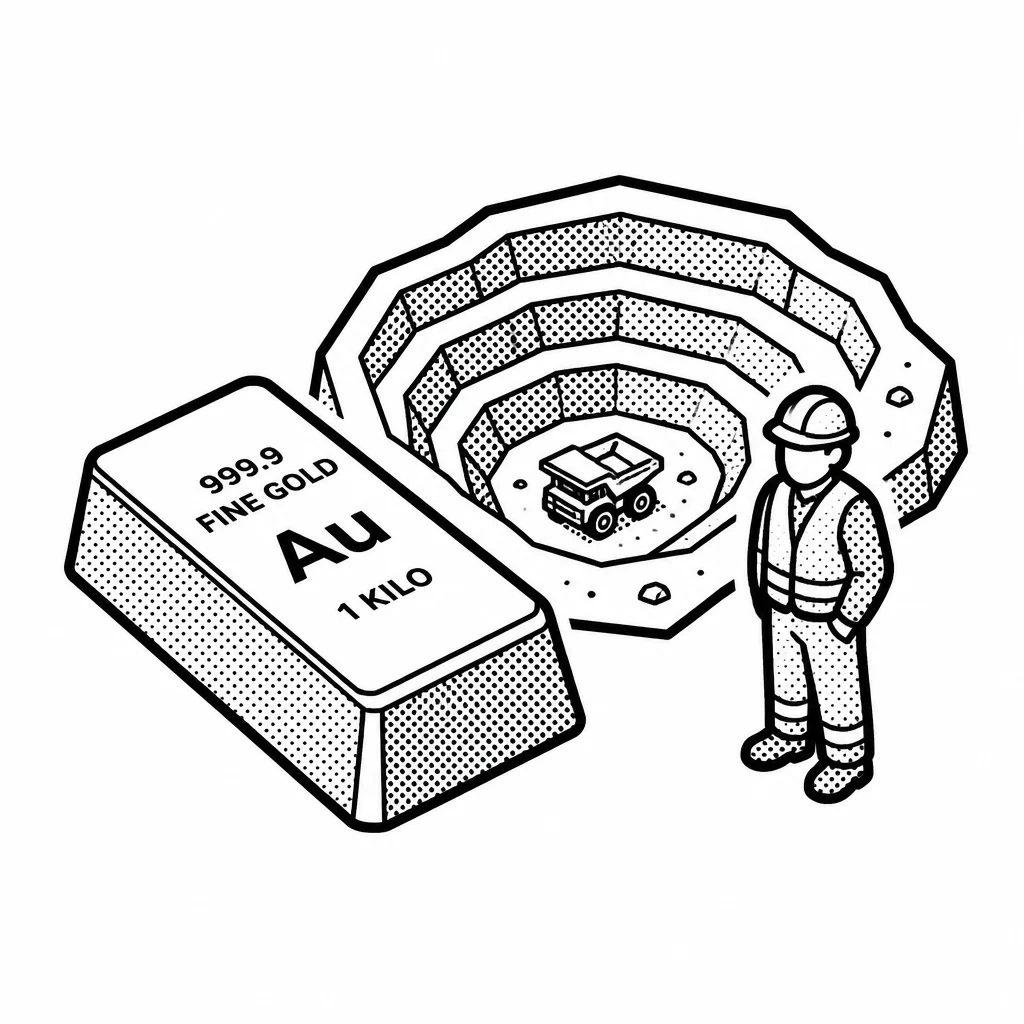
The business is simpler than it sounds. Gold is a commodity — one ounce is worth the same no matter who dug it up — so Capricorn cannot charge a premium for its gold or win customers with a better product. What it can control is cost. The cheaper it can mine each ounce, the more profit it keeps when it sells at the going price. That is why the company's yearly production totals and its "all-in sustaining cost" per ounce matter far more than any marketing. Karlawinda is the engine. It is an open-pit mine, meaning the gold sits near the surface and trucks haul the ore out of a big pit rather than workers tunneling underground. Mt Gibson is a former mine site that Capricorn bought and got back into production, and it adds a second source of gold and a longer runway of future output. Two mines in the same region share know-how and infrastructure, which helps keep costs down. Gold miners are price takers, not price makers. When gold prices are high, Capricorn can be wildly profitable; when they fall, the same mine can suddenly look expensive. Its main vulnerability is that it sells a product it cannot differentiate, so its fate swings with the gold price, the Australian dollar, and how smoothly its pits keep running. Its strength is that Australia is one of the safest, most stable places in the world to mine, and the company owns real, producing assets that generate cash.
For investors, the appeal is leverage to the gold price: hold Capricorn and you get a business whose profits can rise sharply when gold rallies, without the company having to invent anything new. The cash it generates typically goes back into exploration to extend mine life, into keeping the operations running, and potentially into dividends or new acquisitions — the classic cycle of a mid-tier gold producer trying to grow into a bigger one.
Saved answer · last researched 12 Nov 2026