Understand any stock in simple English
Enter a ticker to learn what the company does and how it makes money.
Cellebrite DI Ltd.
Cellebrite sells software that helps police and investigators pull data off phones and computers and turn it into usable evidence.
Cellebrite makes software for investigators who need to get inside a phone. When police seize a suspect's handset, or a company needs to understand what happened on a laptop, Cellebrite's tools extract the messages, photos, location logs, and app data — then organize it all so a detective or analyst can actually make sense of it. Its customers are mostly law enforcement, government agencies, and increasingly enterprises doing internal investigations.
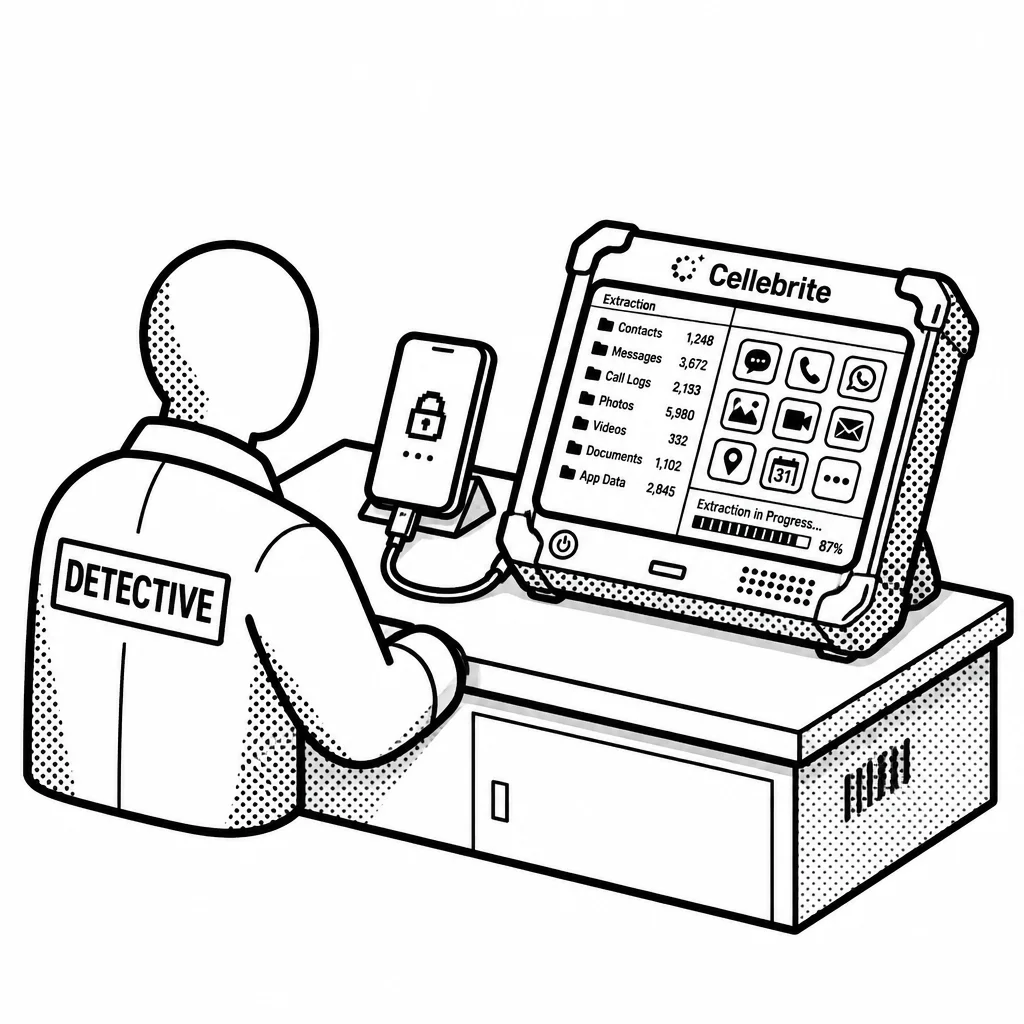
The business has two main parts. The first is digital forensics: plugging into devices and pulling out the data, even when the device is locked or damaged. The second is what Cellebrite calls intelligence — software for police to collect and analyze digital evidence across many cases, like connecting a suspect's movements across a city. In plain terms, it sells both the crowbar and the filing cabinet. It makes money by licensing software and selling devices and support contracts, largely to agencies that renew every year, which makes the revenue fairly predictable. Its position is strong because switching costs are high. Once a police department builds its evidence workflow around Cellebrite's tools and trains its people on them, moving to a rival is painful. A big strategic bet is "Case-to-Closure," its push to sell a single connected platform rather than a pile of separate tools. The company has grown through acquisitions, including the 2024 purchase of Cybercheck, a platform that gathers open-source and online intelligence — the stuff people leave lying around in public — to support investigations.
There is a real tension in this business. The same tools that crack cases can also be used to pry into phones in countries with poor human rights records, and Cellebrite has faced criticism over sales to repressive governments and over how it handles security flaws in its own products. It also sits between two worlds: privacy advocates who distrust device extraction, and police who say they need it to solve crimes. The company leans on the fact that courts increasingly demand digital evidence, and it argues its tools come with oversight. Whether that balance holds as AI gets folded into investigations is the question that will shape its next chapter.
Saved answer · last researched 14 Nov 2026