Understand any stock in simple English
Enter a ticker to learn what the company does and how it makes money.
Global X AI Semiconductor & Quantum ETF
It is an exchange-traded fund that lets investors buy a basket of companies working on AI chips and quantum computing in one trade.
This is a basket, not a business. Global X AI Semiconductor & Quantum ETF is a fund that trades on Nasdaq, and what an investor buys is a single share that holds a whole collection of companies tied to two big ideas: the chips that power artificial intelligence, and the strange, early-stage machines called quantum computers. Instead of picking one winner in either field, you own a slice of many at once.
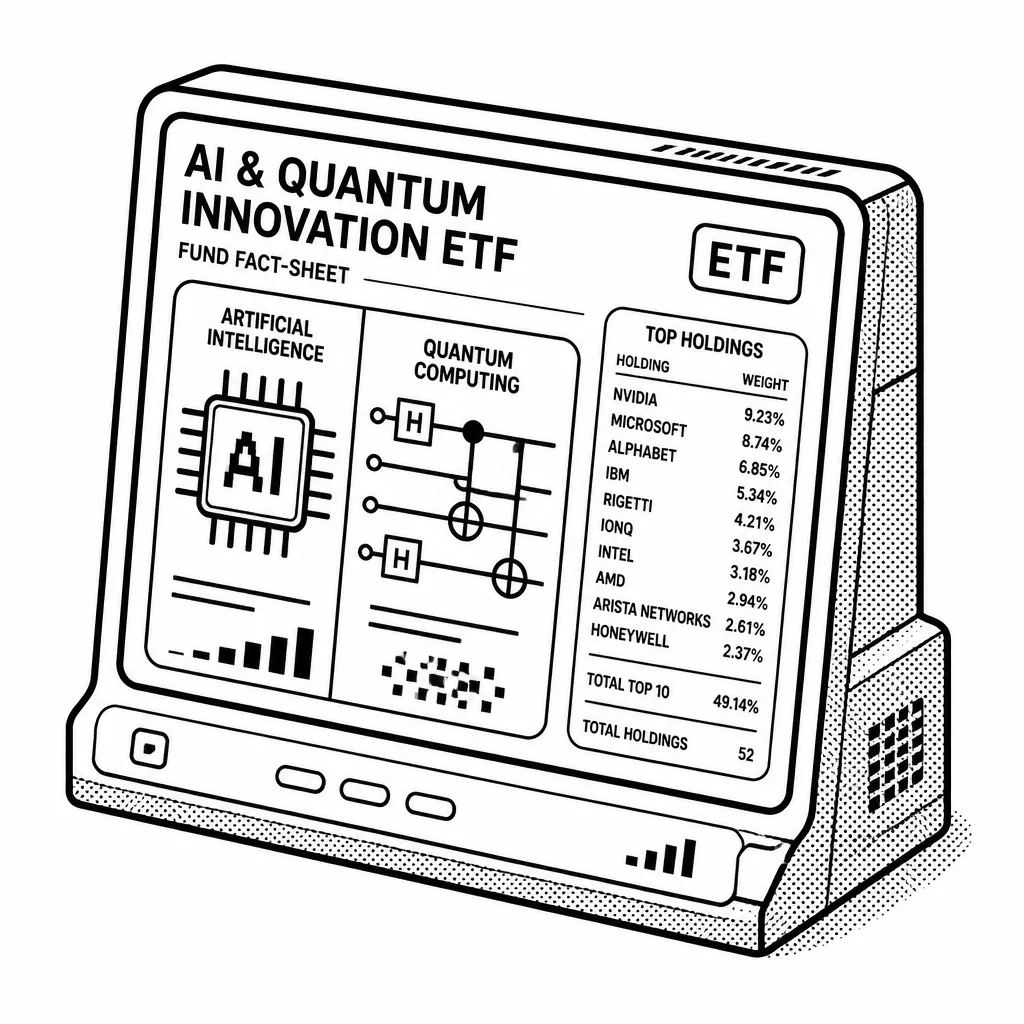
The fund's job is simple. It tracks an index — a rules-based list — of companies whose main work is designing or making semiconductors used for AI, or building the hardware and software behind quantum computing. Those are two very different bets. AI chips are a real, booming market today, with companies like Nvidia and AMD selling the hardware that trains and runs AI models. Quantum computing is much earlier: it uses the odd physics of tiny particles to try calculations that ordinary computers can't handle, and it may take years before it earns serious money. Putting both in one fund lets an investor own the cash-generating present and the speculative future side by side. The fund charges a yearly fee, taken quietly out of the fund's assets, and that fee is the main way its issuer, Global X, makes money. The investor's return comes from how the underlying stocks perform, minus that fee. Because the fund holds a focused set of companies in fast-moving tech, it can swing hard in price — great in a chip rally, painful in a selloff. It is a way to spread a bet across an entire theme rather than betting on one company.
The appeal is convenience: one ticker, one trade, instant exposure to dozens of firms across two frontiers of computing. The catch is that the theme is narrow, so the fund rises and falls with hype and fear around AI and quantum far more than the broad market does. Anyone buying it should understand they are making a concentrated wager on two technologies, one profitable today and one still mostly a promise.
Saved answer · last researched 16 Nov 2026