Understand any stock in simple English
Enter a ticker to learn what the company does and how it makes money.
Cegedim SA
Cegedim makes software and digital services that help healthcare and insurance professionals manage their businesses and data.
Cegedim is a French company that sells the behind-the-scenes software that doctors, pharmacists, hospitals, and insurance companies rely on to get through their day. If a doctor in France opens a patient file, fills a prescription, or books a follow-up appointment, there's a decent chance the software doing that work comes from Cegedim. The company also handles the data side of healthcare — helping insurers process claims and giving the industry tools to make sense of medical and business information.
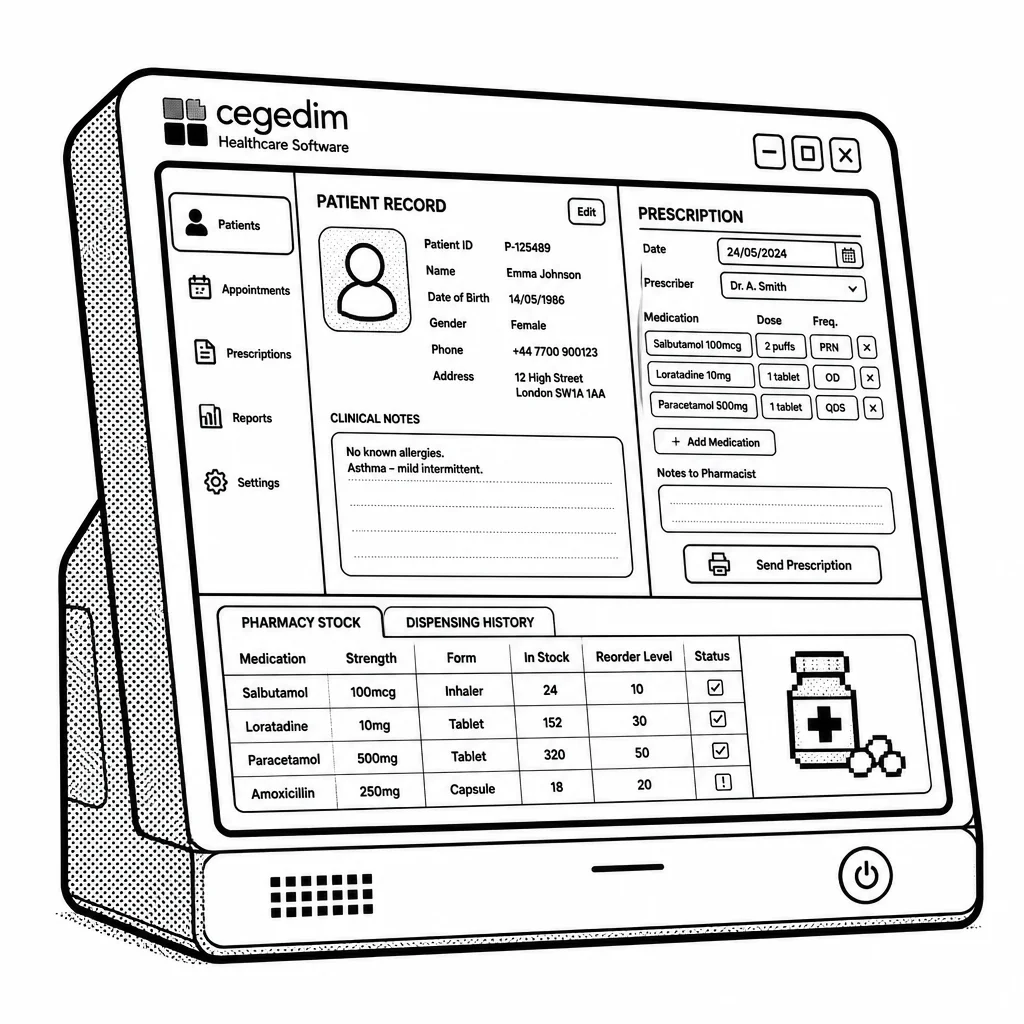
The business runs on two big pillars. One is healthcare software and services: practice-management tools for doctors and pharmacies, hospital systems, and the digital plumbing that lets patient data move around securely. The other is insurance and data services, where Cegedim helps life and health insurers handle claims and manage the immense flow of paperwork that comes with them. Both sides share the same basic idea: sell specialized, hard-to-replace software on subscription or long-term contracts, so revenue keeps rolling in year after year even when nobody's talking about it. Cegedim grew up around the pharmaceutical industry — for years its biggest business was tracking what drugs doctors prescribed and selling that intelligence to drugmakers. That changed in 2019, when it sold that data business to Ipsos for big money, and used the windfall to pay down debt and double down on healthcare software and insurance services. The move made the company simpler and more focused, though it also made it smaller and more dependent on the European healthcare market, especially France, where it's headquartered near Paris.
The competitive picture is mixed. Cegedim has deep roots and loyal customers in France, and switching the software that runs a medical practice is painful and expensive, which locks customers in. But it's up against larger players like Dassault Systèmes in healthcare tech and a crowded field of software rivals across Europe. The company doesn't pay a dividend and has historically leaned on acquisitions to grow, though its profits have been thin, and it carries meaningful debt. It's a steady, unglamorous business — the kind that quietly keeps the healthcare system running.
Saved answer · last researched 14 Nov 2026