Understand any stock in simple English
Enter a ticker to learn what the company does and how it makes money.
Capstone Energy+, Inc.
Capstone Energy+ is an energy company that builds and operates power projects and sells electricity and related services to utilities and large customers.
Capstone Energy+ is a power company. It develops, owns, and operates electricity-generating projects — mostly renewable and flexible generation assets — and sells the output to utilities, industrial customers, and other big electricity buyers under long-term contracts.
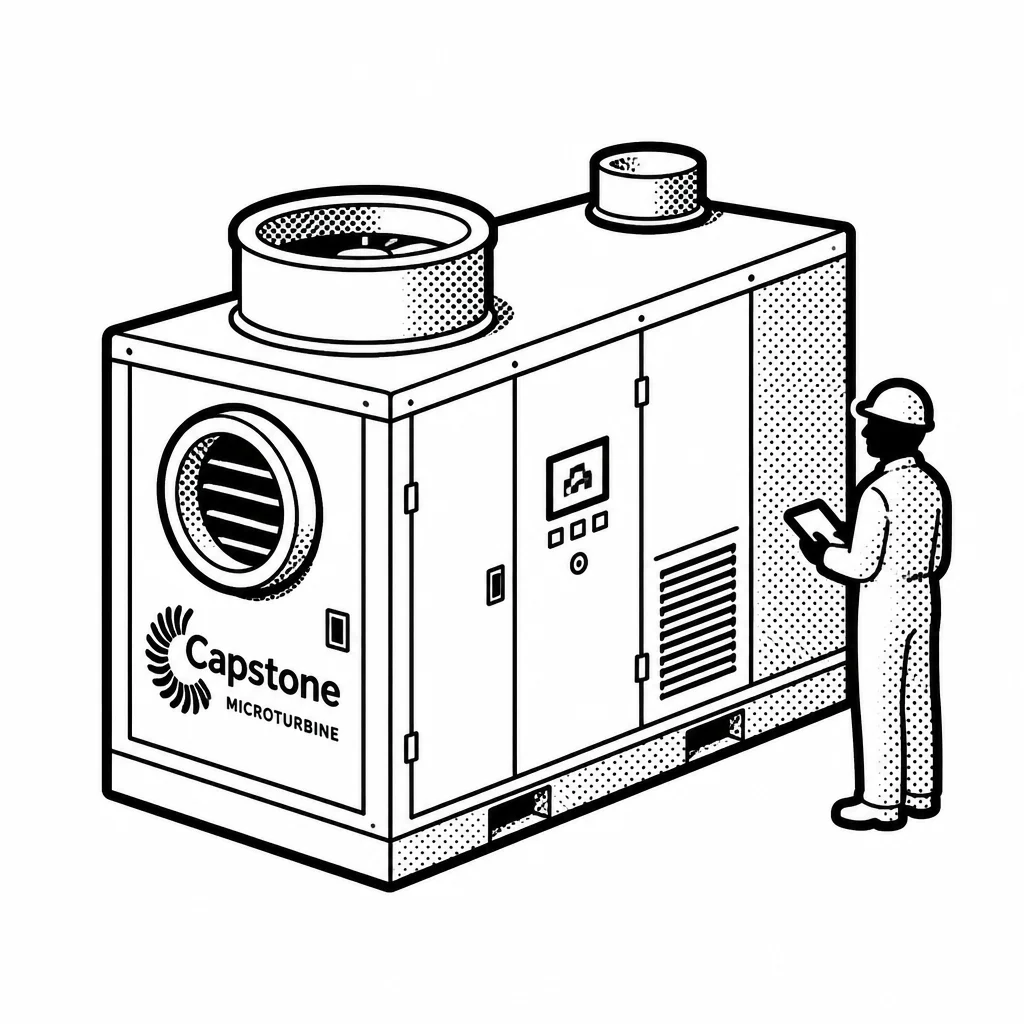
The core of the business is straightforward: Capstone finds a site, lines up permits and financing, builds a power plant, and then signs contracts to sell the electricity for years at a time. Those long-term agreements are the whole point. They turn a lumpy, capital-hungry construction business into something closer to a toll road, where predictable cash shows up month after month. Customers sign up because they need reliable power and, increasingly, because they want cleaner electricity without building plants themselves. It is a capital-intensive model, which cuts both ways. Building projects soaks up cash upfront, and the company carries debt to fund construction. But once a plant is running and contracted, the economics can be steady and the returns decent. The risks are the familiar ones for developers: project delays, cost overruns, interest rates that make borrowing expensive, and the possibility that a contract does not renew or a customer walks away. Policy matters too, since tax credits and state clean-energy rules can make or break a project's math. Capstone sits in a crowded field. Big utilities like NextEra Energy and independent power producers compete for the same projects and contracts, and the largest equipment suppliers and developers are well capitalized. Capstone's edge, if it has one, comes from picking good sites, signing solid contracts, and keeping construction on budget. Its vulnerability is that it is smaller and more dependent on borrowed money than the giants it competes against.
Investors should watch a few things: how much of the pipeline is actually contracted rather than hoped for, how much debt sits against those assets, and whether new projects earn enough to cover their cost of capital. A power developer is only as good as the contracts it signs and the plants it finishes on time.
Saved answer · last researched 10 Nov 2026
BIG PICTURE
Capstone sells about half its power gear outright, but nearly a third of revenue now comes from parts and service
- 54% Capstone Energy+
- 31% Parts and services
- 15% Rentals
In fiscal 2026, 54% of Capstone's revenue came from selling microturbine units and accessories outright. Another 31% came from parts and service work, and 15% from renting equipment. The service slice matters because it repeats: once a turbine is installed, the customer keeps buying parts and maintenance, which gives Capstone steadier money than one-off equipment orders. Source: understandstock.com, data from 2026
Timeline
Capstone Starts With Microturbines
Capstone Energy+ began in 1988 as a microturbine company, building small power plants customers could run right on their own property instead of buying everything from the grid. The basic idea was simple: make your own electricity, either plugged into the grid or completely off it, with machines that need little maintenance and can burn different fuels. That on-site approach became the company's whole identity for decades.
Re-incorporated in Delaware
In 2000 the company re-incorporated in Delaware, the state where most American public companies choose to set up. It was a paperwork move, but it fixed the corporate structure Capstone would operate under for years to come.
A Bad Year and a Loan Covenant
The good story cracked in 2022. Fourth-quarter revenue badly missed expectations and gross margins collapsed to 6%, and the company filed its annual report late. Worse, it broke a financial promise attached to $51 million in Goldman Sachs notes, forcing it to negotiate a waiver that demanded fresh equity and a refinancing. Free cash flow was deeply negative, and Capstone was sliding toward bankruptcy. The microturbine maker had become a company fighting for its life.
Vince Canino Takes Over
Vince Canino stepped in as chief executive in 2024 at the Van Nuys microturbine maker, right as it was climbing out of bankruptcy. Under him the numbers turned: revenue improved and net losses shrank a lot compared with the year before. The patient was recovering.
A New Name: Capstone Energy+
On April 29, 2026, the company filed to change its name to Capstone Energy+, effective the next day. The rebrand wasn't cosmetic; it was meant to say the company had grown from a microturbine manufacturer into a broader distributed energy platform.
Capstone Joins the Nasdaq
On July 8, 2026, Capstone's stock began trading on the Nasdaq Global Select Market under the ticker CEPL, leaving the OTCQX market where it had traded as CGEH. The move came after the rebrand, a simpler capital structure and a return to profitability, and the company framed it as the start of a new chapter.
A Recapitalization and the AI Data Center Bet
In March 2026 a $112.5 million recapitalization led by Monarch Alternative Capital closed, with part of the money earmarked for pushing into the AI data center market. Capstone repositioned itself around "energy certainty" — behind-the-meter power for data centers, ports, utility microgrids and factories. The catch: most orders were still plain natural gas infrastructure, data center revenue hadn't shown up yet, and the stock was down roughly 73% for the year. The new chapter was still mostly a promise.