Understand any stock in simple English
Enter a ticker to learn what the company does and how it makes money.
CareDx, Inc.
CareDx sells blood tests and software that help doctors monitor transplant patients and catch signs of organ rejection early.
CareDx makes the tests and tools that help keep transplanted organs — hearts, lungs, kidneys — alive and working. After someone gets a new organ, the biggest fear is that the body's immune system will quietly start attacking it. The old way to check for this was a biopsy: stick a needle into the new organ and snip out a bit of tissue. That hurts, costs a lot, and only samples a tiny spot. CareDx's flagship product, AlloSure, is a blood test instead. It looks for tiny fragments of DNA floating in the blood that came from the donor organ. If those fragments are rising, the immune system may be attacking, and doctors can act before real damage is done.
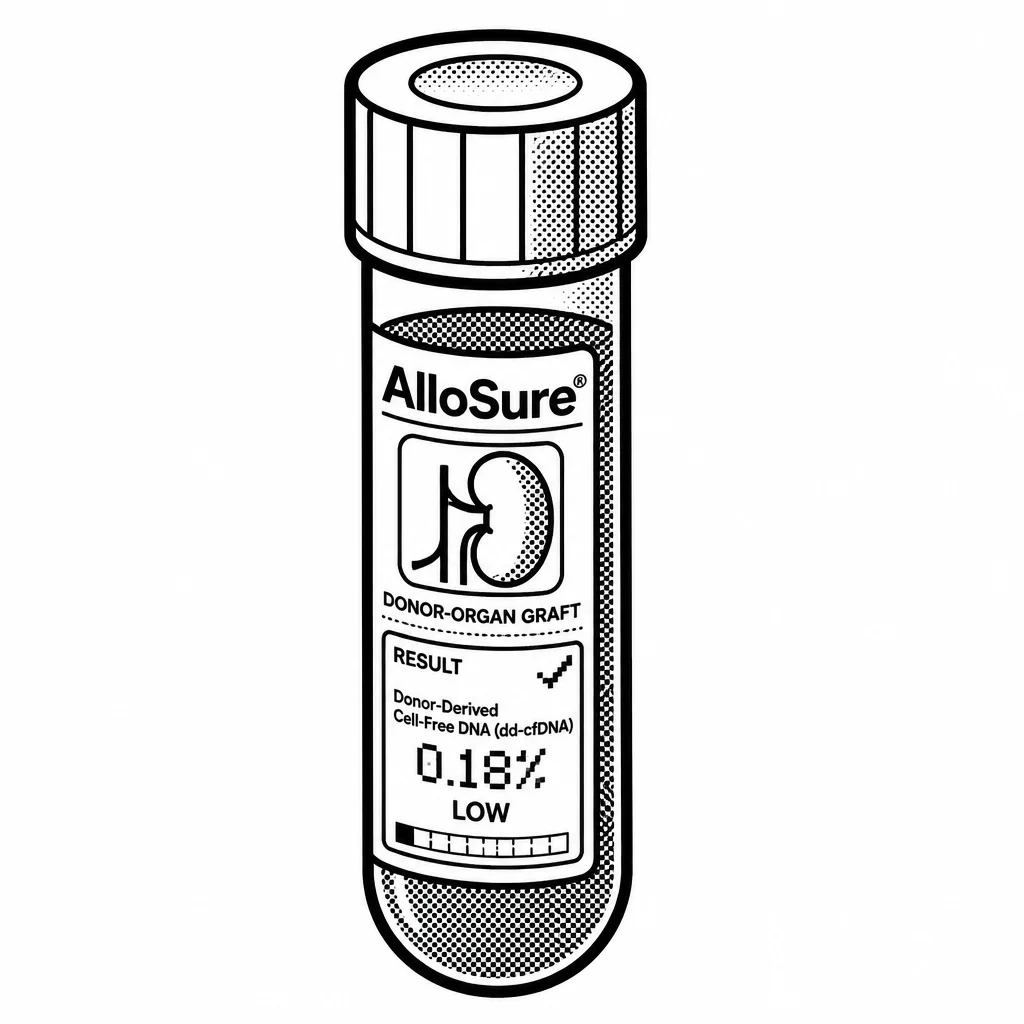
The company also sells AlloMap, a blood test used to watch for rejection in heart transplant patients, plus software called AlloCare that helps patients log symptoms and stay in touch with their care team. Its TxAccess line handles the lab work and patient-support services around transplants. The customers are transplant centers, hospitals, and labs — the places that order the tests — and the money comes mainly from insurers and government health programs paying for each test. CareDx wins when it can show that a cheap, painless blood draw beats an invasive biopsy, and it has spent years building the clinical evidence to make that case. The business has had a bumpy ride. Growth was strong for years, but in 2024 Medicare proposed deep cuts to what it would pay for the company's tests, and that threat hangs over the whole story — CareDx's revenue depends heavily on a handful of payers. Revenue was roughly $333 million in 2024, up slightly from the year before, and the company has been cutting costs to get back to profitability. Competition comes from other labs and diagnostics firms chasing the same transplant-monitoring market, so staying ahead means constant research and convincing doctors to switch.
There is a human story underneath the spreadsheets. Transplant patients often face years of anxiety and repeated biopsies; a simple blood test that says "you're fine" is a real quality-of-life improvement. CareDx is betting that this shift — from cutting into organs to reading a blood sample — is the future of transplant care, and that payers will eventually agree it is worth paying for. The company is headquartered in Brisbane, California, just south of San Francisco.
Saved answer · last researched 15 Nov 2026