Understand any stock in simple English
Enter a ticker to learn what the company does and how it makes money.
Cameco Corporation
Cameco mines uranium and turns it into the fuel that nuclear power plants burn to make electricity.
Cameco is one of the world's largest uranium companies. It digs uranium ore out of the ground in Canada and Kazakhstan, then processes it into the concentrated yellow powder that nuclear power plants need to make fuel. It also runs a fuel services business that refines and shapes that uranium into the precise forms reactors use.
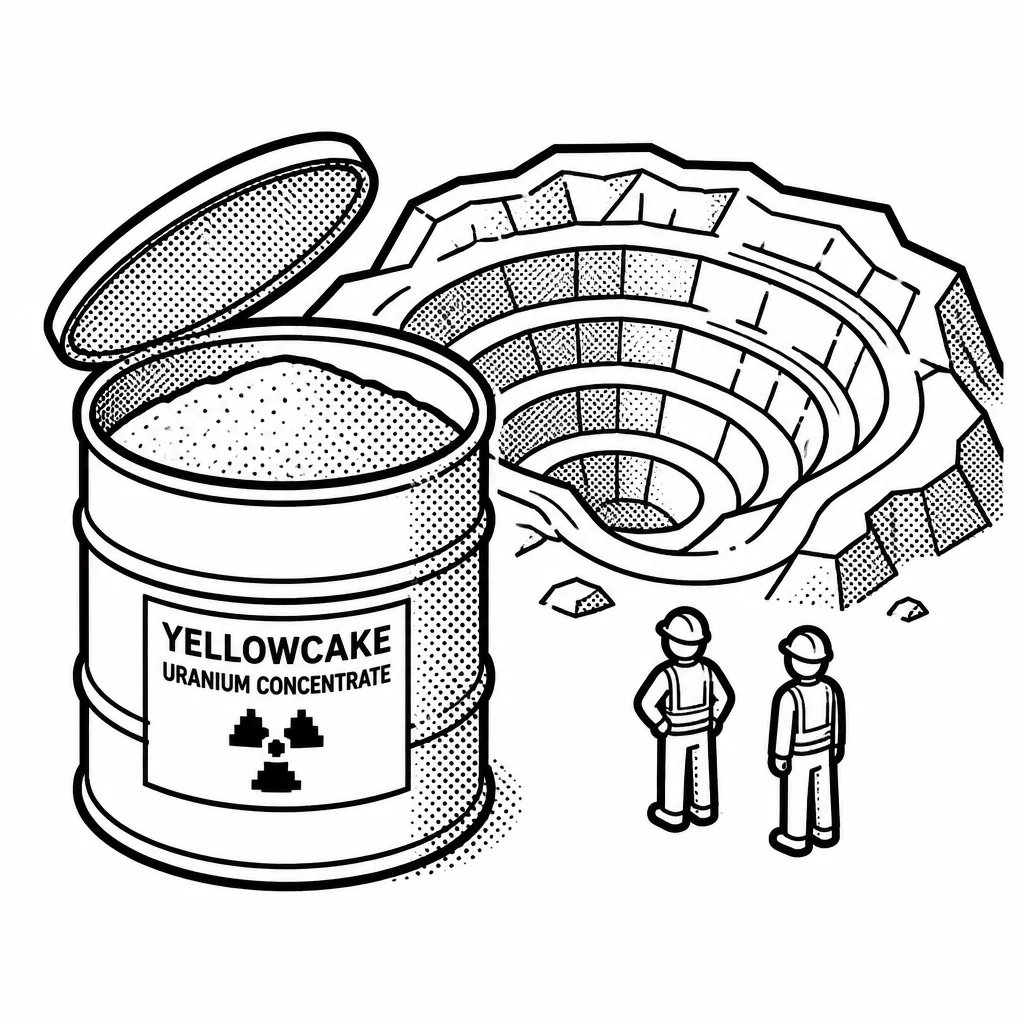
The customers are nuclear utilities and government agencies — the operators of big power plants, mostly in North America, Europe, and Asia. They buy uranium under long-term contracts that can stretch for years, because a reactor needs a steady, reliable supply and switching suppliers on short notice is painful. That contract structure is central to how Cameco earns money: it locks in prices and volumes, which smooths out the wild swings of the spot uranium market. Cameco's biggest edge is its low-cost mines, especially the high-grade deposits in northern Saskatchewan. Grade matters enormously here — richer ore means less rock moved per pound of uranium, which means lower costs. That lets Cameco keep producing profitably even when uranium prices are weak, while higher-cost rivals struggle. Its main competitors are other large uranium producers such as Kazatomprom and smaller miners, plus secondary supply from decommissioned weapons and stockpiles.
Uranium is a tough, cyclical business. Prices sat depressed for years after the 2011 Fukushima accident chilled demand, and Cameco responded by cutting production and buying out a partner to take full control of a key mine. More recently, interest in nuclear power has revived as countries look for steady, low-carbon electricity, and uranium prices have climbed. That tailwind matters because Cameco's profits swing heavily with the uranium price, so the company's fortunes are tied closely to how serious the world gets about building and keeping nuclear reactors.
Saved answer · last researched 12 Nov 2026