Understand any stock in simple English
Enter a ticker to learn what the company does and how it makes money.
CAE Inc.
CAE builds flight simulators and runs pilot-training programs for airlines, aircraft makers, and militaries around the world.
CAE sells a very specific kind of safety: it makes the giant simulators that let pilots practice flying without leaving the ground, and it runs the training centers where that practice happens. When an airline hires a new pilot or a captain needs to learn a new aircraft, CAE is often the company providing the machine, the instructor, and the classroom. Its customers are airlines, aircraft manufacturers, and defense forces — anyone who needs people trained to operate complex machines without crashing the real ones.
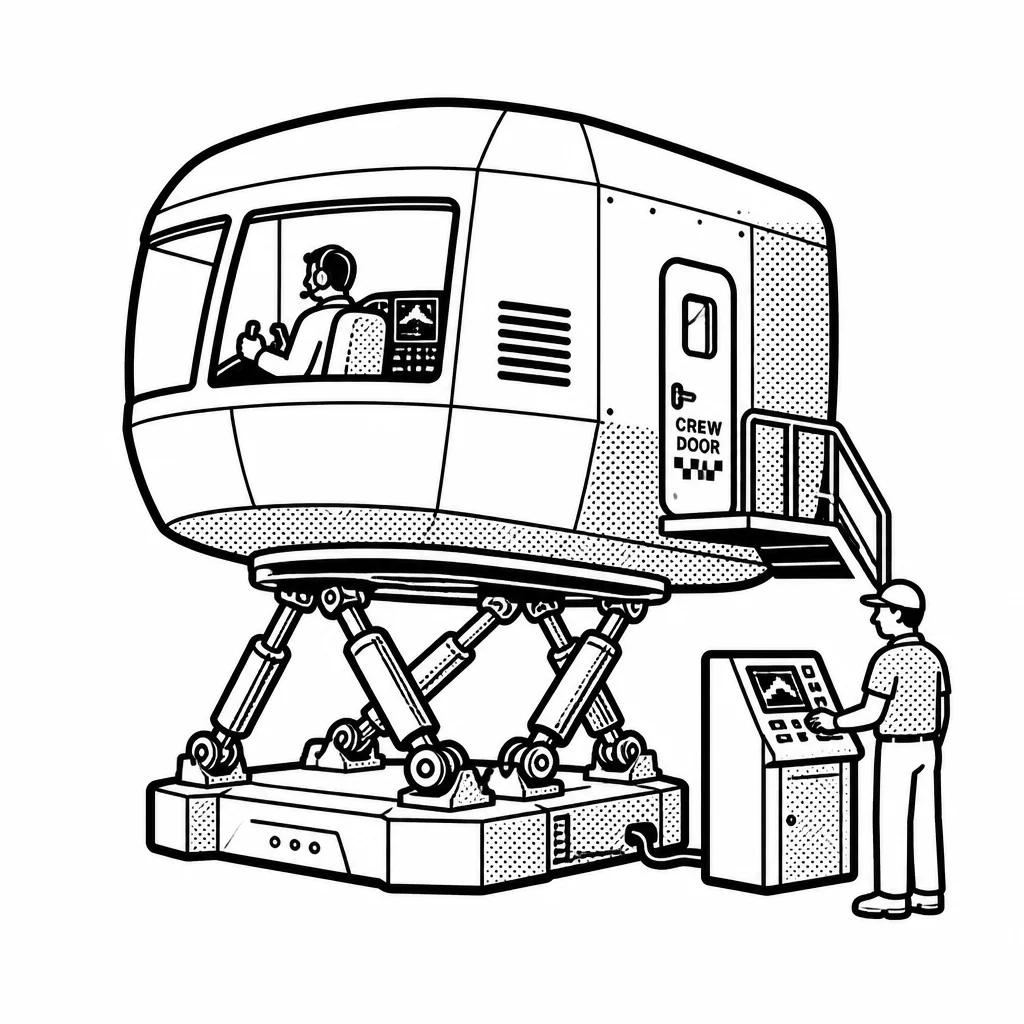
The heart of the business is a simple trade-off. A full flight simulator is a marvel of engineering — a cockpit on hydraulic legs that can mimic turbulence, engine failure, and a snowstorm at a fraction of the cost of burning real jet fuel. But it is expensive and complicated to own and maintain. So instead of just selling boxes, CAE increasingly sells time inside them. Its civil aviation segment trains pilots under long-term contracts with airlines, which like handing off the headache of keeping simulators current and instructors scheduled. Training is recurring revenue: pilots must recertify again and again, so the work keeps coming back year after year. There is also a defense side. CAE builds simulators and training systems for military aircraft, helicopters, and naval crews, and it runs training programs for armed forces in countries like the United States and Canada. That business is lumpier — big contracts won and lost — but it ties CAE to long-lived government programs. The company is headquartered in Montreal, which is fitting: it grew out of the Canadian aviation industry and has been in the simulation game for decades. The industry is not crowded at the very top. CAE's main rival in civil training is FlightSafety International — a private subsidiary of Berkshire Hathaway — and on the defense side it competes with players like L3Harris and smaller simulation shops. CAE's edge is scale: a global network of training centers, deep relationships with aircraft makers, and decades of data on how to build a simulator that feels real. The vulnerability is the same as its strength — airlines and militaries are cyclical customers, and a downturn in travel or a shift in defense budgets can slow orders. Still, the recurring training revenue cushions the ride.
For a snapshot of size, CAE reported revenue of roughly C$4.7 billion in its fiscal 2025 year, and it has been spending on expanding its training network and paying down debt after a period of acquisitions. The company pays a small dividend and buys back shares from time to time. The big question for investors is whether it can keep winning long-term training contracts as airlines look to cut costs and as militaries ramp up simulation spending — a bet that the world will keep needing pilots who have already made their mistakes in a machine, not in the sky.
Saved answer · last researched 12 Nov 2026