Understand any stock in simple English
Enter a ticker to learn what the company does and how it makes money.
Webull Corporation
Webull runs a low-cost trading app where everyday investors can buy stocks, options, and other assets and learn about the markets.
Webull is a stock-trading app. It gives ordinary people a place to buy and sell stocks, options, exchange-traded funds, and fractions of shares, usually without paying a commission on the trade itself. It also bundles in market data, charting tools, and educational content, which is why the app tends to attract people who want to trade actively rather than just park money and forget it.
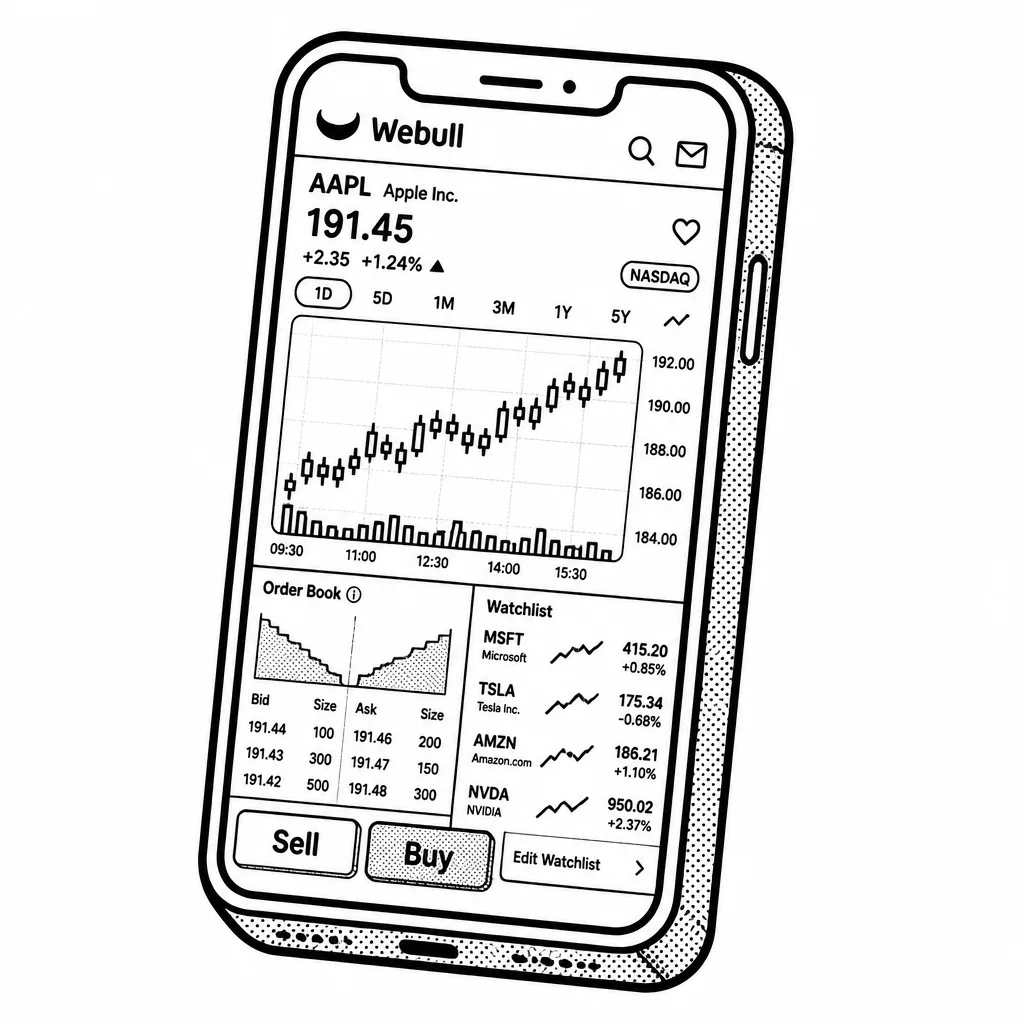
The money doesn't come from trade commissions. It comes mostly from selling customers' orders to market makers, who pay for the right to execute them, and the customer gets a slightly better-than-market price in return. Webull also earns on the cash it holds for customers, on margin loans to those trading with borrowed money, and on extra services like market-data upgrades and options trading. Its pitch to users is speed, rich tooling, and a modern interface — the same basic turf where Robinhood and established brokers like Charles Schwab compete. Webull itself is not the first Webull most people meet. The brand grew out of a Chinese fintech group and became famous as an app-based alternative to the big brokerages during the 2020–2021 retail trading boom, when millions of new investors downloaded trading apps. It listed on NASDAQ in 2025 in a deal that took it public, which is how a platform founded to give small investors tools previously reserved for professionals ended up as a listed company itself.
The business is small next to the giants but growing. It expanded beyond the U.S. into markets like Hong Kong, Singapore, and Japan, and it has pushed into new areas such as crypto trading and wealth products. The uncomfortable part is that much of its revenue depends on trading activity and order flow — so calm markets mean less trading, less revenue. It is a young, fast-moving company with a loyal user base of active traders, but it lives or dies on how much people like to trade.
Saved answer · last researched 14 Nov 2026