Understand any stock in simple English
Enter a ticker to learn what the company does and how it makes money.
Bufab AB (publ)
Bufab is a Swedish distributor that supplies screws, fasteners, and small parts to factories, along with the procurement and logistics services that keep those parts flowing.
Bufab is a giant hardware store for factories. It doesn't make screws or bolts — it buys them from hundreds of manufacturers around the world and delivers them, in the right quantities and at the right time, to industrial companies that assemble everything from trucks and appliances to furniture and electronics.
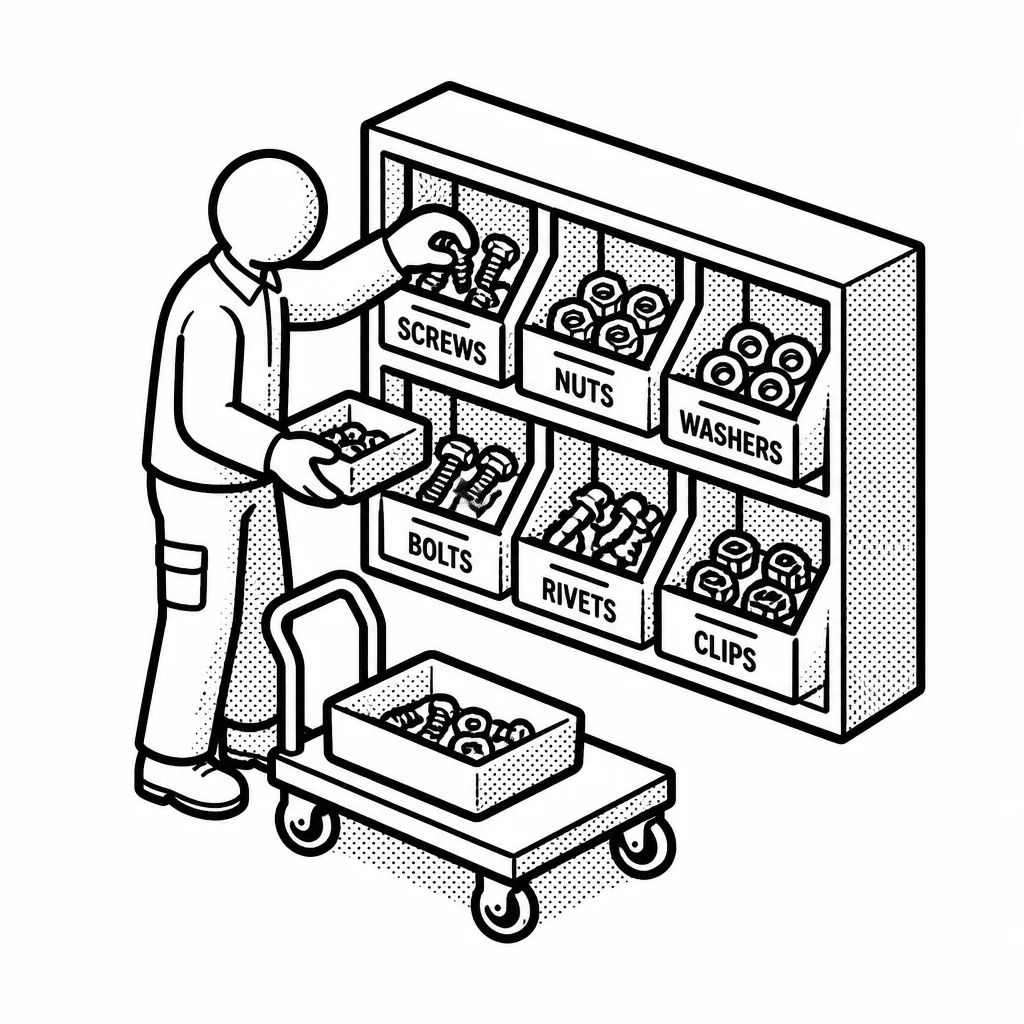
The product itself is tiny and cheap. A screw might cost a few cents. But if a factory runs out of the right screw, the whole assembly line can stop, and that costs a fortune. Bufab's real business is taking that risk off its customers' hands: it holds the inventory, manages thousands of small "C-parts," and often runs the purchasing and logistics for them. Customers pay for the parts, plus the service of never having to think about them. This is why Bufab likes to call what it sells "quality in every part" — it makes money on the reliability, not the metal. The company was founded in 1977 in the small Swedish town of Värnamo and grew by acquiring local distributors across Europe and beyond, keeping their customer relationships while adding scale and centralized buying power. That acquisition strategy is the engine: Bufab buys smaller rivals, folds them in, and uses its size to negotiate better prices from suppliers. Its customers are mostly in segments like automotive, engineering, and white goods, and it competes with other broad distributors and with customers simply buying direct.
The business is steady rather than glamorous, and that is the point. Because it sells tiny, essential parts, demand tends to track industrial production rather than booms and busts in any one sector. The vulnerability is the same as the strength: when factories slow down, they buy fewer parts, and Bufab feels it. It also carries a lot of inventory, so working capital matters. Still, the model — many small, sticky customer relationships, spread across many countries — makes it a quiet, resilient compounder that profits from being the reliable supplier nobody wants to lose.
Saved answer · last researched 12 Nov 2026