Understand any stock in simple English
Enter a ticker to learn what the company does and how it makes money.
BTS Group Holdings Public Company Limited
BTS Group runs Bangkok's Skytrain metro system and makes money from transit fares, advertising, and investments.
BTS Group Holdings runs the Skytrain, the elevated train network that weaves through Bangkok and carries hundreds of thousands of commuters every day. If you have ever ridden the green-line trains above the traffic-choked streets of Thailand's capital, you have used its core product. The company also sells advertising space across its media network and manages a portfolio of investments, so it is really three businesses under one roof: moving people, selling attention, and putting money to work.
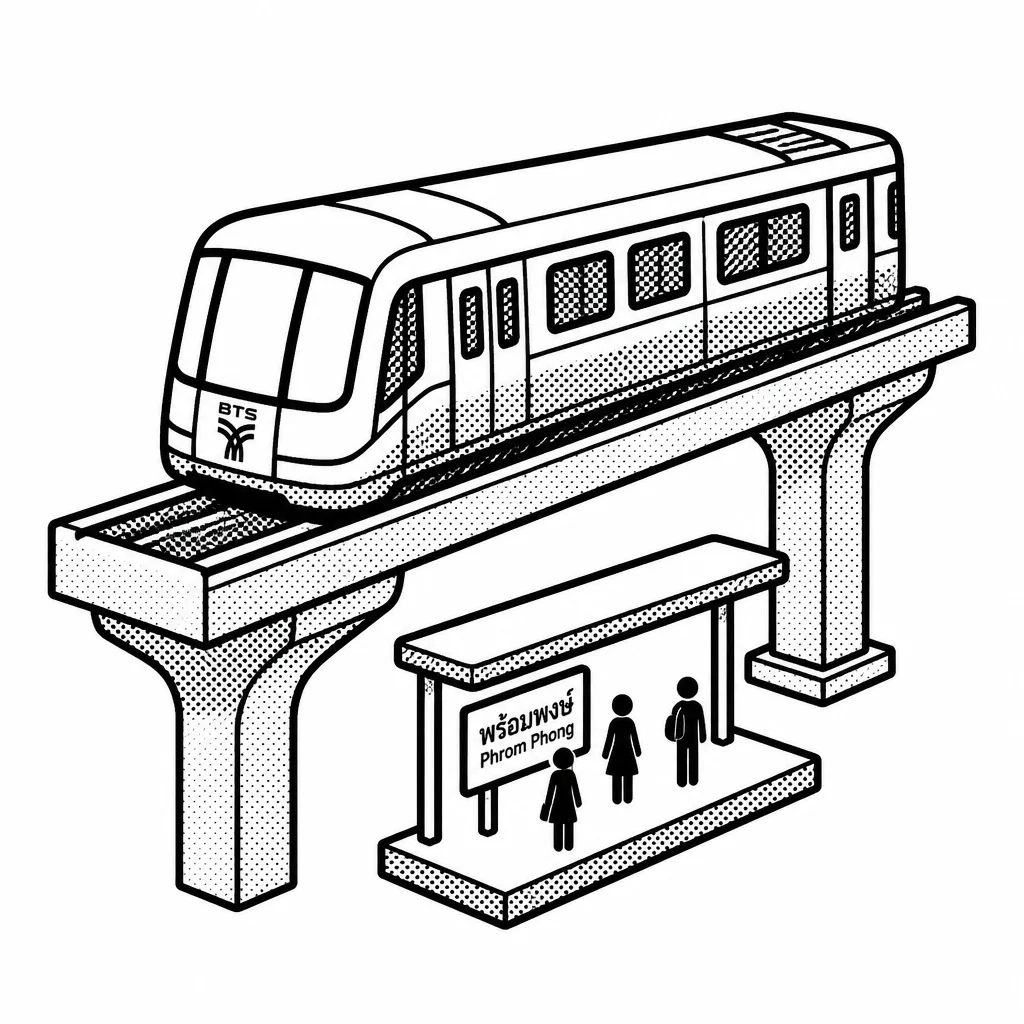
The transit arm is the heart of the operation. BTS builds and operates the train lines, collects fares from passengers, and earns fees for running the service. Riders choose it because it skips the gridlock below, and cities prize it because a single train line can move as many people as a huge highway without the pollution or the land grab. The catch is that train systems are enormously expensive to build and slow to pay back, so the company leans on other revenue to smooth the ride. That is where the marketing and investment arms come in. BTS owns advertising spaces and media that reach its captive audience of commuters, and it holds stakes in related businesses, including property and services tied to its stations. In recent years the group has also expanded into payments and other ventures that plug into the daily flow of people through its network. Investors value these side businesses because they generate cash that the capital-hungry rail operations cannot always provide on their own.
The company is a genuine builder of city infrastructure, which makes it both important and financially fragile. Its fortunes rise and fall with Bangkok's commuters, government transit policy, and the heavy debt that comes with laying track. When ridership is strong and new lines open, the economics improve; when costs run ahead of passenger growth, the balance sheet feels the strain. It is a business that shapes how a megacity moves — and one that constantly has to balance public service against the hard math of paying for steel and concrete.
Saved answer · last researched 12 Nov 2026