Understand any stock in simple English
Enter a ticker to learn what the company does and how it makes money.
Yangzijiang Shipbuilding (Holdings) Ltd.
Yangzijiang Shipbuilding builds large commercial ships — containerships, bulk carriers, tankers and gas carriers — and sells them to shipping companies around the world.
Yangzijiang Shipbuilding is one of China's largest private shipbuilders. It runs big yards along the Yangtze River, and its job is simple to describe: it takes steel and a design, welds together a working ship, and hands it over to a shipping company that will sail it for the next twenty or thirty years. The ships it builds are the workhorses of global trade — containerships that carry your stuff across the ocean, bulk carriers hauling iron ore and coal, tankers moving oil, and increasingly the specialized gas carriers that move LNG.
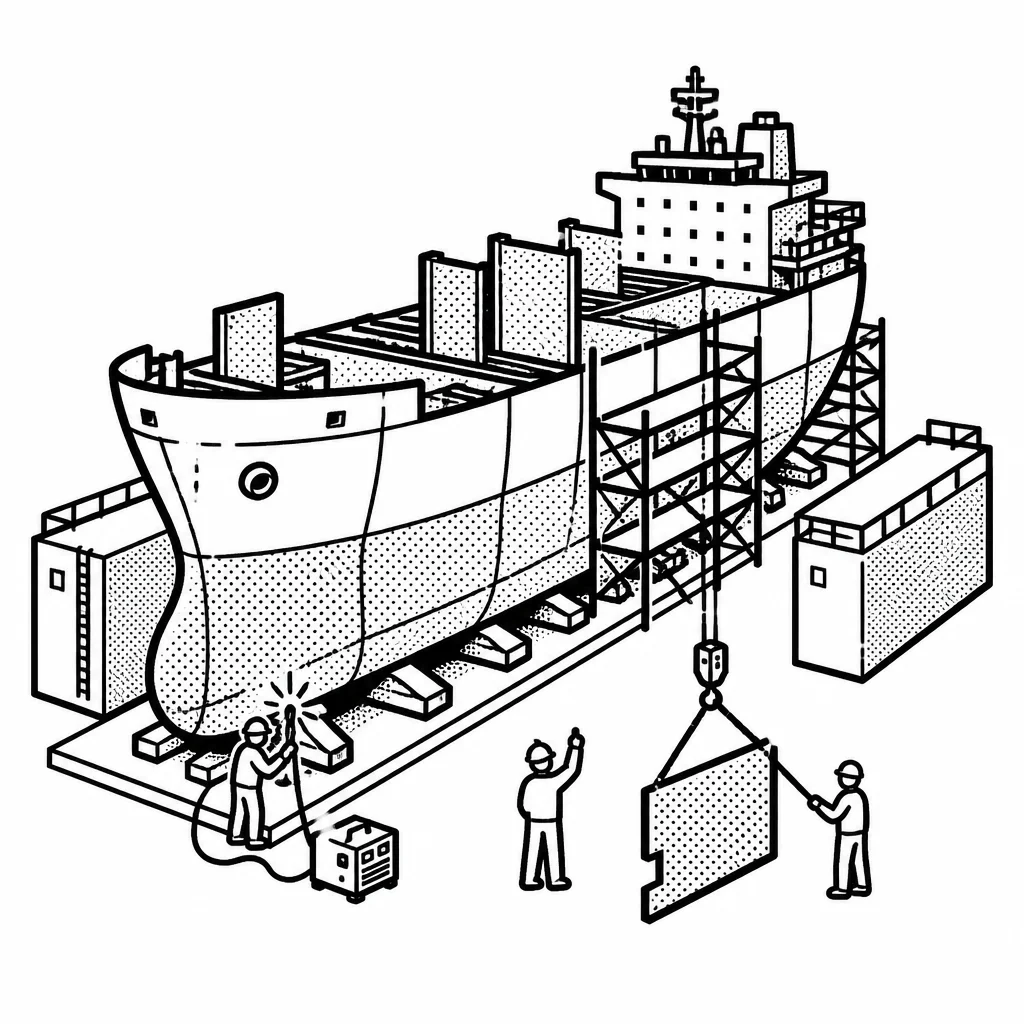
Customers are shipowners and ship operators — container lines, tanker fleets, dry bulk operators — not ordinary consumers. They come to Yangzijiang because building a ship is a huge, risky purchase, and they want a yard that delivers on time, on budget, and to spec. The company has earned a reputation as one of the more reliable and cost-efficient builders in the industry, which matters enormously when a single vessel can cost tens of millions of dollars and arrive years after the order is placed. Ships are typically paid for in installments as construction progresses, so the yard gets cash along the way rather than only at delivery. The business runs in long waves tied to global trade and freight rates. When shipping is booming and freight rates are high, shipowners order new vessels; when rates collapse, orders dry up and yards fight over scraps. Yangzijiang has survived these cycles for decades and, in recent years, rode a surge of new orders — including a run of large LNG carrier contracts that pushed it into a more sophisticated, higher-value segment of shipbuilding. It also holds a stake in a shipbuilding-related financial business, though the core of what it does is still welding steel into ships.
What makes it strong: scale, a track record of delivering, and a cost base in China that lets it compete globally. What makes it vulnerable: it has almost no control over the biggest driver of its fortunes — the global shipping cycle and the price of freight — and it competes against giant state-backed Chinese and South Korean yards. Steel prices and labor costs also squeeze margins. If you want a simple mental model: it's a factory that turns steel into ocean-going ships, and its health rises and falls with how much the world wants to move stuff across the sea.
Saved answer · last researched 12 Nov 2026