Understand any stock in simple English
Enter a ticker to learn what the company does and how it makes money.
Brembo N.V.
Brembo makes the braking systems — calipers, discs, and pads — that stop cars, motorcycles, and industrial vehicles.
Brembo is the company that makes the parts that make vehicles stop. If you've ever looked through the spokes of a fancy car and seen a bright red or yellow brake caliper squeezing a shiny disc, there's a decent chance Brembo made it. The company designs and builds braking systems — the calipers that clamp down, the discs they clamp onto, the pads that create friction, and the electronics that tie it all together. Its customers are the world's automakers and motorcycle makers, who buy these systems to install on their vehicles at the factory, plus racing teams and ordinary drivers who upgrade their brakes aftermarket.
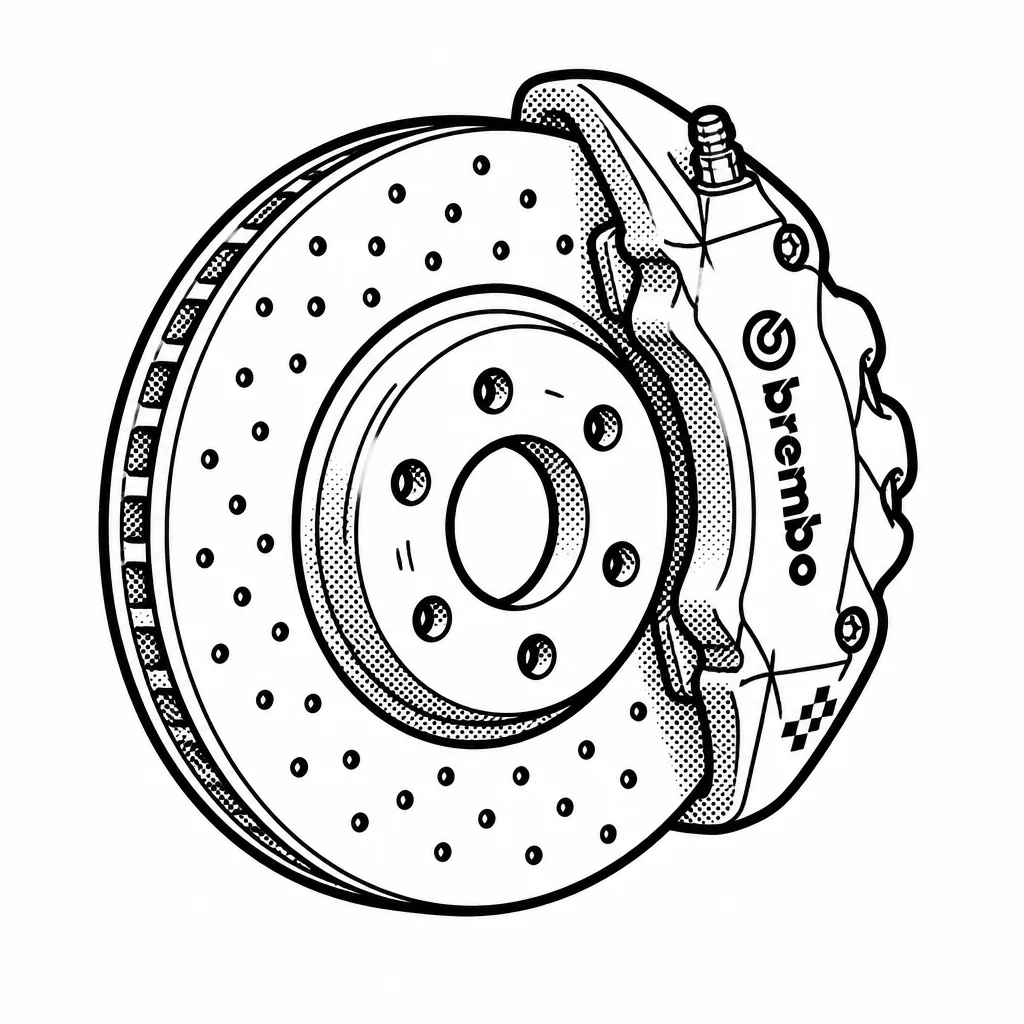
The business works like this: Brembo sells to car companies as a Tier 1 supplier, meaning it delivers complete brake systems directly to the assembly line, not just individual parts. That's the bulk of the money. The aftermarket and racing businesses are smaller but punch above their weight in reputation. Brembo brakes have won in Formula 1 and MotoGP for decades, and that racing halo is a marketing engine — it's why a teenager with a tuned hatchback wants Brembo calipers, and why luxury brands put the Brembo name in their brochures. The company also makes braking systems for industrial vehicles and has been pushing into software and electronics, like brake-by-wire systems that replace mechanical linkages with electronic signals. The roots are Italian and a bit romantic. Brembo started in 1961 in a small town near Bergamo, in northern Italy, making brake discs. It grew by winning over motorcycle makers first, then car companies, and later went on an acquisition spree — buying AP Racing in the UK, Marchesini in Italy, and SBS Friction in Denmark, among others. Today it's a global supplier with factories across Europe, Asia, and the Americas, and it's been listed on the Milan Stock Exchange since 1995. The controlling shareholder is the Bombassei family, which founded the company and still runs it — a rare thing in an industry dominated by giant conglomerates. Brembo's strength is its brand and engineering, but it's not a company that prints money effortlessly. Car manufacturers squeeze suppliers on price constantly, and the shift to electric vehicles brings both opportunity and risk: EVs need brakes too, but regenerative braking means the traditional friction brakes get used less, which could shrink demand for the parts Brembo sells. It also faces competition from big players like Continental and Bosch, though Brembo's premium positioning gives it some pricing power. The company spends heavily on research and development to stay ahead, and it has been investing in its digital and electronics capabilities — a bet that the future of braking is software as much as metal. Revenue was around €3.8 billion in 2023, and the company has been growing steadily, but it's a cyclical business tied to how many cars and motorcycles the world buys.
The nice thing about Brembo is that it's a specialist, not a generalist. It doesn't make seats or air conditioning or infotainment. It makes brakes, and it's spent six decades getting very good at one thing. That focus is why a Ferrari or a Ducati wears its name, and why the company has stayed profitable through downturns that flattened bigger rivals. It's not a household name in the way Apple is, but if you care about cars, you know it — and that's exactly the kind of brand power that keeps a supplier in business.
Saved answer · last researched 12 Nov 2026