Understand any stock in simple English
Enter a ticker to learn what the company does and how it makes money.
Bossard Holding AG
Bossard sells screws, nuts, and other fasteners to factories, along with the logistics and inventory systems that keep those parts flowing to the assembly line.
Bossard is the company factories call when they need to make sure the right screw shows up at the right workstation at the right moment. It sells industrial fasteners — screws, nuts, bolts, rivets, and the like — but the real product is often the system around them: vendor-managed inventory, smart bins that reorder parts automatically, and logistics that keep a manufacturer's assembly line from ever stopping for a missing bolt.
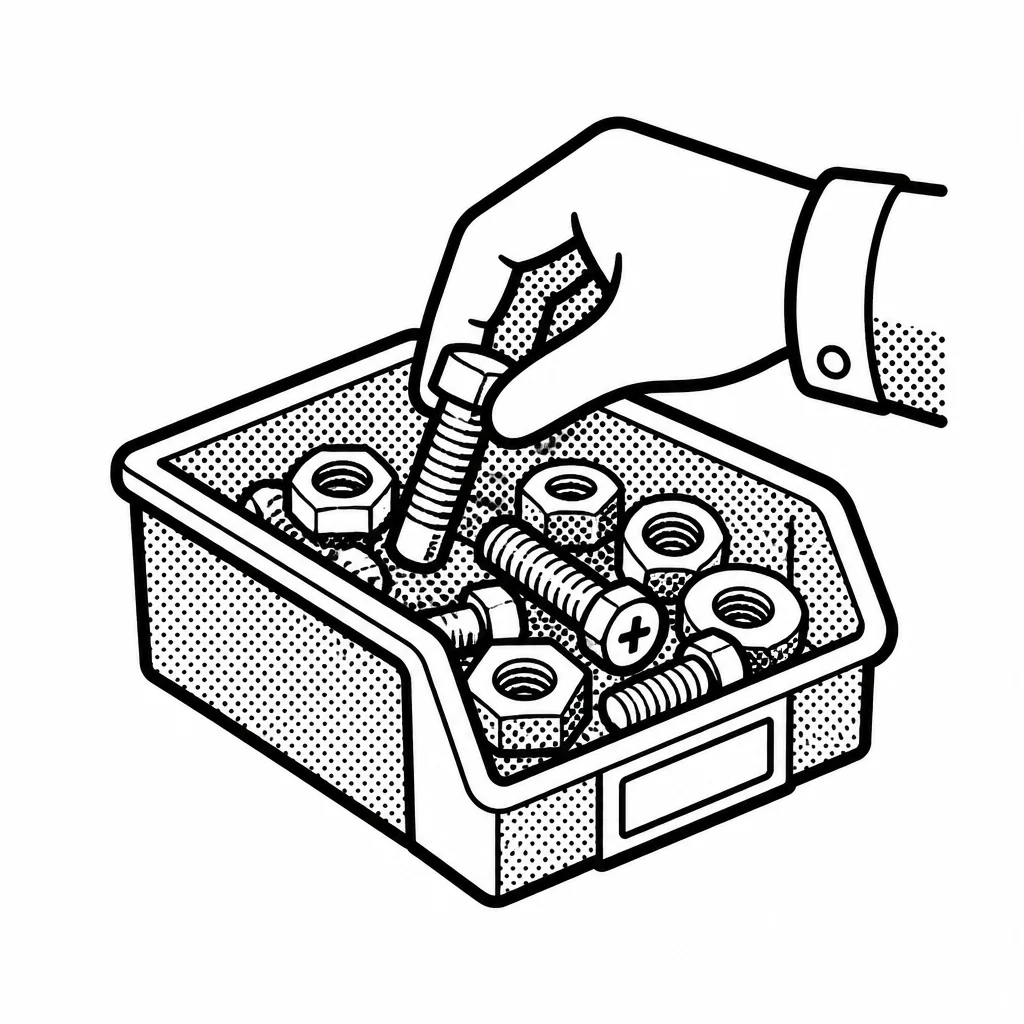
The business has two main pieces. The larger one is what Bossard calls its industrial fastening and assembly solutions, where it supplies fasteners and increasingly sells engineering help and proprietary products like its Bossard SmarTec line, which includes things like locking screws and fastening systems designed to solve specific assembly problems. The other piece is logistics and inventory management: Bossard sets up and runs the supply of fasteners inside a customer's plant, tracks usage, and keeps shelves stocked so the customer doesn't have to manage thousands of tiny parts itself. That second piece is the moat. Fasteners are cheap and boring, and anyone can sell a box of screws. What's hard is managing tens of thousands of different part numbers across dozens of factories, many of which Bossard serves through its own distribution centers and its network of partner companies around the world. Once Bossard is embedded in a plant's supply chain and its systems are wired into the production process, switching away is a hassle. Customers pay for reliability and for offloading a headache, not for the screws themselves.
Bossard is headquartered in Zug, Switzerland, and its customers are mostly industrial manufacturers — machinery, automotive, electronics, and medical technology among them. It competes with big fastener distributors and with the purchasing departments of its own customers, and it is exposed to the same thing every industrial supplier is: when factories cut production, they buy fewer parts. The company has grown partly by acquiring smaller distributors and partner businesses to widen its geographic reach, and it returns cash to shareholders through a dividend. The simple way to think about it: Bossard doesn't make the machine, but it makes sure the machine can be built without someone running to the hardware store.
Saved answer · last researched 14 Nov 2026