Understand any stock in simple English
Enter a ticker to learn what the company does and how it makes money.
Bolsa Mexicana de Valores, S.A.B. de C.V.
It runs Mexico's main stock exchange and sells the trading, listing, clearing, and market-data services that keep buyers and sellers of investments connected.
Bolsa Mexicana de Valores runs Mexico's stock market. If a Mexican company wants its shares to trade publicly, or an investor wants to buy and sell those shares, this is the marketplace where it happens. The company itself does not buy or sell investments and does not take market risk; it provides the arena and the plumbing that let everyone else trade.
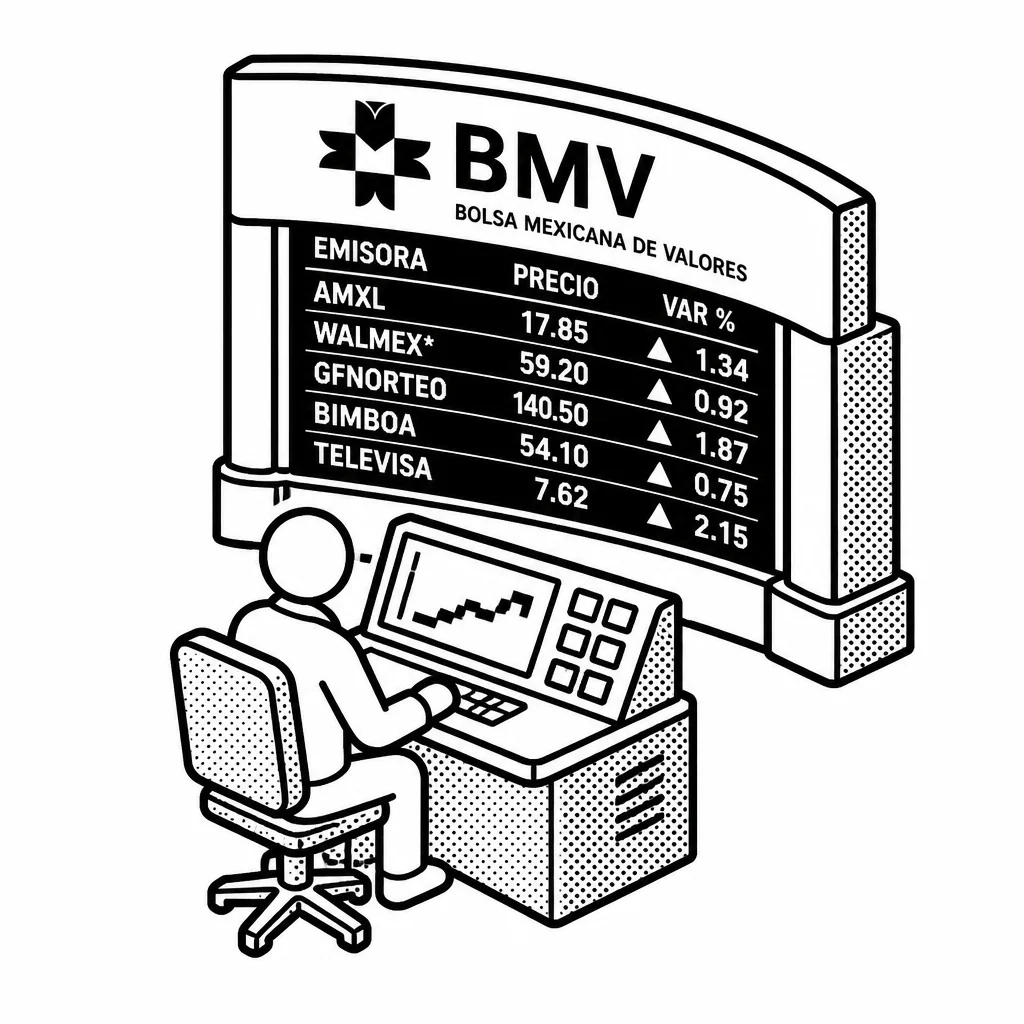
Its money comes from selling access to that arena. Issuers pay to list their shares, brokers pay to trade, and everyone pays for the behind-the-scenes work: clearing and settling trades so money and shares actually change hands, holding securities in custody, and buying real-time price data. It also sells market data to outside customers who need to know what things are worth. The appeal is simple: a stock exchange is a network, and traders and issuers tend to gather where the liquidity already is, which makes the incumbent hard to displace. The BMV has a near-monopoly on Mexican cash equities, but it is not the only game in town. Bolsa Institucional de Valores launched in 2018 as a competing Mexican exchange and has been chipping away at its dominance, which pressures fees and forces the incumbent to keep investing in its technology. Its results also rise and fall with trading volumes, so quiet markets and fewer new listings hurt.
The company is headquartered in Mexico City and is itself listed on its own exchange. It is a steady, fee-collecting business rather than a fast grower, and it tends to return cash to shareholders through dividends. The core question for any investor is straightforward: can it defend its toll-booth position as competition and cheaper electronic trading slowly reshape the market?
Saved answer · last researched 12 Nov 2026