Understand any stock in simple English
Enter a ticker to learn what the company does and how it makes money.
Bunzl Public Limited Company
Bunzl sells the everyday, non-food supplies that businesses need to operate, like packaging, cleaning products, and safety gear.
Bunzl is a giant distributor of life's business essentials — the gloves, cardboard boxes, cleaning sprays, and safety goggles that other companies need to do their jobs. You will almost never see its name on a product, because Bunzl doesn't really make much of what it sells. Instead, it acts as the middleman for hundreds of thousands of products, buying them in bulk from manufacturers and delivering them to hospitals, hotels, supermarkets, and factories. When a restaurant chain needs napkins and takeaway containers, or a hospital needs surgical gloves, Bunzl is often the company quietly arranging the delivery.
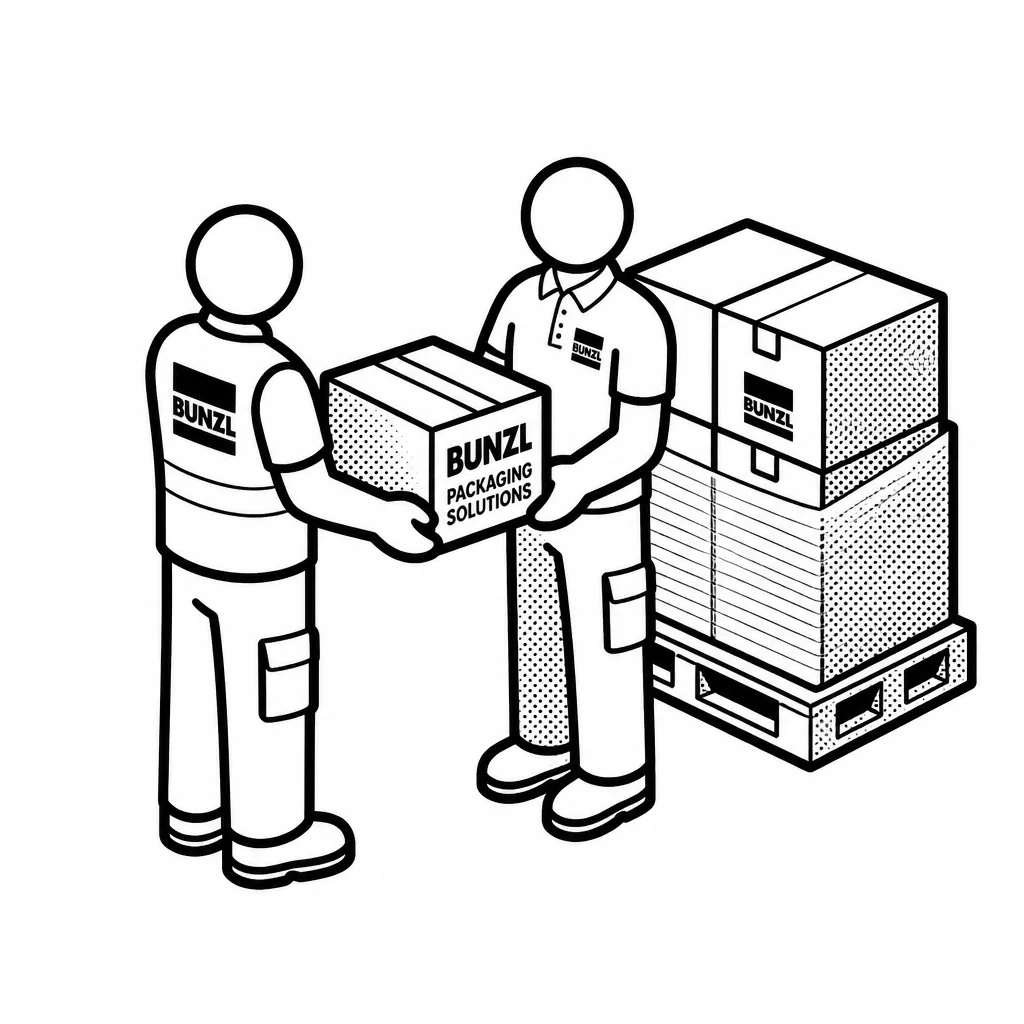
The business is simple but powerful because of its scale. Bunzl buys in enormous volumes, which lets it negotiate lower prices than any single customer could get alone. It then bundles thousands of different items from hundreds of suppliers into one easy order, saving its customers the headache of managing dozens of separate relationships. This "one-stop shop" convenience is why customers stick around: switching suppliers means rebuilding a complex supply chain, so most would rather just keep ordering from Bunzl. That loyalty translates into steady, recurring revenue, because these are consumables — items that get used up and reordered week after week. Headquartered in London, Bunzl has grown mostly by buying up smaller, local distributors around the world and letting them keep their local know-how while plugging into Bunzl's bigger purchasing power. It runs this playbook across North America, Europe, and beyond, and it has a long track record of doing it profitably. The company generates reliable cash flow and has historically returned a good chunk of it to shareholders through dividends, while still funding its steady stream of acquisitions. It is, in many ways, a compounding machine built on boring but indispensable stuff.
The flip side is that Bunzl is a low-margin, high-volume business that depends on the health of its customers. When inflation spikes, the company can pass rising costs through to buyers, which even inflates its reported sales — but that growth can mask weaker real demand. Competition comes from other big distributors and from manufacturers selling directly, and there is always the risk of overpaying for acquisitions. Still, the core appeal is durable: as long as businesses exist, they will need to wrap, clean, and protect things, and Bunzl makes money every time they reorder.
Saved answer · last researched 16 Nov 2026