Understand any stock in simple English
Enter a ticker to learn what the company does and how it makes money.
BlackRock Health Sciences Term Trust
This is a closed-end fund that invests in health sciences companies to earn income and total return for its shareholders.
BlackRock Health Sciences Term Trust is a closed-end fund. It pools money from investors and uses it to buy a basket of stocks and other investments tied to the health sciences world — drugmakers, medical device makers, biotech firms, and healthcare services companies. If you buy shares, you own a slice of that whole basket, not a single company.
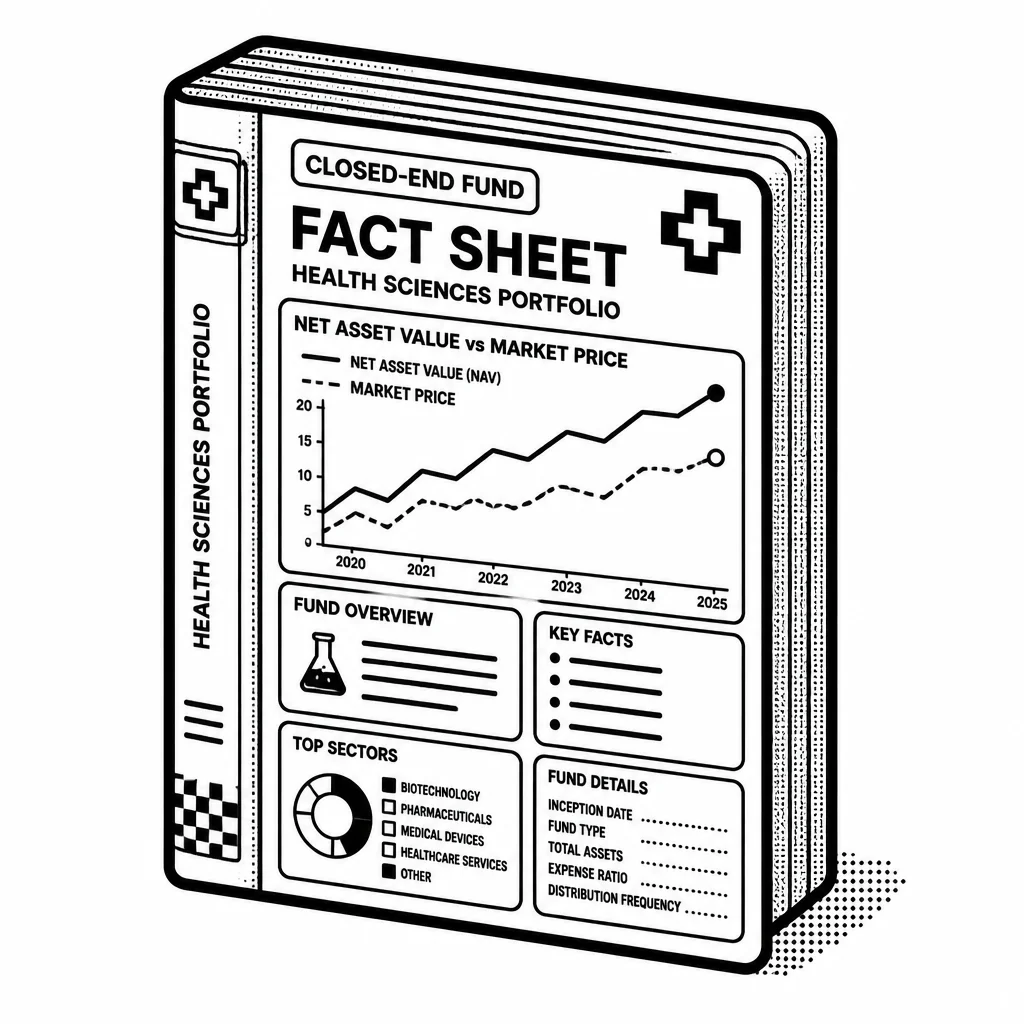
The pitch is straightforward: give ordinary investors a professionally managed, concentrated bet on healthcare, a sector people need in good times and bad. The fund also uses derivatives and option strategies to squeeze extra income out of its holdings, which is part of why it markets itself on total return and income rather than plain stock growth. That said, this is a term trust — it has a set lifespan and is designed to wind down or transition at a planned date, so it isn't meant to be a forever holding the way a typical fund might be. Like most closed-end funds, it trades on the exchange like a stock rather than being bought and sold directly with the fund company. That creates a quirk: the share price can drift above or below the actual value of the investments inside, depending on demand. The fund earns money for its manager, BlackRock, through management fees taken out of the pool, which quietly reduces what investors keep. The trade-off for shareholders is convenience and a steady hand on the wheel — but they pay for that hand.
The real risks are worth naming plainly. Healthcare investing swings on drug trial results, patent cliffs, and regulatory decisions that can move a stock hard in a single day. The fund also uses leverage and options, which can amplify both gains and losses. So while the income looks attractive, it isn't free money — it's a concentrated, actively managed bet on one sector, wrapped in a structure with a built-in end date.
Saved answer · last researched 15 Nov 2026