Understand any stock in simple English
Enter a ticker to learn what the company does and how it makes money.
ProShares Bitcoin ETF
It is an exchange-traded fund that gives investors a way to bet on bitcoin's price through regulated futures contracts.
ProShares Bitcoin ETF is a fund, not a company that makes or sells things. It gives ordinary investors a way to get exposure to bitcoin's price through a regular brokerage account, without needing to buy bitcoin itself or open a crypto wallet.
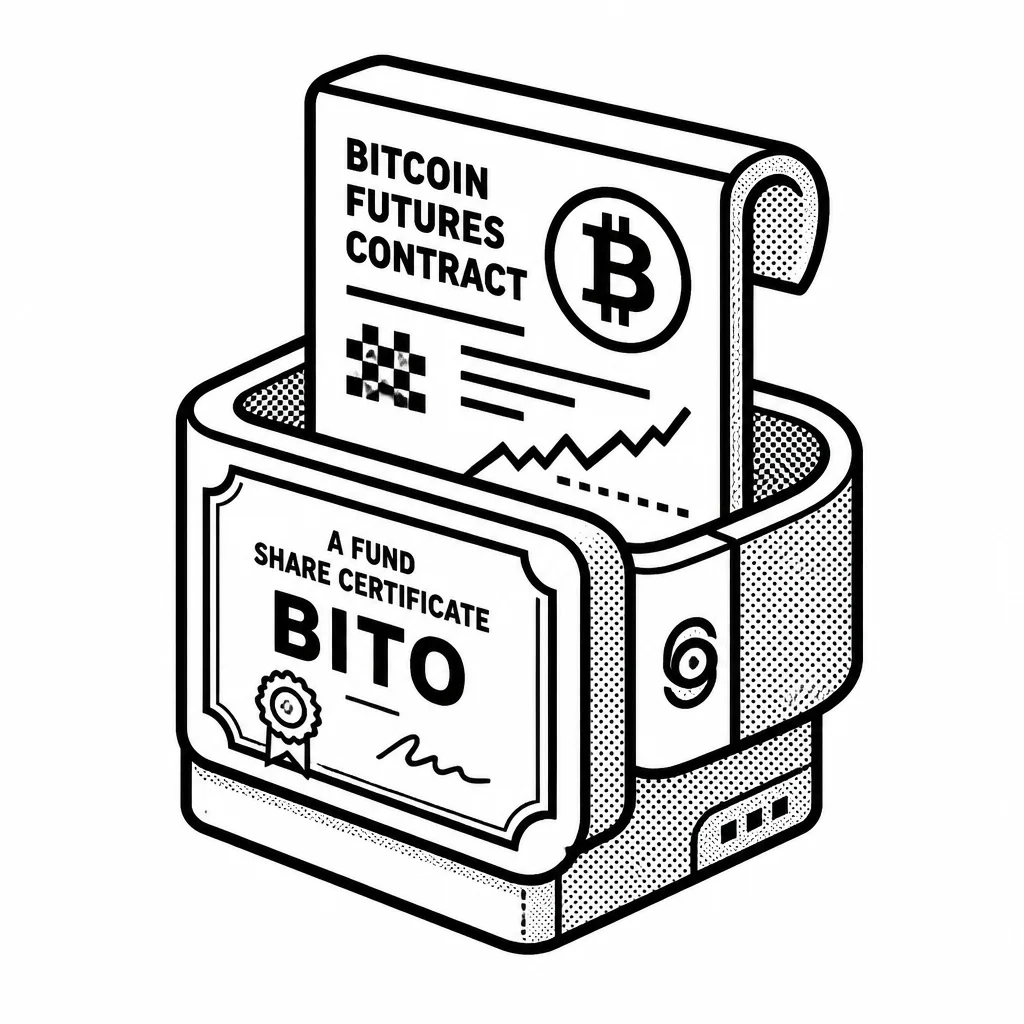
Here is the basic problem it solves. Bitcoin trades on crypto exchanges, and some investors find that messy or worrying — the wallets, the security, the unregulated venues. This fund sidesteps all of that by holding bitcoin futures instead. A futures contract is simply an agreement to buy or sell something at a set price on a future date. This fund buys front-month contracts on the Chicago Mercantile Exchange, meaning the ones closest to expiring, and rolls them forward as they expire. The CME is a big, regulated, old-line exchange, so the whole thing sits inside the traditional financial system. Investors buy shares through a normal broker, and the share price loosely tracks bitcoin. They pay an expense ratio for the convenience — a small yearly fee skimmed from the fund's assets, which is how the issuer, ProShares, earns its money. The fund does not own actual bitcoin; it owns paper contracts. That distinction matters, because futures can drift away from the spot price, especially when the market is in "contango" — a fancy word for when later contracts cost more than current ones, so rolling them over bleeds a little money each time.
Demand for the fund surged when it launched in October 2021, because it was the first bitcoin-linked ETF approved in the United States. That first-mover status made it a household name among crypto-curious investors almost overnight. The catch is competition: after spot bitcoin ETFs won approval in January 2024, many investors switched to those, since they hold actual bitcoin directly and typically charge lower fees. The fund is a convenient, regulated on-ramp to bitcoin — but it is a toll road, and cheaper, more direct roads now exist.
Saved answer · last researched 15 Nov 2026