Understand any stock in simple English
Grupo Casas Bahia S.A.
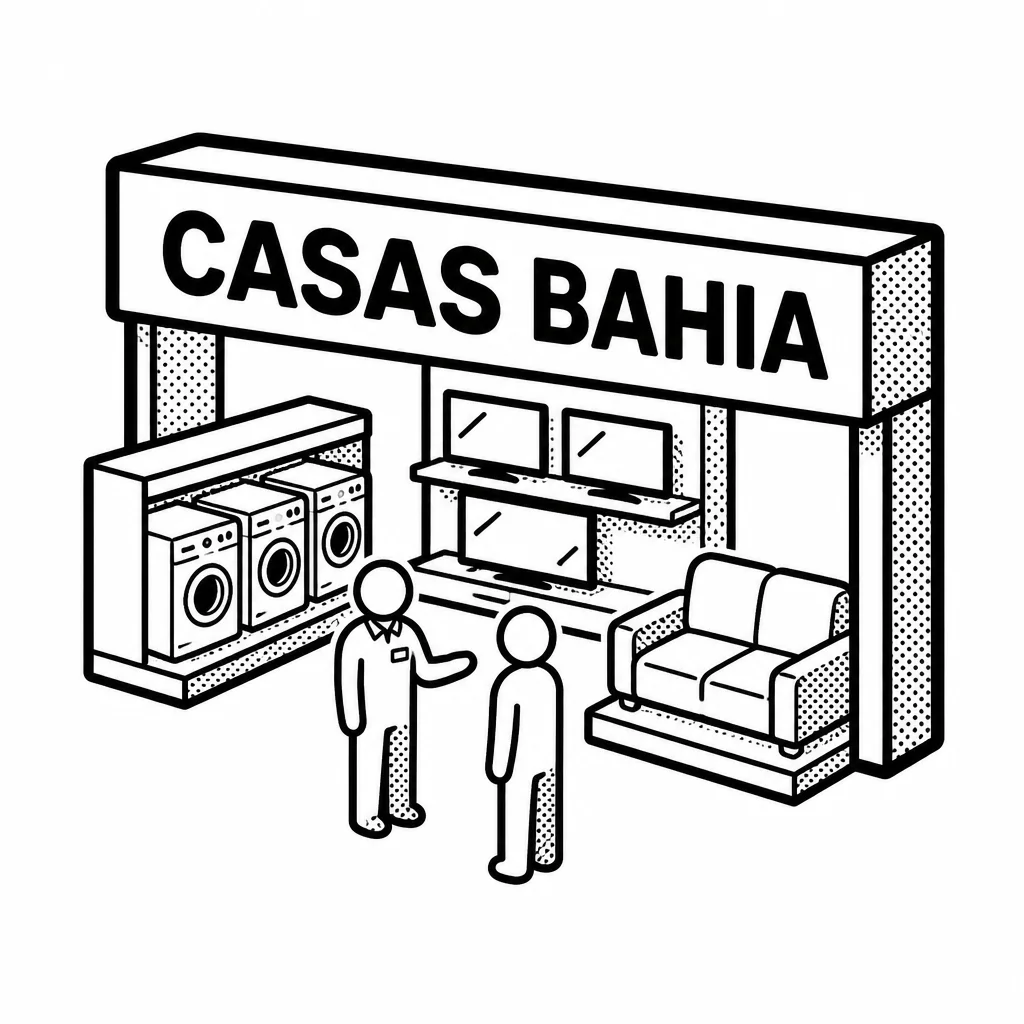
Casas Bahia sells electronics, appliances, furniture, and household goods to Brazilian consumers through stores, websites, apps, and a marketplace.
Casas Bahia is one of Brazil's best-known retailers of things you need for a home: refrigerators, washing machines, televisions, phones, sofas, beds, and kitchen gadgets. For decades it was famous for selling to lower-income families who paid in installments, letting people buy a fridge or a bed and spread the cost over many months. That installment model is practically part of the Brazilian retail DNA, and Casas Bahia built much of its business on it.
The company behind the brand today is Grupo Casas Bahia, which was long known as Via Varejo and also went by the name Via. It runs several store brands, most famously Casas Bahia and Ponto, alongside its online sites and marketplaces where outside sellers can list their own products. Money comes from selling goods in stores, from e-commerce orders, and increasingly from marketplace commissions and financial services like credit and installment plans. Its main rivals are other big Brazilian retailers such as Magazine Luiza and MercadoLibre, which is a huge force in Latin American e-commerce and marketplace selling. The business is brutally competitive and low-margin. Retailers like this make a little money on each item and need lots of volume, tight cost control, and efficient logistics to profit. Offering credit to customers is a double-edged sword: it helps people buy things they couldn't afford upfront, but it also means the company carries the risk that borrowers won't pay. In recent years the company has struggled with heavy debt and weak profitability, and it has been going through a restructuring effort—closing some stores, cutting costs, and trying to shift more of its business online and into higher-margin services. The story behind the name is worth knowing. Casas Bahia was founded by Samuel Klein, a Polish immigrant who started out as a street peddler in Brazil and built one of the country's most recognizable retail empires. In 2009 the Klein family sold control to Grupo Pão de Açúcar, and after a series of corporate moves the business was split off and eventually became Via, which then renamed itself Grupo Casas Bahia to lean on the brand people actually know. It is a useful reminder that a famous store name can outlive many layers of corporate restructuring.
For investors, the key question is whether the turnaround works: can it fix its balance sheet, keep customers coming back to its stores and apps, and squeeze a profit out of thin retail margins while fending off giant online competitors? The brand is strong and widely recognized across Brazil, which is a real asset, but the company's recent record has been rocky, and the market remains skeptical until the financial picture improves.
Saved answer · last researched 17 Nov 2026