Understand any stock in simple English
Enter a ticker to learn what the company does and how it makes money.
BE Semiconductor Industries N.V.
BE Semiconductor makes the machines that chipmakers use to assemble and package finished chips.
BE Semiconductor, often called just BESI, builds the machines that turn a bare silicon chip into something you can actually put in a phone, a car, or a data center. A chip starts out as a fragile sliver of silicon; BESI's equipment handles the delicate steps of attaching it to a package, wiring it up, and sealing it so it survives real-world use. Its customers are chipmakers, foundries, and the assembly subcontractors who do this packaging work on a massive scale.
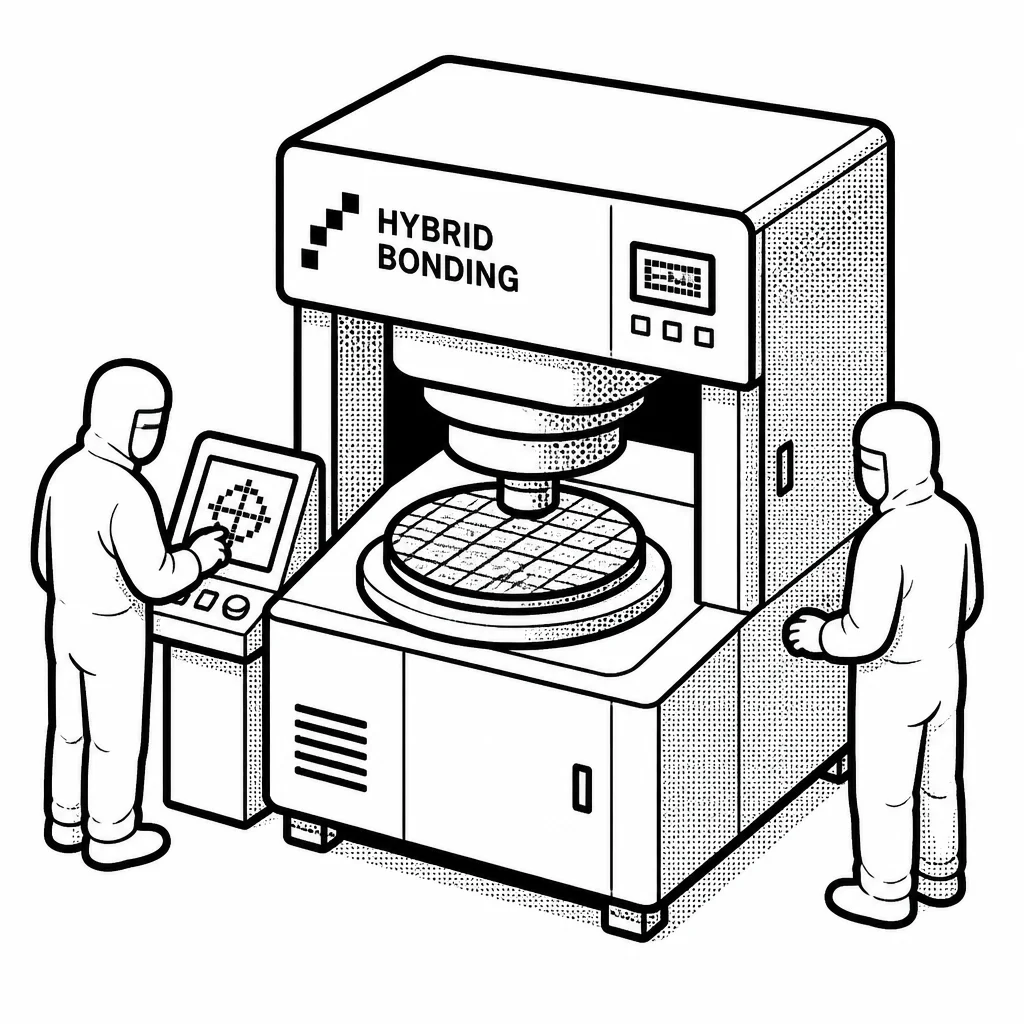
The company is best known for two kinds of machines. One is die-attach equipment, which picks up a tiny chip and places it precisely onto a substrate or another chip. The other is packaging and plating gear that finishes the job. Its real edge is precision and speed at very small scales: as chips shrink and get stacked in 3D packages for phones and AI servers, placing each one accurately becomes harder and more valuable. That is why BESI has become a key supplier for advanced "hybrid bonding," a technique that joins chips directly without solder bumps.
Headquartered in Duiven, the Netherlands, BESI is a pure play in a niche that sits at the crossroads of two trends: the boom in AI data centers and the push to pack more computing into smaller spaces. The risk is that chip equipment is a deeply cyclical business — when chipmakers pause spending, orders dry up fast. The company has spent heavily on buybacks and dividends over the years, returning a large share of its cash to shareholders rather than hoarding it, which suits a business with relatively modest capital needs. Its main competition comes from larger packaging and assembly tool makers, but in the most advanced bonding machines it holds a strong position that few rivals can match.
Saved answer · last researched 14 Nov 2026