Understand any stock in simple English
Enter a ticker to learn what the company does and how it makes money.
Brookfield Renewable Corporation
Brookfield Renewable owns and runs hydroelectric dams, wind farms, solar plants and battery storage, then sells the electricity to utilities and big customers.
Brookfield Renewable is one of the world's largest owners of clean power plants. It runs hydroelectric dams, wind farms, solar fields, and battery storage, then sells that electricity to utilities and large customers under long-term contracts. Think of it as a landlord for electricity: it builds or buys the machines that make power, then collects steady payments for decades.
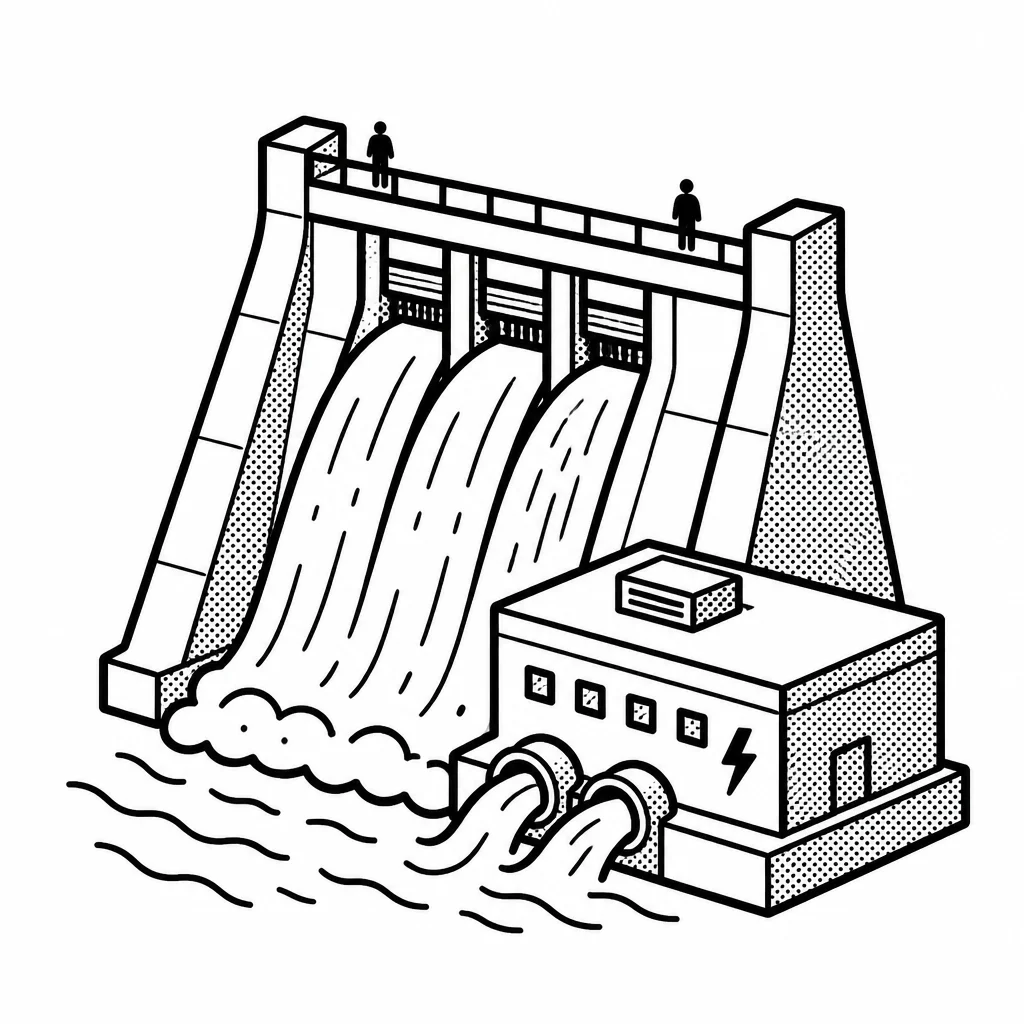
The business is built on hydro dams, which are the crown jewel. A dam can run for a century with modest upkeep, and it acts like a giant battery you can switch on when demand spikes. That makes hydro power especially valuable as more intermittent wind and solar come onto the grid. Around that core sit wind and solar farms, plus storage. Brookfield Renewable sells most of its output through contracts that lock in prices, so revenue is steadier than a pure market seller. Annual revenue has run in the billions of dollars, and it has grown quickly by buying other clean-power companies. The money has to go somewhere, and Brookfield Renewable mostly spends it on buying and building more plants, then returning cash to shareholders. It pays a meaningful dividend and has raised it regularly. It is part of the giant Brookfield Corporation asset-management world, which gives it cheap access to capital and a deep pipeline of deals. Size is an advantage: it can buy portfolios that smaller operators cannot afford.
The risks are real. Power prices can fall, interest rates sit heavily on a capital-hungry business, and new projects face permitting delays and supply-chain costs. It also competes with much larger integrated utilities and other renewable developers. But the long-life assets and contracted cash flows are why investors treat it as a steady income play with growth attached — less a startup bet, more a toll road for the energy transition.
Saved answer · last researched 12 Nov 2026