Understand any stock in simple English
Enter a ticker to learn what the company does and how it makes money.
Bangkok Expressway and Metro Public Company Limited
It runs toll highways and metro train lines in Bangkok, and earns money from fares, tolls, and advertising in its stations.
Bangkok Expressway and Metro is the company that quietly moves millions of people around Bangkok every day. It operates two big things: a network of toll expressways that cars and trucks pay to use, and the city's metro rail lines that commuters ride to skip the legendary traffic. If you have ever zipped above the jam on an elevated highway or squeezed onto a train during rush hour in the Thai capital, you have probably paid this company.
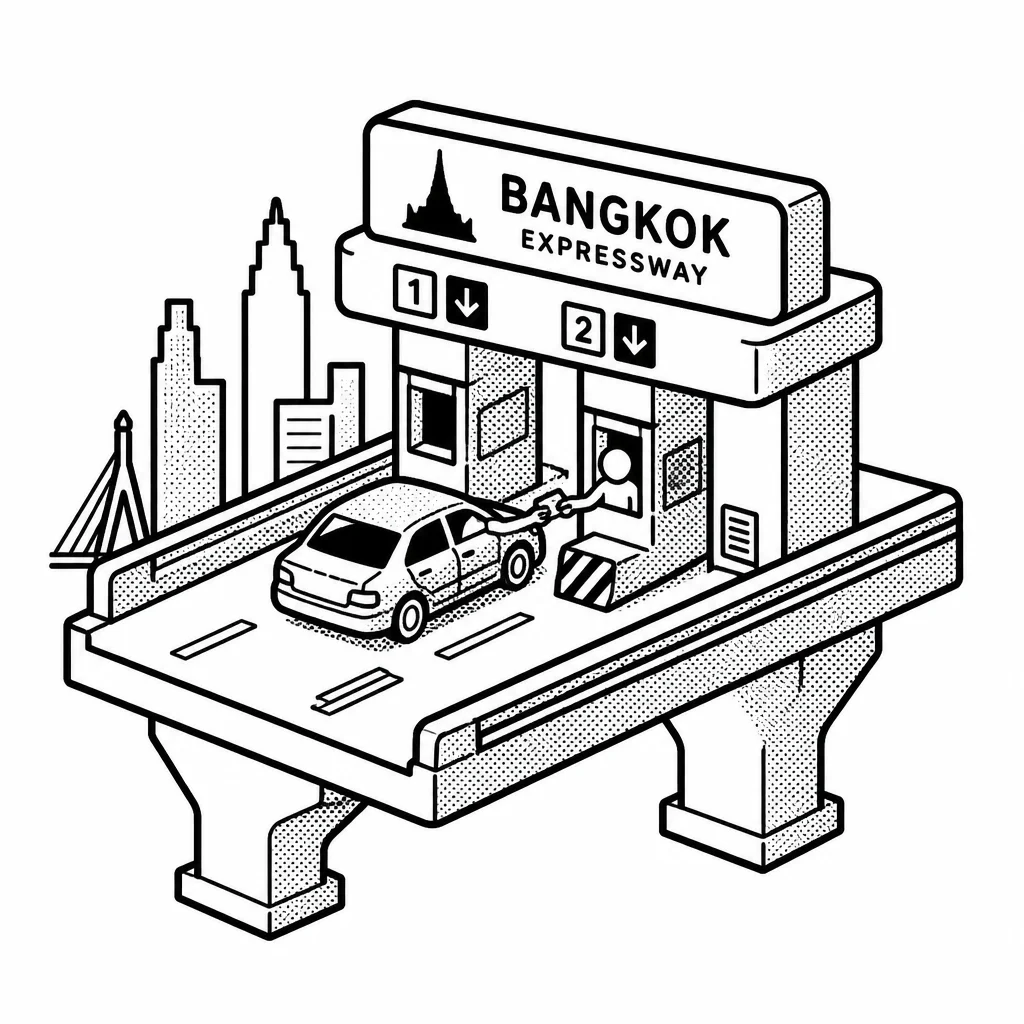
The business splits into two engines. The expressway side collects tolls from drivers who choose to pay for a faster, less crowded route — a simple, steady business where the money comes in every time a car passes a booth. The rail side earns from passenger fares on the metro lines it runs, plus the commercial space and advertising inside and around its stations. Those station shops and billboards are a clever bonus: the trains bring the crowds, and the crowds make the advertising space valuable. What makes this business strong is that it is hard to copy. You cannot easily build a second elevated highway next to the first, and metro lines take years and enormous sums to construct, so once the tracks and roads are in place, the operator enjoys a kind of protected position. The trade-off is that this is a heavy, expensive business — building and maintaining roads and rail lines costs a fortune up front. That means the company carries significant debt and spends a lot on upkeep, so its fortunes rise and fall with how many people use its roads and trains, which in turn depends on fuel prices, economic conditions, and government policy on fares and tolls.
The company is majority-owned by the Thai government through its transport and infrastructure arms, which gives it a stable, quasi-public character and close ties to national planning. It also collects steady cash that it uses to service debt and pay dividends to shareholders. For investors, the appeal is predictability: people still need to get to work, and toll roads and trains keep collecting money rain or shine. The risk is that much of its fate sits in the hands of regulators and the economy — fare rules, concession terms, and how crowded Bangkok gets all shape the returns.
Saved answer · last researched 12 Nov 2026