Understand any stock in simple English
Enter a ticker to learn what the company does and how it makes money.
Bangkok Dusit Medical Services Public Company Limited
It runs private hospitals and clinics in Thailand and nearby countries, charging patients and their insurers for medical care.
Bangkok Dusit Medical Services is Thailand's biggest private hospital group. It runs a network of hospitals and clinics — from small neighborhood clinics to large flagship hospitals — where people go for everything from a checkup to heart surgery. Most patients are Thai, but a meaningful slice are foreigners: medical tourists from the Middle East, China, and neighboring countries, plus expats living in the region.
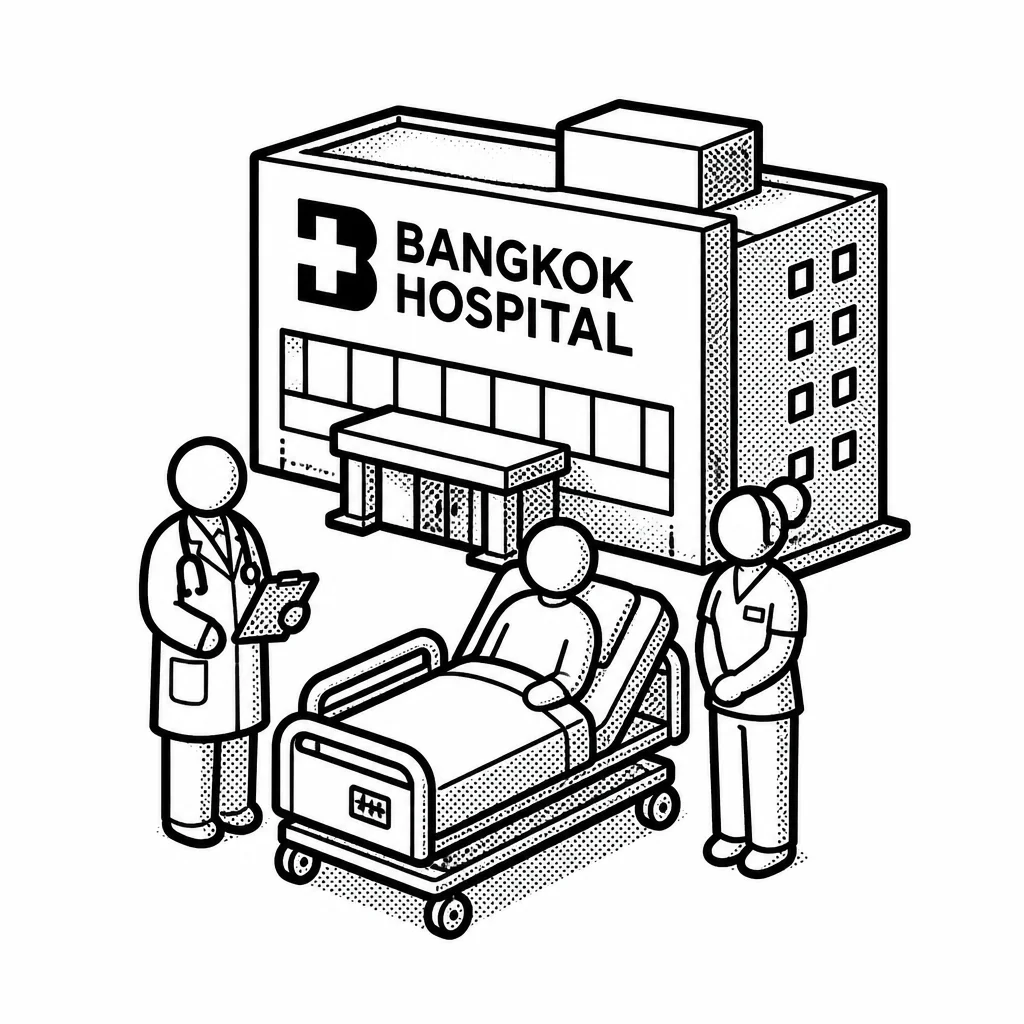
The business model is straightforward. Patients pay for consultations, procedures, lab tests, and hospital stays, either out of their own pocket or through insurance and corporate health plans. Private hospitals in Thailand compete on shorter waits, nicer rooms, and English-speaking staff, which is why foreigners often choose them over public hospitals. The group operates its hospitals under several brand names, with the crown jewel being the large Bangkok Hospital and Bumrungrad-style flagship facilities that draw international patients. What makes the business strong is scale and location. Thailand has become a global hub for medical tourism, and the group's hospitals sit right in the middle of that flow. The money is usually steady — people get sick regardless of the economy — and international patients pay premium prices. On the flip side, the group is exposed to anything that dents travel to Thailand, like a pandemic or political unrest, which can quickly dry up the foreign patient stream. It also faces rising competition from other private hospital chains and from public hospitals improving their services.
The company spends its cash on expanding its hospital network, upgrading equipment, and paying dividends to shareholders. It has grown largely by acquiring and building hospitals across Thailand and into neighboring markets like Cambodia and Myanmar. The core bet is simple: as Thailand and Southeast Asia get richer and older, more people will pay for private care, and foreign patients will keep flying in for treatment. Whether that bet keeps paying off depends on travel, regulation of medical fees, and how well it fends off rivals in an increasingly crowded private healthcare market.
Saved answer · last researched 12 Nov 2026