Understand any stock in simple English
Becton, Dickinson and Company
BD makes and sells medical supplies, devices, lab equipment, and diagnostic tests to hospitals, labs, and drug companies.
BD is a giant supplier to the healthcare system — the company that makes a lot of the ordinary, essential stuff that hospitals, clinics, and labs burn through every single day. Think needles and syringes, IV catheters, blood collection tubes, and the machines that test blood for infections or run a patient's samples through a lab. Most people never notice BD's products, but a hospital can't really run without them.
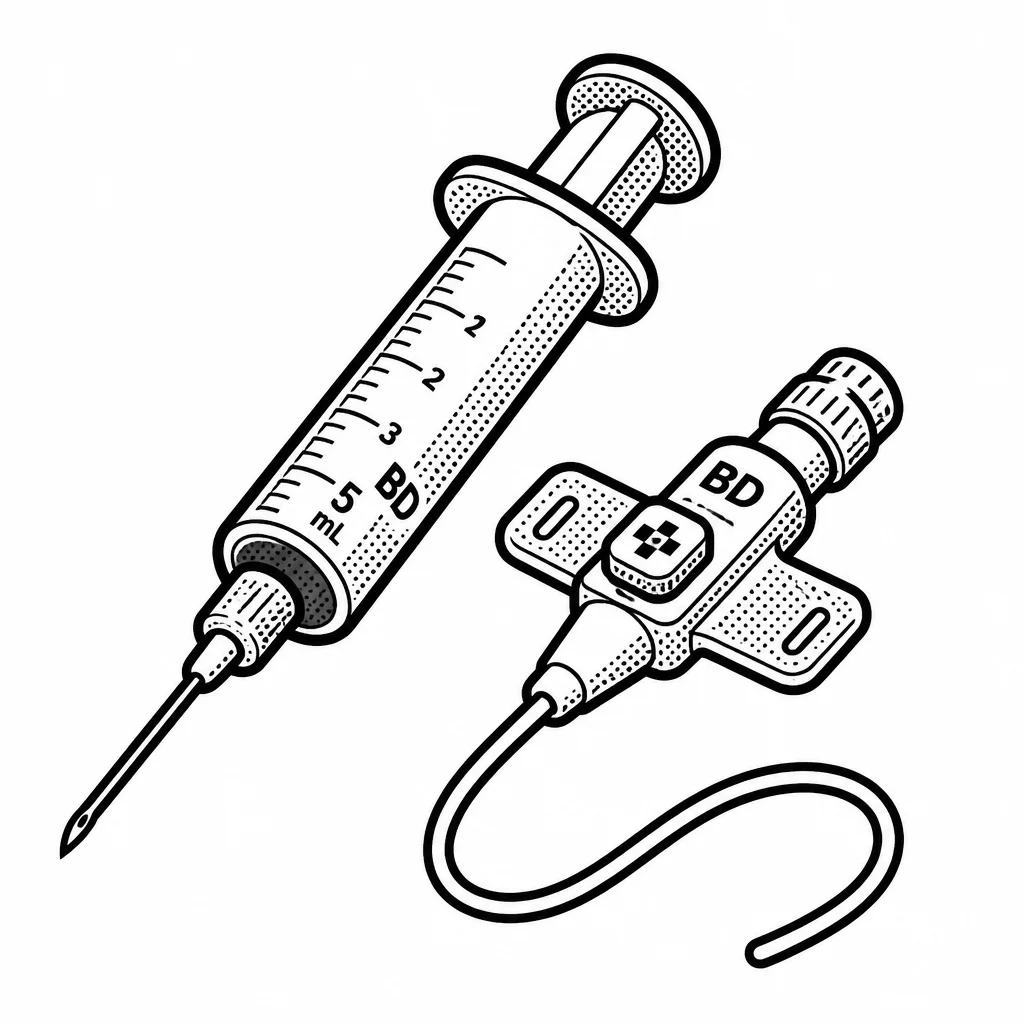
The business splits into roughly two halves. One is medical essentials — the disposable devices nurses and doctors use at the bedside, like syringes, catheters, and infusion pumps that deliver drugs and fluids into a patient's veins. The other is diagnostics and lab science — the instruments and tests that hospitals and research labs use to figure out what's wrong with a patient or to develop new drugs and therapies. BD sells to hospitals, clinics, labs, and pharmaceutical companies, and it earns money both from the initial sale of equipment and from the steady stream of disposable parts and tests that customers keep buying. The quiet strength here is the "razor and blades" pattern. A hospital that installs BD's infusion pumps or lab machines tends to keep buying BD's proprietary tubes, sensors, and test kits for years, because switching means retraining staff and reworking carefully built workflows. That recurring revenue makes BD's sales steadier than a pure equipment maker's, and it's a big reason the company has stayed a heavyweight in hospitals for decades. It also means BD faces real competition from other large medtech players, but rarely from scrappy newcomers.
BD has been reshaping itself lately. It spun off its biosciences and diagnostics unit into a separate public company in 2025, keeping the medical essentials side, and it has been working through a major recall of its Alaris infusion pumps that weighed on results and drew regulatory scrutiny. The company also carries a hefty debt load from past acquisitions. Still, it throws off solid cash, pays a dividend, and keeps investing in new devices and automation for hospitals that are short on nurses and squeezed on costs — which is exactly the kind of mundane, indispensable business that quietly keeps the healthcare system running.
Saved answer · last researched 17 Nov 2026