Understand any stock in simple English
Enter a ticker to learn what the company does and how it makes money.
Banco Bilbao Vizcaya Argentaria, S.A.
BBVA is a global bank that takes deposits, makes loans, and sells insurance and investment products to people and businesses, with a big presence in Mexico.
BBVA is a bank — one of Europe's largest — and its business is the oldest one in finance: it holds people's money, lends it out, and earns the difference. In Spain, its home market, it runs a huge retail network serving families and small businesses. But the engine that really drives the company sits across the Atlantic: its Mexican arm, known as BBVA México, is the country's biggest bank, and it generates a large share of the group's profit. That is why the company trades on the Mexican stock exchange as well as in Spain.
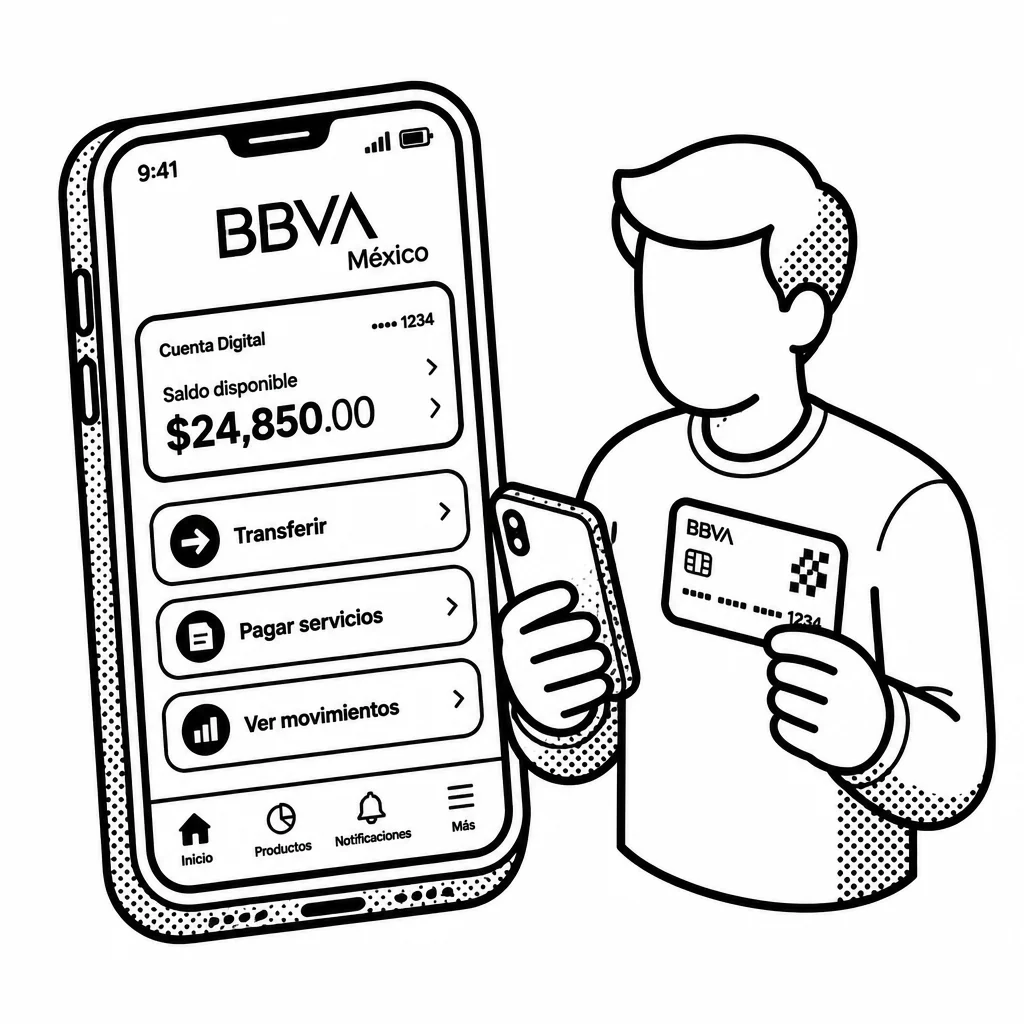
The mechanics are simple. A customer deposits a paycheck; BBVA pays little or nothing for that money, then lends it out as a mortgage, a car loan, or credit to a business at a higher rate. It also collects fees for everyday services — cards, payments, account packages — and sells insurance and investment funds. For companies, it provides wholesale and investment banking: helping them raise money, manage risk, and move cash across borders. Customers choose a bank mostly on convenience and trust, which is why branch networks and now mobile apps matter so much; switching banks is a hassle, and that stickiness is the industry's quiet superpower. BBVA's big strategic bet has been digital. It poured money into its app early, and it now handles a large share of its sales through digital channels, which is far cheaper than running branches. Its most interesting move recently was a hostile takeover bid for Banco Sabadell, a smaller Spanish rival — an attempt to add scale in its home market and squeeze out overlapping costs. The pitch to shareholders is straightforward: two banks becoming one can cut duplicated expenses and compete better against bigger European peers. Whether regulators and Sabadell's board agree is another matter.
The risks are the classic banking ones, and they are real. Mexico delivers growth but also political and currency risk; a weak peso or a hostile government hurts. Low interest rates squeeze the gap between what BBVA pays depositors and earns on loans. And like every bank, it lives with the constant possibility that borrowers stop repaying. When times are good, banking is a beautiful machine — take cheap deposits, lend them out, collect the spread. When times are bad, the same machine can turn on you fast.
Saved answer · last researched 15 Nov 2026