Understand any stock in simple English
Enter a ticker to learn what the company does and how it makes money.
JPMorgan BetaBuilders International Equity ETF
It is an exchange-traded fund that gives investors a simple, low-cost way to own a basket of large and mid-sized company stocks from developed markets outside North America.
This is a single fund rather than an operating company, and it does one job for the people who buy it: hold a broad slice of stocks from developed countries outside the United States and Canada, all in one ticket. An investor who buys a share gets exposure to big and mid-sized companies across places like Japan, the United Kingdom, Germany, Switzerland, France, and Australia. Instead of picking individual stocks or opening accounts in a dozen foreign markets, you own a diversified bundle through a fund that trades on the Cboe exchange just like a regular stock.
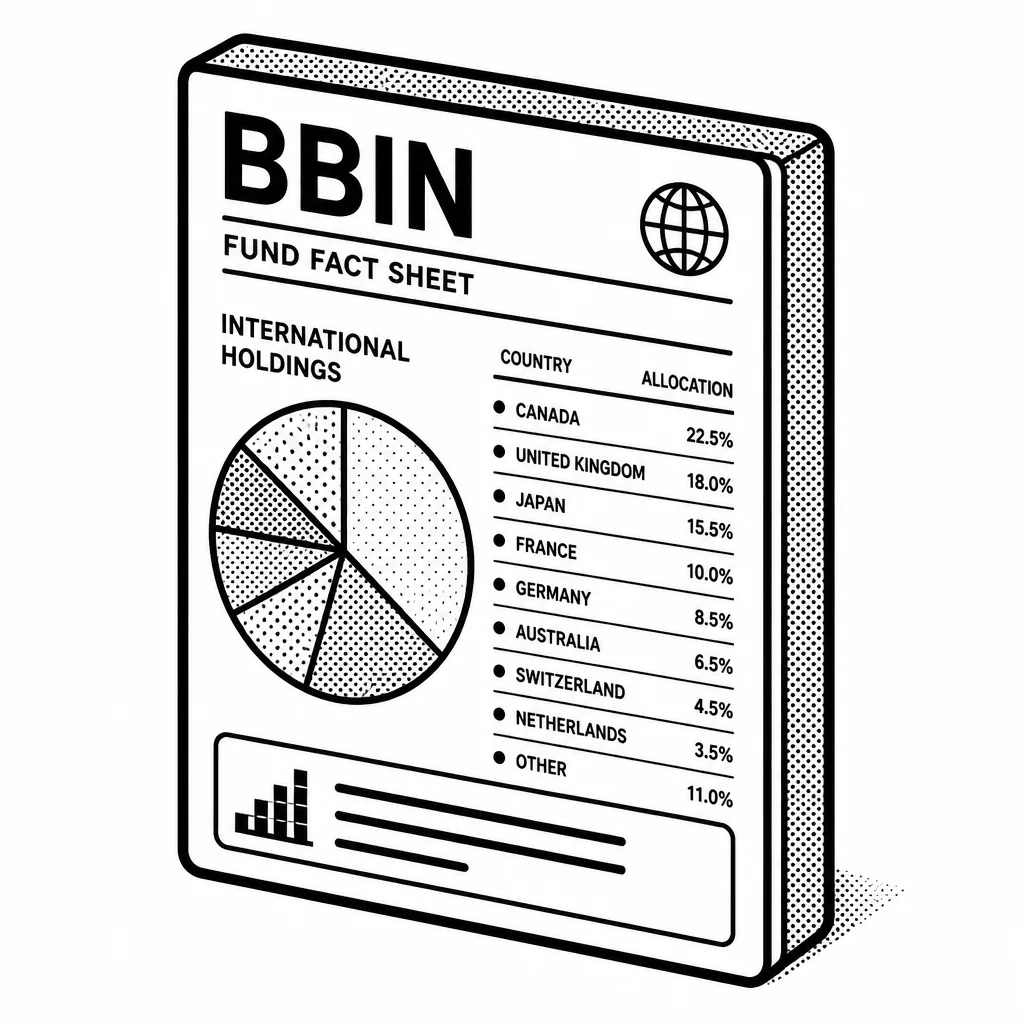
The fund is run by JPMorgan's asset management arm and is built to track an index of these developed-market stocks rather than to have a manager hand-pick winners. That "beta" in the name is a signal: it aims to match the market's return, not beat it. Investors use it as a building block—the international piece of a portfolio that might otherwise be all American stocks—because owning companies abroad spreads risk and taps into businesses and economies the U.S. market doesn't cover. Why would someone choose this particular fund over the many other international ETFs? Mostly cost and simplicity. It is designed as a cheap, plain-vanilla option, so a saver who wants foreign exposure without paying for active management can get it in one trade. The trade-off is that it is passive and broad: it will not dodge a weak country or sector, and it rises and falls with those foreign markets. Currency swings matter too, since the fund's holdings are priced in foreign money and their value to a U.S. investor shifts as exchange rates move.
As an ETF, it makes its money for the issuer by charging a small management fee taken out of the fund's assets, which quietly reduces the investor's return. Because it tracks an index, it shuffles its holdings only when the index changes, keeping costs down. It doesn't sell products or chase customers; its appeal is purely being a cheap, diversified, easy-to-buy gateway to the rest of the developed world.
Saved answer · last researched 15 Nov 2026