Understand any stock in simple English
Enter a ticker to learn what the company does and how it makes money.
JPMorgan BetaBuilders Emerging Markets Equity ETF
It is a passively managed exchange-traded fund that gives investors a simple, low-cost way to own a broad basket of large- and mid-sized companies in emerging markets around the world.
This is a fund, not a company that makes or sells anything. It is an exchange-traded fund, or ETF, which is a basket of stocks you can buy and sell on a stock exchange just like a single share. This particular basket holds large- and mid-sized companies from emerging markets — fast-growing economies like China, India, Taiwan, Brazil, and South Korea — all wrapped into one ticker you can trade in a single click.
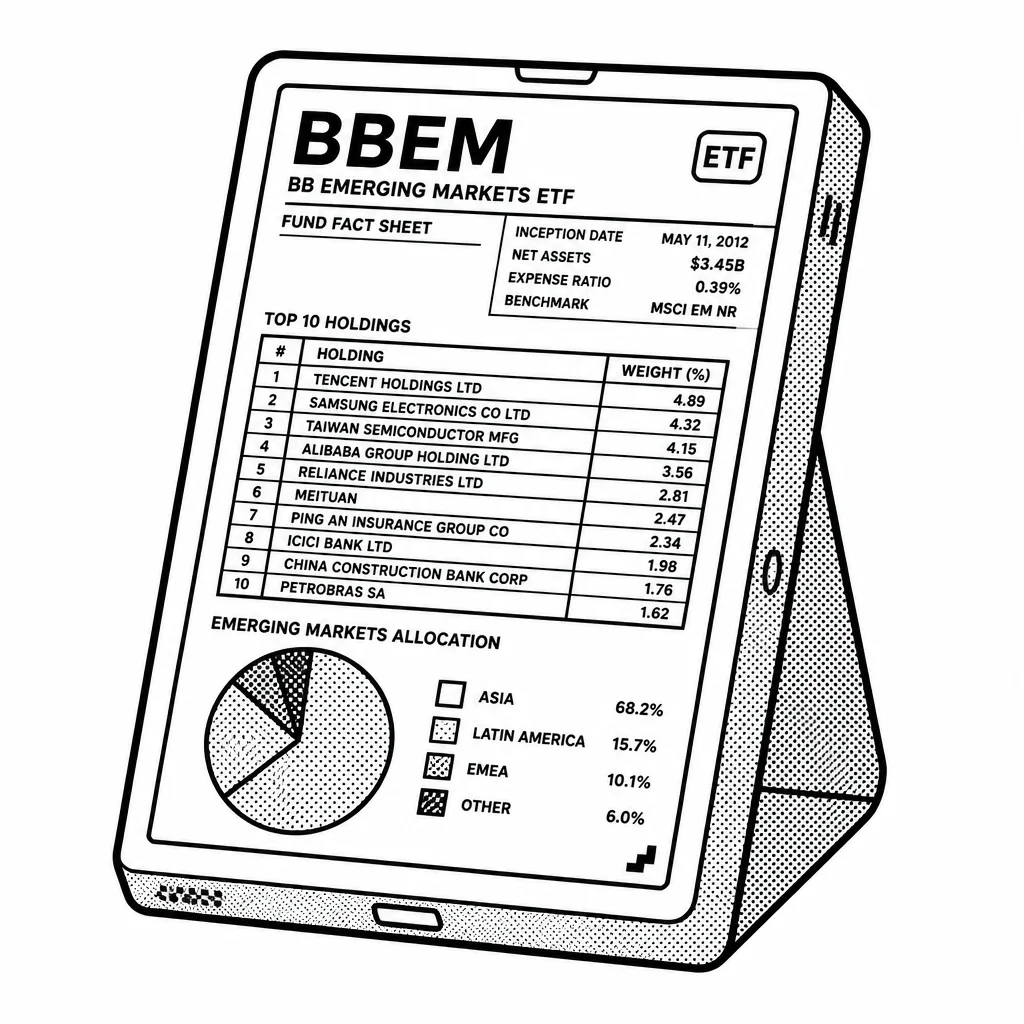
The appeal is simplicity and cost. Instead of picking individual stocks in countries where the rules, language, and accounting can be unfamiliar, an investor buys one share and instantly owns a slice of hundreds of companies across many developing economies. The fund is "passive," meaning it doesn't pay a team of experts to guess which stocks will win. It simply tracks an index that defines what "emerging markets" means, and holds the stocks in roughly the same proportions. Because there's no stock-picking, the fees stay low, which matters a lot over decades. The fund is run by JPMorgan, one of the largest banks in the world, based in New York. But the bank isn't betting its own money on these stocks — it's acting as the manager and collecting a small fee. The investor's money buys the underlying shares, and the fund's value rises and falls with the emerging-market companies inside it. It sits inside JPMorgan's "BetaBuilders" lineup, a family of funds designed to deliver broad market exposure cheaply, built to compete with the big index-fund players like BlackRock's iShares and Vanguard-style offerings. (Vanguard is privately held by its funds, so no ticker applies.)
What you're really buying is a bet on the growth of developing economies. Emerging markets can grow faster than the rich world, but they also swing harder — currencies wobble, politics shift, and a single country's troubles can drag the basket down. Owning the whole basket spreads that risk around rather than betting on one nation. That mix of higher potential growth and higher turbulence is the whole story of the fund, and it's why it's usually a small slice of a diversified portfolio rather than the whole thing.
Saved answer · last researched 15 Nov 2026