Understand any stock in simple English
Enter a ticker to learn what the company does and how it makes money.
Brookfield Asset Management Ltd.
Brookfield Asset Management invests other people's money in things like office towers, power plants, and pipelines, and earns fees for managing that money.
Brookfield Asset Management is one of the world's largest alternative asset managers. It doesn't mostly invest its own money — it raises money from pension funds, sovereign wealth funds, insurance companies, and wealthy individuals, then puts that money to work in long-lived physical assets: office towers, renewable power farms, toll roads, pipelines, data centers, and private equity stakes. In return, it collects management fees based on the assets it oversees, plus a share of the profits when investments do well.
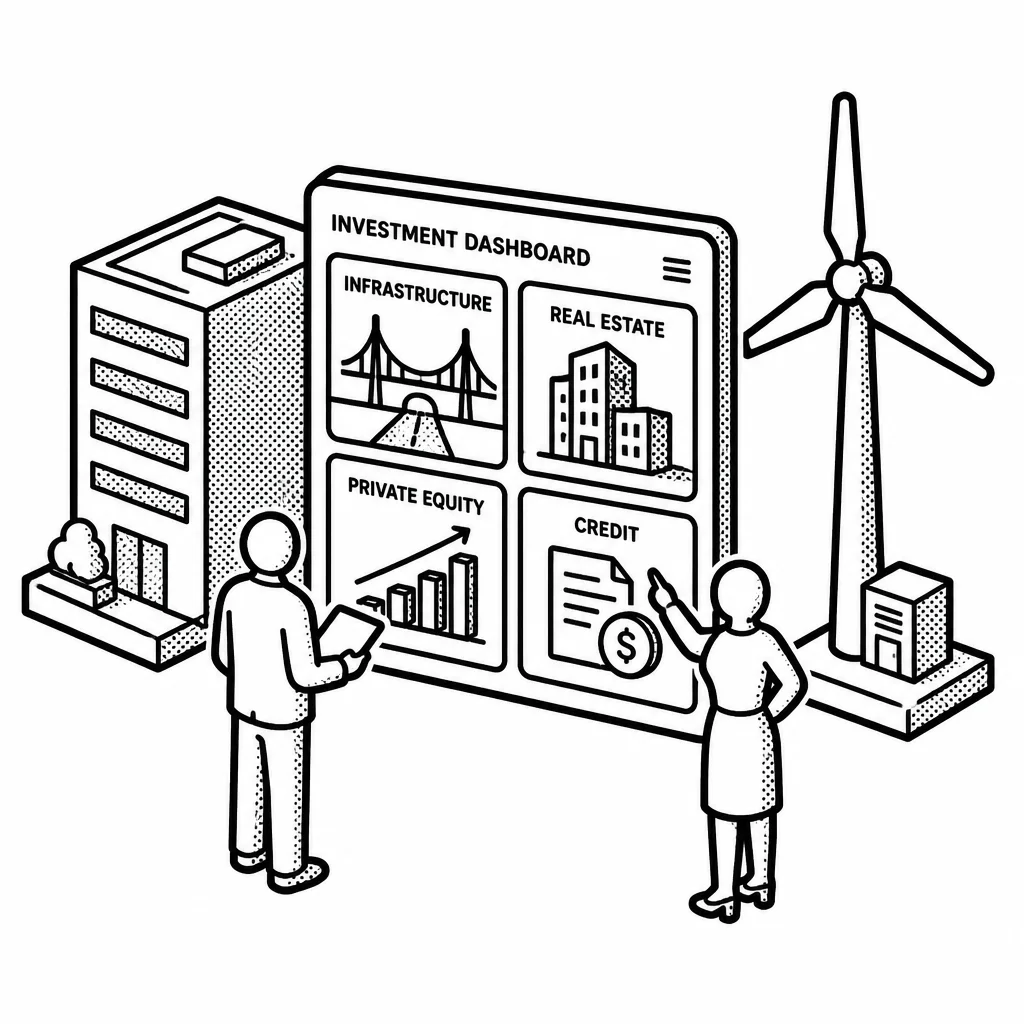
The business is built around a simple idea: own the boring, essential stuff that keeps the economy running and hold it for a very long time. A pension fund that needs steady returns for decades can't easily buy a hydroelectric dam or a container port on its own. Brookfield gives it a seat at that table, along with the teams that operate and improve those assets. That scale — hundreds of billions of dollars under management — is the moat. Big deals need a manager with the capital, expertise, and track record to pull them off. Brookfield's history goes back more than a century to Brazilian and Canadian roots, and it has long been known for buying unloved assets and fixing them up. Today the listed company itself is a pure fee-earning manager — a structure set up in late 2022 when the old Brookfield Corporation spun off the asset management arm as its own public company. The parent still owns a large stake and keeps a big chunk of its own money invested alongside clients, which keeps incentives aligned.
The business is highly scalable: fees on a growing pile of assets tend to flow straight to the bottom line, and the company pays out most of its earnings as dividends. The main risks are the usual ones for any asset manager — clients pulling money out, tough fundraising markets, and the fact that interest rates and credit conditions shape how easily big infrastructure deals get done. Competition comes from other giants chasing the same pension dollars, including Blackstone, KKR, and Apollo Global Management.
Saved answer · last researched 12 Nov 2026