Understand any stock in simple English
Enter a ticker to learn what the company does and how it makes money.
Aster DM Quality Care Limited
Aster DM Healthcare runs hospitals, clinics, and pharmacies that treat patients in India and the Gulf countries.
Aster DM Healthcare is a hospital company. It runs a network of private hospitals, clinics, and pharmacies that people visit when they are sick, need surgery, or just need a doctor's checkup. It operates mainly in two parts of the world: India, and the Gulf countries such as the United Arab Emirates, Oman, Saudi Arabia, and Qatar. In the Gulf, it is one of the biggest private healthcare providers, with hospitals, medical centers, and pharmacies all under its own brands.
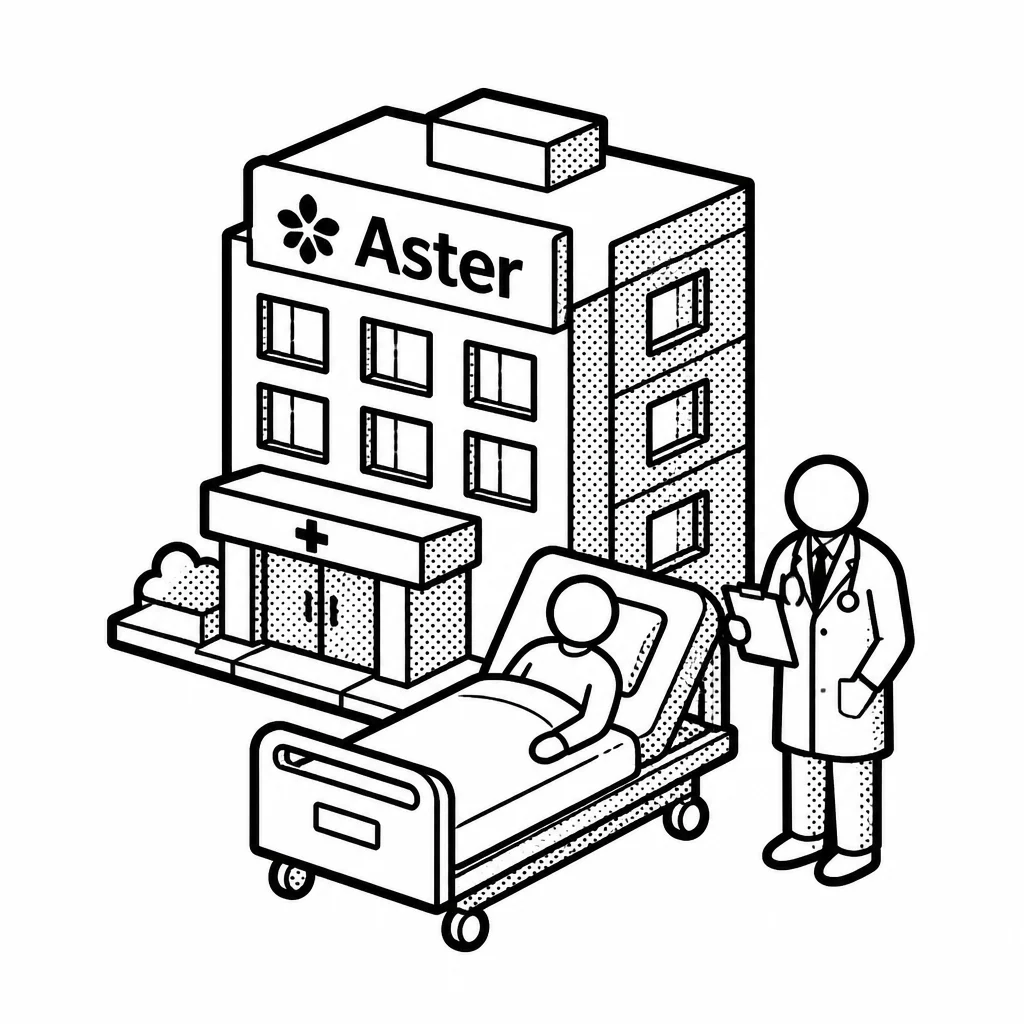
The way it makes money is simple. Patients and their health insurers pay for doctor visits, surgeries, tests, and medicines. In the Gulf, many customers pay through private health insurance tied to their jobs, so the insurance company is often the one writing the check. Aster also runs pharmacies that sell medicine, both inside its hospitals and as standalone stores. People choose it because a hospital is a trust business: you want one with good doctors and a clean reputation, and Aster has spent years building a brand name in the regions where it operates. A big turning point came when the company decided to split itself. The Gulf and India businesses are very different animals, with different regulators, insurers, and growth rates. In 2024 it sold a majority stake in the Gulf business to a group backed by Fajr Capital and the UAE sovereign investor Mubadala, keeping the India business. In 2025, the remaining India-focused company was renamed Aster DM Quality Care, listed on the National Stock Exchange of India. So today, the listed company is mostly an India story: building and filling hospitals across Indian cities where private healthcare demand keeps rising. That India business is the growth engine. It keeps adding beds, because in a hospital the number of beds is like shelf space in a shop — no beds, no revenue. It has been opening new hospitals and expanding existing ones in cities like Bengaluru, Kochi, and Hyderabad. The risk is straightforward: hospitals are expensive to build, take years to fill up, and need a steady supply of good doctors. If a new hospital sits half-empty, it drags on profits. The opportunity is that India's private healthcare market is growing fast as more people can afford private care and insurance coverage spreads.
Healthcare is a business where reputation compounds. A good hospital gets referrals, loyal patients, and word-of-mouth that no advertising can buy. That is why the company leans hard on its brand and on keeping doctors happy enough to stay. Its main rivals in India include large private hospital chains like Apollo Hospitals, plus other big Gulf and Indian operators depending on the market. The simple way to judge Aster is to watch whether its hospitals fill up, whether it earns more per bed, and whether it can keep expanding without letting debt and empty beds eat the profits.
Saved answer · last researched 15 Nov 2026