Understand any stock in simple English
ASM International N.V.
ASM International sells machines that lay down incredibly thin layers of material onto silicon wafers, the key step that turns plain silicon into working computer chips.
ASM International makes the machines that put the "recipe" onto a computer chip. A chip starts as a plain silicon wafer, but it only becomes useful when manufacturers build up dozens or hundreds of microscopic layers of different materials on top of it — insulating layers, conducting layers, and so on. ASM's equipment deposits these films one atomic-scale layer at a time, a process called thin-film deposition. Without this step, the wafer is just expensive sand.
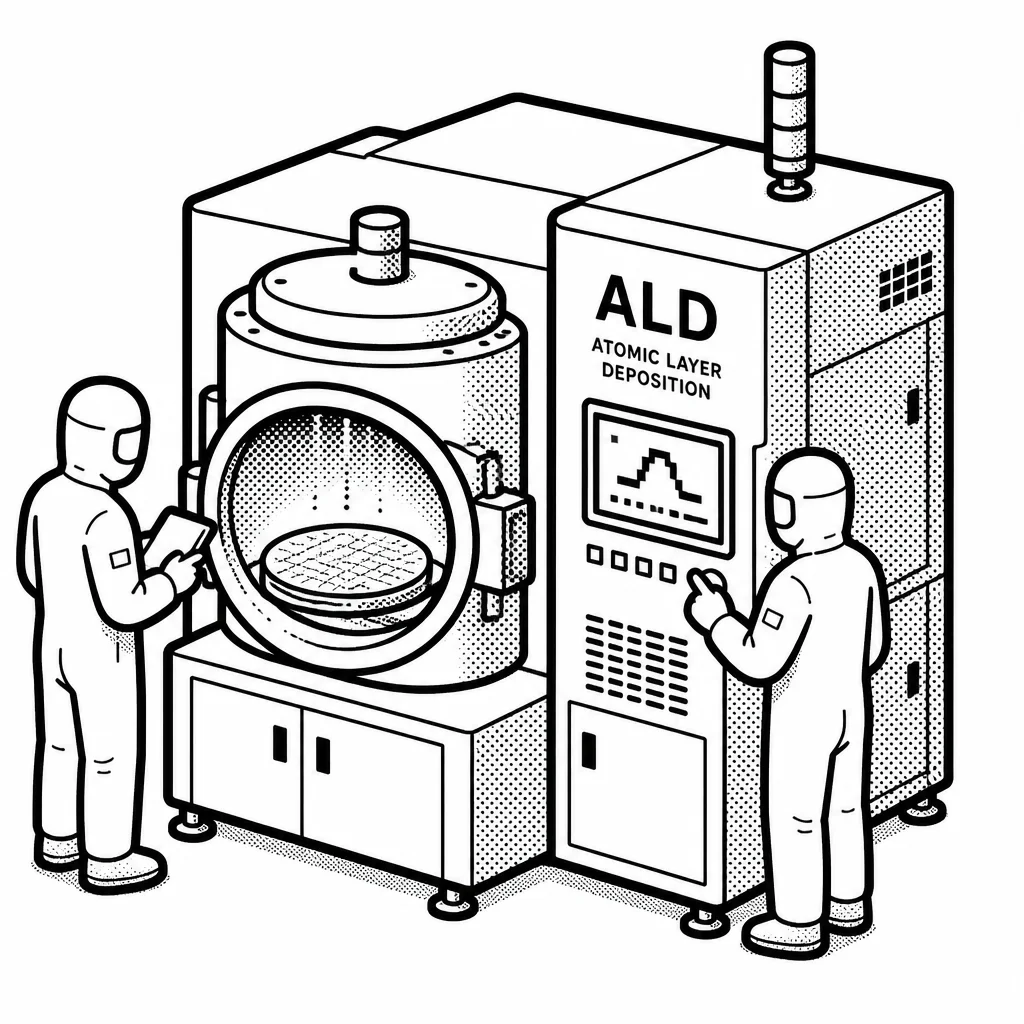
The company sells two main families of tools. One group handles atomic layer deposition, or ALD, which lays down films so thin and precise that each layer is measured in single atoms — think of painting a wall with a brush one molecule thick. The other group covers epitaxy, which grows perfect crystalline layers on the wafer. Chipmakers use these tools for the most advanced logic chips, memory chips, and increasingly for power chips used in electric cars and solar gear. ASM's customers are the giant fabs that build chips, including foundries like Taiwan Semiconductor Manufacturing and memory makers like Samsung Electronics. ASM is not the biggest player in its field. Its main rival is Applied Materials, a much larger American company, alongside Lam Research and Tokyo Electron. ASM wins business by being the specialist in ALD, a niche where precision matters enormously and where it has built deep expertise over decades. Its tools are expensive and each sale is a big deal, so revenue swings with the spending cycles of chipmakers — when fabs build new factories, ASM booms; when they pause, orders dry up.
The company is based in the Netherlands and trades in Amsterdam, but most of its customers and money are in Asia. In recent years ASM has leaned hard into two growth areas: advanced chipmaking for artificial intelligence and power chips for electric vehicles and clean energy. It also returns cash to shareholders through dividends and buybacks, and returned roughly €250 million via buybacks in 2023. The catch: its fortunes ride on a handful of huge customers who spend in lumpy waves, so the stock can be as volatile as the chip cycle itself.
Saved answer · last researched 17 Nov 2026