Understand any stock in simple English
Enter a ticker to learn what the company does and how it makes money.
Sendas Distribuidora S.A.
Assaí runs cash-and-carry wholesale stores in Brazil that sell food, groceries, and household goods to small shopkeepers and regular shoppers.
Assaí Atacadista is Brazil's big cash-and-carry store chain. It sells food, drinks, cleaning products, and household goods in huge, warehouse-style stores where the shelves are stacked high and the prices are low. Its main customers are small shopkeepers — the owner of the corner grocery, the neighborhood restaurant, the little bar down the street — who come to buy in bulk and resell to their own customers. Ordinary families also shop there to save money.
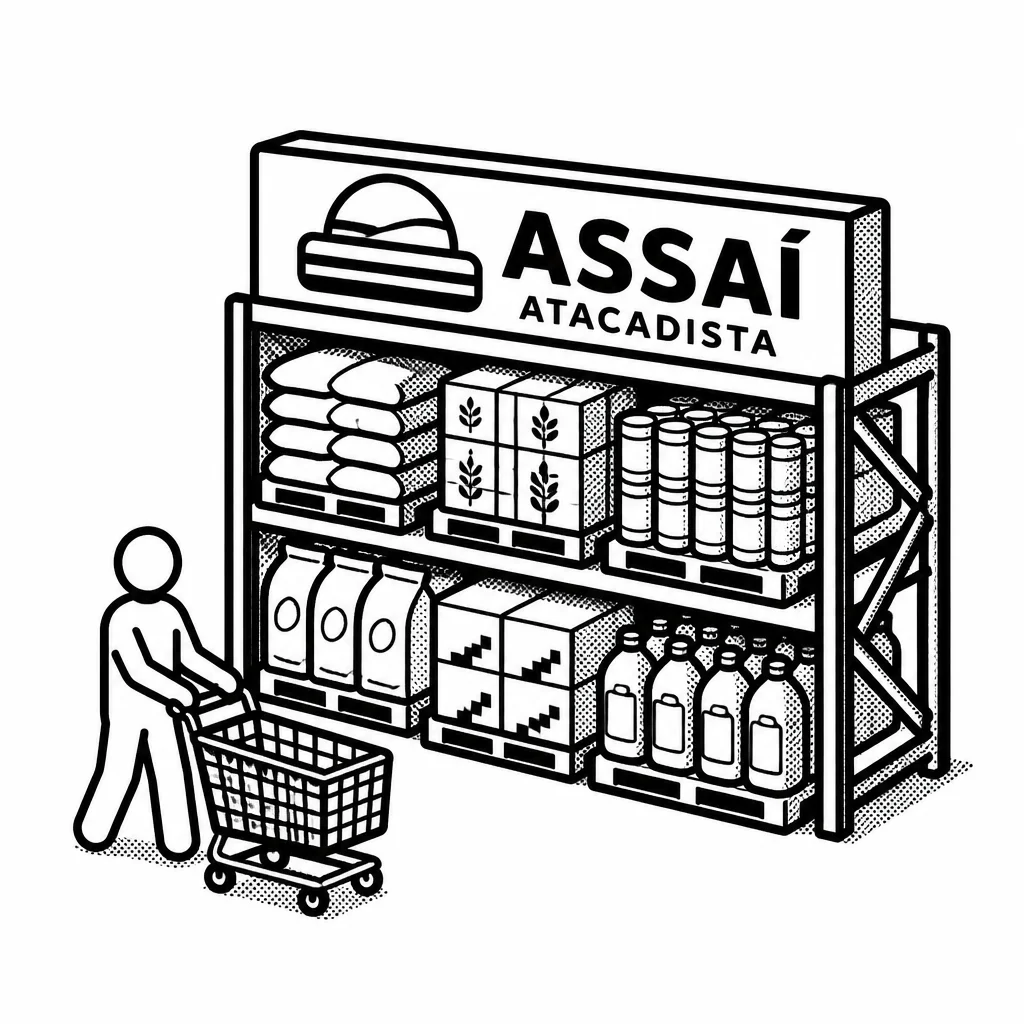
The cash-and-carry model is simple but powerful. Customers pay on the spot, usually in cash or by card, and they carry their goods out themselves. That means Assaí gets its money right away and doesn't get stuck with unpaid bills. Storing goods on plain metal racks instead of fancy displays keeps costs down, and a no-frills layout lets the company pass savings on to shoppers. The stores are enormous, often doing very high sales volume on thin profit margins. That's the whole trick: make a little on each item, sell a massive amount of items, and turn over the inventory fast. Assaí used to belong to Grupo Pão de Açúcar (GPA), a big Brazilian retailer, before it was spun off and listed separately on the B3 stock exchange. Under its own ownership, it has been opening new stores at a rapid pace — converting some former competitor locations into Assaí stores and pushing into new cities across Brazil. This expansion has been the company's big growth story: more stores means more customers and more sales, though it also means heavy spending on rent, staff, and inventory.
The business faces real pressures. Food inflation squeezes both the small shopkeepers who buy from Assaí and the company's own costs. Competition is fierce, with rivals like Carrefour also chasing the same wholesale shoppers. And the rapid store expansion has added debt and stretched the company's finances. Still, Assaí's basic appeal is durable: when money is tight, people look for cheap bulk buys, and small businesses need a reliable, low-cost place to stock their shelves.
Saved answer · last researched 12 Nov 2026