Understand any stock in simple English
Enter a ticker to learn what the company does and how it makes money.
Alexandria Real Estate Equities, Inc.
Alexandria owns and rents out lab and office space in life science and technology hubs, collecting rent from the companies that work there.
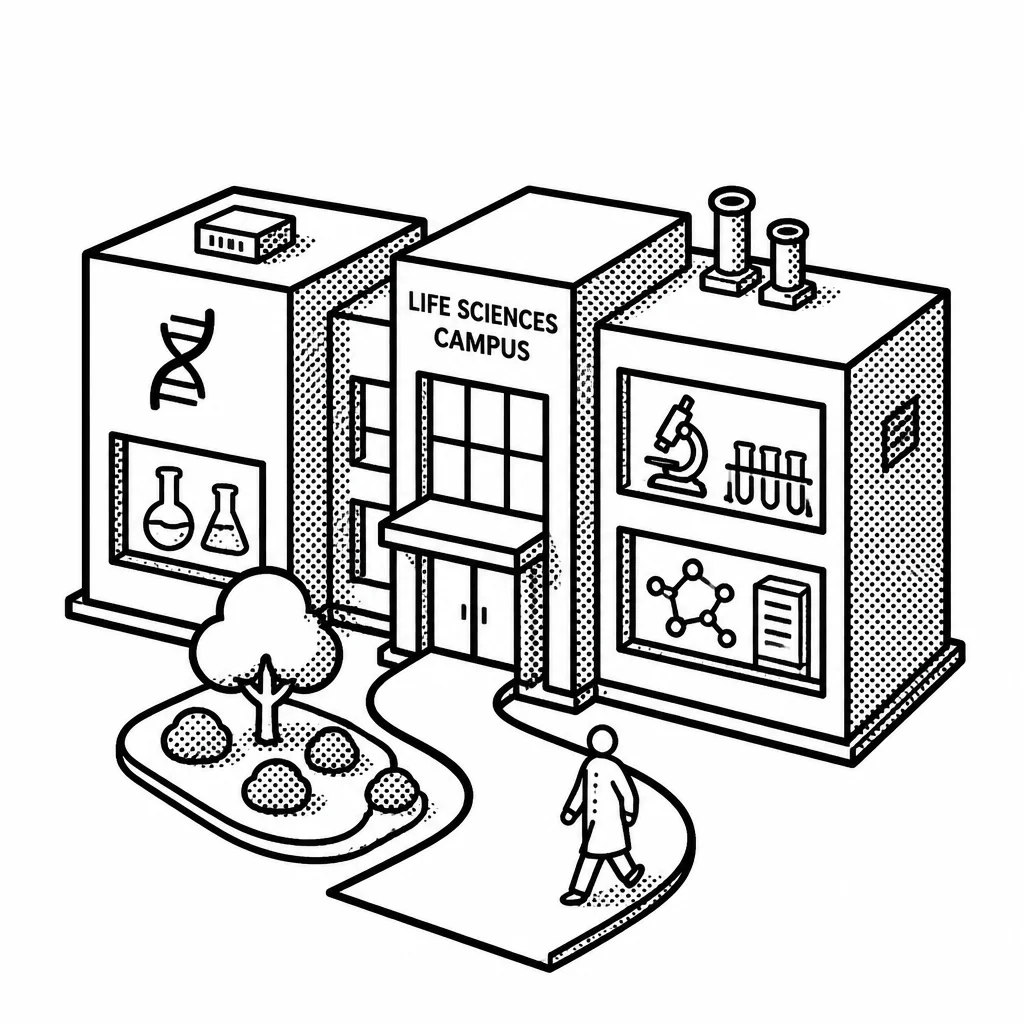
Alexandria Real Estate Equities owns the buildings where science happens. It is a real estate investment trust, which is a company that owns property and must pass most of its taxable income to shareholders as dividends. Alexandria's specialty is lab space: the wet labs, clean rooms, and offices that biotech and pharmaceutical companies need, clustered together in places like Cambridge, San Diego, San Francisco, Seattle, and Research Triangle Park. It leases these campuses to tenants in life science, agtech, and technology, and collects rent, usually on long leases.
The business works because lab space is not ordinary office space. A biotech tenant needs specialized plumbing, ventilation, backup power, and heavy floor loads for equipment, and it wants to be near other scientists, universities, and talent. Alexandria has spent decades assembling land and buildings in exactly those clusters, which makes it hard for a new landlord to copy. That gives it pricing power: it can raise rents when leases renew, and demand for lab space has historically outpaced supply in the best locations. The big risk is that its fortunes are tied to the health of the biotech industry. When venture funding for young drug companies dries up, as it did after the 2021 boom, tenants shrink, consolidate, or disappear, and demand for new lab space cools. Alexandria has also grown into a very large company, with a development pipeline and major tenants including big pharmaceutical firms, so it carries more debt and more exposure to a handful of large tenants than a simple office landlord might.
Alexandria pays out most of its profit to shareholders as a dividend, which is typical for a REIT. It has also been selling off some non-core assets and slowing new construction to protect its balance sheet when capital is expensive. In short, it is a landlord whose product is scientific real estate, and its results rise and fall with the money flowing into biotech and the clusters where that money lands.
Saved answer · last researched 12 Nov 2026